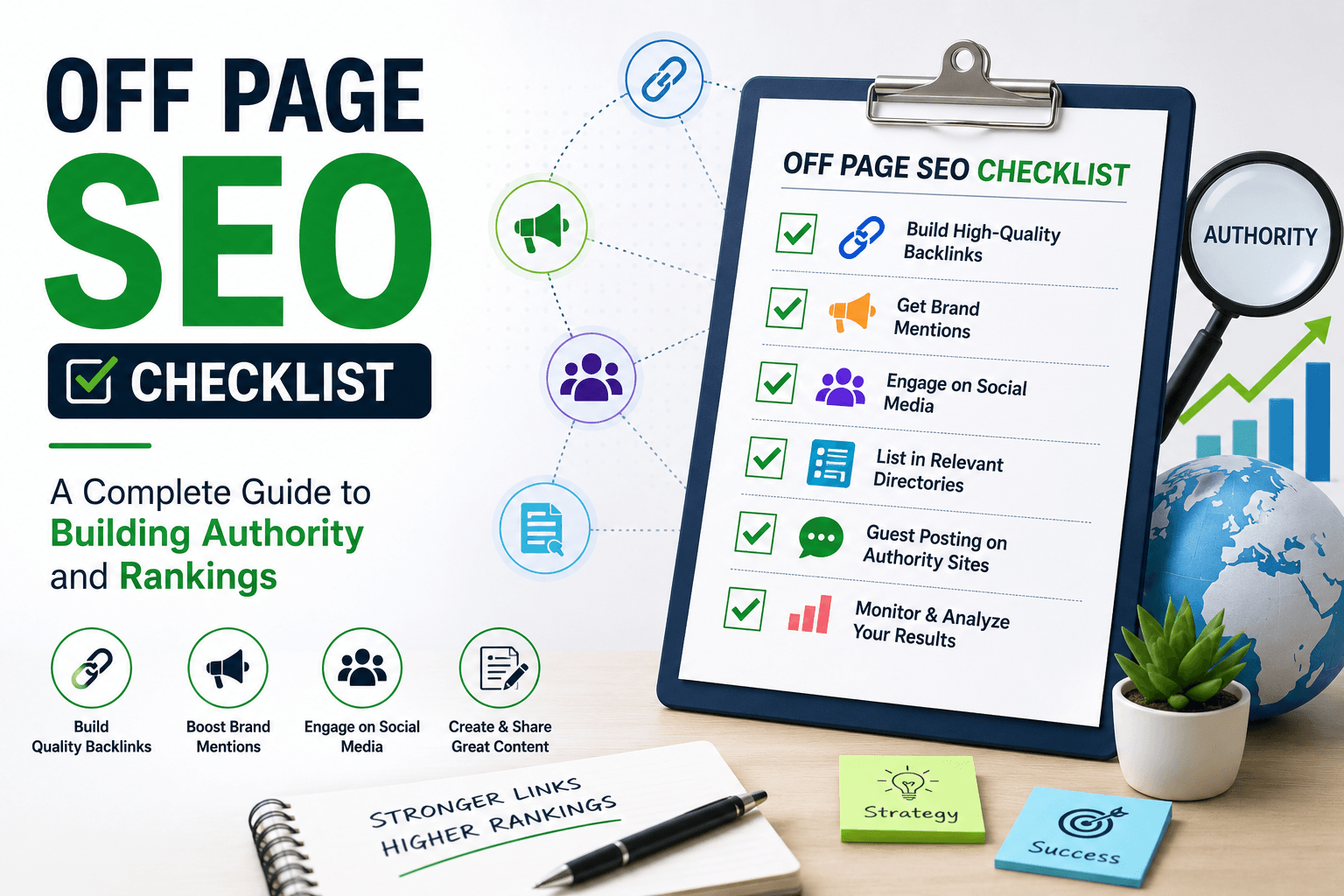
Search engine optimization involves more than improving content, titles, headings, and technical performance on your own website. Search engines also consider how other websites, users, and online platforms interact with your brand. These external signals help demonstrate authority, credibility, relevance, and trust.
An effective off page SEO checklist helps you organize these activities and focus on strategies that can strengthen your website’s reputation. From earning quality backlinks to improving local visibility and brand mentions, off-page SEO supports long-term organic growth.
This guide explains the most important off-page SEO tasks and shows you how to build a sustainable strategy without relying on low-quality or manipulative tactics.
What Is Off-Page SEO?
Off-page SEO includes actions that take place outside your website and influence its visibility in search results. These activities help search engines understand how people and other websites view your business, content, products, or services.
Backlink building remains one of the best-known off-page SEO activities, but a complete strategy includes much more. Brand mentions, online reviews, digital public relations, local citations, social engagement, expert contributions, and community participation can all support your online reputation.
The main goal is to show that your website offers useful, trustworthy, and relevant information.
Why Off-Page SEO Matters
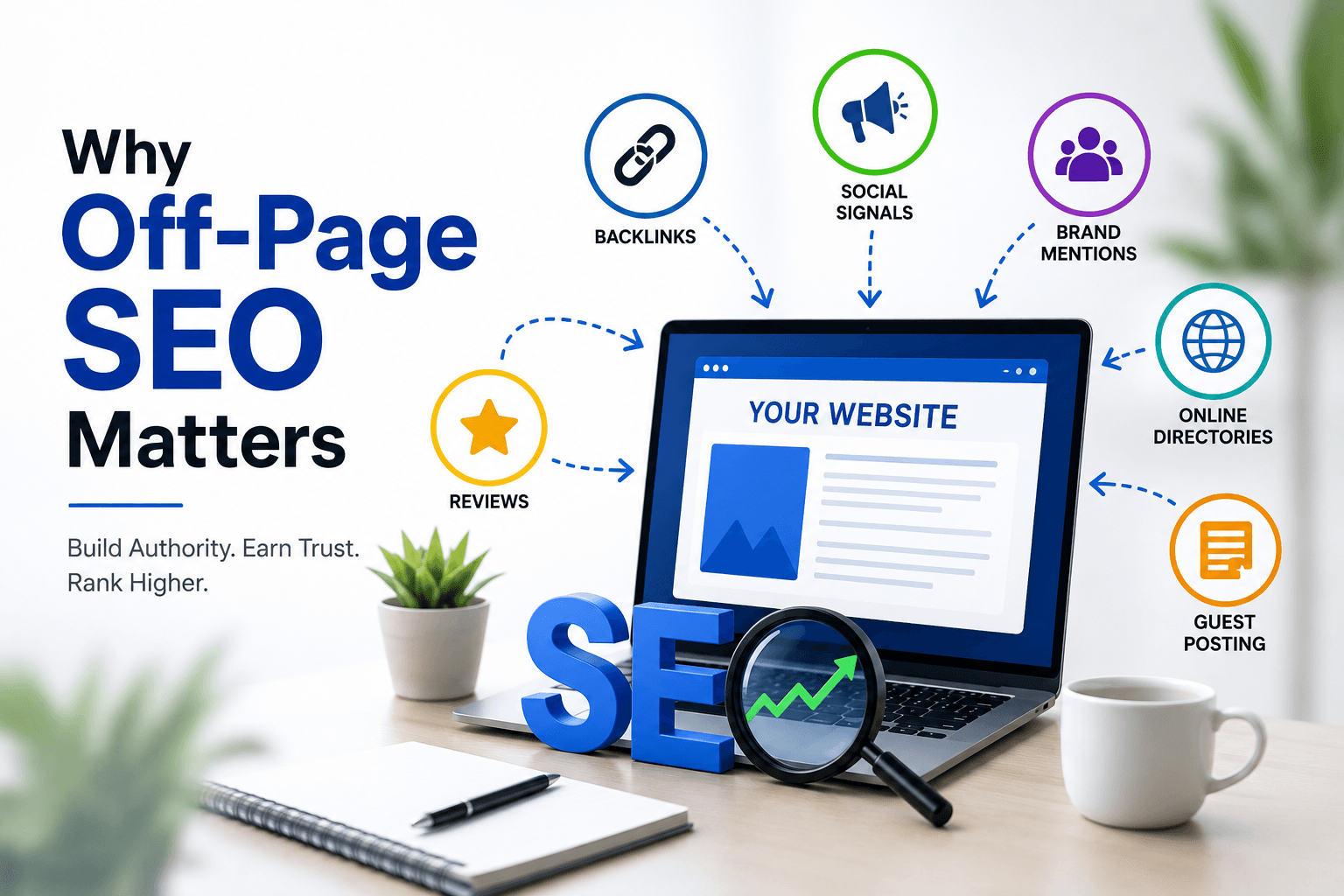
A well-optimized website may still struggle to rank when it lacks authority and external recognition. Search engines often use links, mentions, reviews, and other signals to evaluate whether a website deserves visibility for competitive searches.
Off-page SEO can help you:
- Build website authority
- Earn referral traffic
- Improve brand awareness
- Increase trust and credibility
- Strengthen local search visibility
- Support rankings for competitive keywords
- Create relationships within your industry
- Attract potential customers from external platforms
Strong off-page SEO works best when it supports useful content and a technically sound website.
Complete Off Page SEO Checklist
1. Review Your Current Backlink Profile
Start your off page SEO checklist by reviewing the links that already point to your website. A backlink audit can show which pages attract links, which websites mention your brand, and whether suspicious or irrelevant links appear in your profile.
Review important factors such as:
- Referring domains
- Link relevance
- Website quality
- Anchor text
- Linked pages
- Follow and nofollow attributes
- New and lost backlinks
- Links from unrelated or suspicious websites
Focus on the overall quality and relevance of your links rather than the total number.
2. Study Competitor Backlinks
Competitor backlink research can reveal websites, publishers, directories, and content formats that may also work for your business.
Identify competitors that rank for your target keywords and examine where their links come from. Look for patterns such as:
- Industry blogs
- Resource pages
- Business directories
- News websites
- Guest articles
- Product reviews
- Professional associations
- Local organizations
- Research reports
- Expert roundups
Use this information to discover realistic link-building opportunities. Avoid copying every competitor link because some sources may offer little value.
3. Create Link-Worthy Content
High-quality backlinks often start with content that people naturally want to reference. A basic promotional page rarely attracts many links, so create useful resources that solve problems, explain complex topics, or provide original information.
Link-worthy content may include:
- Original research
- Industry statistics
- Detailed guides
- Checklists
- Templates
- Case studies
- Surveys
- Infographics
- Comparison pages
- Free tools
- Calculators
- Expert interviews
Make the content accurate, easy to understand, visually clear, and simple to share.
4. Build Relevant Backlinks
Backlink building should focus on relevance, authority, and usefulness. One link from a respected website in your industry can provide more value than many links from unrelated or low-quality sources.
Common backlink-building methods include:
Resource-Page Outreach
Find pages that list helpful resources related to your topic. Contact the website owner and explain why your content could benefit their readers.
Broken-Link Building
Locate broken external links on relevant websites. Recommend your content as a useful replacement when it closely matches the original resource.
Unlinked Brand Mentions
Search for websites that mention your business or product without linking to your website. Politely ask the publisher to add a link where it improves the reader’s experience.
Link Reclamation
Check whether websites link to deleted pages, incorrect URLs, or outdated content on your domain. Redirect or update those links when appropriate.
Supplier and Partner Links
Ask legitimate suppliers, partners, distributors, associations, and organizations to include your website on relevant partner or member pages.
5. Use Guest Posting Carefully
Guest posting can help you reach new audiences, demonstrate expertise, and earn relevant referral traffic. However, low-quality guest posting can damage your reputation.
Choose websites that:
- Publish useful and original content
- Serve a relevant audience
- Maintain clear editorial standards
- Attract genuine readers
- Avoid excessive promotional links
- Match your industry or subject area
Create an article that provides real value instead of writing thin content solely to obtain a backlink.
6. Strengthen Digital Public Relations
Digital public relations can earn brand mentions and links from journalists, publishers, bloggers, and industry websites.
Possible digital PR campaigns include:
- Original surveys
- Data-led reports
- Expert commentary
- Company announcements
- New product launches
- Trend analysis
- Community initiatives
- Unique case studies
- Seasonal insights
- Research findings
A strong campaign gives publishers a clear story, useful data, and credible expert input.
7. Improve Local Citations
Local citations mention your business name, address, phone number, and other essential information across online directories and platforms.
Check that your business details remain consistent across:
- Business directories
- Local chambers of commerce
- Industry directories
- Mapping platforms
- Review websites
- Social profiles
- Professional associations
- Local media websites
Consistent information helps customers find your business and supports local search visibility.
8. Optimize Your Business Profiles
Complete and accurate business profiles can improve trust and help users discover your company.
Add important details such as:
- Business name
- Address
- Phone number
- Website
- Opening hours
- Service areas
- Business categories
- Product or service descriptions
- Photos
- Frequently asked questions
Update these details whenever your business changes its hours, location, services, or contact information.
9. Encourage Genuine Customer Reviews
Online reviews can influence customer decisions and support your business reputation. Encourage satisfied customers to share honest feedback on relevant platforms.
Use ethical review practices:
- Ask customers after a successful purchase or service
- Make the review process simple
- Respond to positive and negative feedback
- Avoid buying reviews
- Never offer rewards in exchange for positive ratings
- Do not post fake reviews
A professional response to criticism shows that your business listens to customers and takes concerns seriously.
10. Monitor Brand Mentions
People may discuss your company without linking to your website. Track mentions of your:
- Brand name
- Website name
- Product names
- Founder or executive names
- Branded campaigns
- Original research
- Slogans or unique terms
Monitoring these mentions helps you identify public relations opportunities, customer concerns, incorrect information, and possible backlink opportunities.
11. Build a Strong Social Media Presence
Social media activity does not replace traditional SEO, but it can expand content reach and attract new visitors. Increased exposure may also lead to natural mentions, links, partnerships, and media opportunities.
Share content that encourages interaction, such as:
- Helpful tips
- Short tutorials
- Industry news
- Blog summaries
- Videos
- Infographics
- Customer stories
- Polls
- Expert opinions
- Behind-the-scenes updates
Choose platforms that match your audience instead of trying to maintain an active presence everywhere.
12. Participate in Relevant Online Communities
Industry forums, professional groups, question-and-answer websites, and niche communities can help you build visibility and authority.
Contribute by:
- Answering questions
- Sharing practical knowledge
- Joining meaningful discussions
- Providing examples
- Clarifying common problems
- Linking only when a resource genuinely helps
Avoid posting repetitive promotional messages or dropping links without context.
13. Use Influencer and Creator Outreach
Industry creators can introduce your brand to a relevant audience and generate valuable mentions.
Look for creators who:
- Serve your target market
- Produce credible content
- Maintain authentic engagement
- Share values that match your brand
- Understand your products or services
Possible collaborations include reviews, interviews, tutorials, event coverage, expert discussions, and co-created resources.
Always disclose sponsored relationships where required.
14. Submit Your Website to Relevant Directories
Quality directories can help customers discover your business and may support local or industry visibility. However, submitting your website to hundreds of unrelated directories can create spam signals and waste time.
Choose directories that:
- Serve your industry
- Cover your location
- Maintain editorial standards
- Provide useful business information
- Attract real users
- Avoid excessive advertising and spam
Prioritize relevance over quantity.
15. Create Expert Contributions
You can build authority by contributing useful insights to established publications, podcasts, webinars, newsletters, and industry reports.
Expert contributions may include:
- Interviews
- Quotes
- Opinion articles
- Podcast appearances
- Webinar presentations
- Conference talks
- Research commentary
- Collaborative guides
- Industry predictions
These activities can improve brand recognition and create natural linking opportunities.
16. Promote Your Content Strategically
Publishing useful content does not guarantee that people will discover it. Promote each important resource through appropriate channels.
Consider using:
- Email newsletters
- Social media
- Industry communities
- Outreach campaigns
- Partner networks
- Employee advocacy
- Professional groups
- Online events
- Paid content promotion
Match the promotion method to the content and audience.
17. Recover Lost Backlinks
Websites may remove links, update pages, change URLs, or delete content. Monitor lost backlinks and determine whether you can recover valuable ones.
You may regain a link by:
- Fixing a broken page
- Restoring useful content
- Redirecting an old URL
- Contacting the publisher
- Suggesting an updated resource
- Correcting an inaccurate link
Focus on links from relevant and trustworthy websites.
18. Diversify Your Backlink Sources
A healthy backlink profile usually includes links from different types of websites rather than repeated links from one source.
Aim to earn mentions from:
- Industry websites
- News publications
- Local organizations
- Educational resources
- Business partners
- Relevant blogs
- Professional associations
- Community websites
- Research publications
- Review platforms
A diverse profile can look more natural and introduce your brand to different audiences.
19. Review Anchor Text
Anchor text refers to the clickable words that contain a link. A natural backlink profile usually includes a mix of:
- Brand names
- Website names
- Page titles
- Plain URLs
- General phrases
- Descriptive phrases
- Partial keyword references
Avoid forcing the same exact keyword into every backlink. Excessive exact-match anchor text can look unnatural.
20. Avoid Harmful Link-Building Practices
A safe off-page strategy focuses on genuine value and long-term reputation. Avoid tactics that attempt to manipulate rankings without helping users.
Risky practices may include:
- Buying large volumes of low-quality links
- Joining automated link schemes
- Using private networks solely for links
- Posting spam comments
- Creating fake profiles
- Exchanging links excessively
- Submitting to irrelevant directories
- Publishing duplicate guest posts
- Hiding paid relationships
- Using automated outreach without personalization
These methods may create temporary gains, but they can also harm trust and visibility.
21. Track Referral Traffic
Backlinks can deliver more than ranking value. They can also send potential customers directly to your website.
Monitor which external sources generate:
- Website visits
- Engaged sessions
- Newsletter signups
- Product views
- Contact requests
- Leads
- Sales
- Downloads
A link that sends qualified visitors may provide significant business value even when it does not come from the largest website.
22. Measure Off-Page SEO Performance
Track results regularly so you can identify effective strategies and remove unproductive activities.
Useful performance indicators include:
- Growth in referring domains
- Quality of new backlinks
- Lost backlinks
- Brand mentions
- Referral traffic
- Local profile views
- Review volume
- Average review rating
- Organic keyword growth
- Organic traffic
- Leads and conversions
- Digital PR coverage
Measure progress over several months because off-page SEO often produces gradual results.
Monthly Off Page SEO Checklist
Use this monthly checklist to keep your strategy organized:
- Audit new and lost backlinks
- Review suspicious links
- Monitor branded mentions
- Check competitor backlink growth
- Update business directory information
- Respond to customer reviews
- Contact relevant outreach prospects
- Promote high-value content
- Recover broken or lost links
- Track referral traffic
- Review anchor-text diversity
- Measure rankings, traffic, leads, and conversions
A consistent monthly process usually delivers better results than occasional large campaigns.
Off-Page SEO Checklist for Local Businesses
Local businesses should give extra attention to location-based authority and reputation.
Complete these tasks:
- Maintain accurate business details
- Optimize local business profiles
- Earn reviews from real customers
- Join local business associations
- Seek mentions from local news websites
- Sponsor relevant community events
- Build relationships with nearby businesses
- Submit information to trusted local directories
- Create location-specific content
- Respond professionally to customer feedback
Local relevance often matters more than earning links from unrelated national websites.
Common Off-Page SEO Mistakes
Focusing Only on Link Quantity
A large number of weak links rarely provides the same value as a smaller number of relevant, trustworthy links.
Ignoring Brand Reputation
Off-page SEO includes reviews, mentions, public discussions, and customer sentiment. Poor reputation management can limit the benefits of backlink growth.
Using Irrelevant Websites
A link should make sense for the audience and topic. Unrelated links may provide little value and can make your backlink profile look unnatural.
Expecting Immediate Results
Authority takes time to build. Consistent content promotion, relationship building, digital PR, and review management usually produce better long-term results than shortcuts.
Neglecting Your Website
Off-page activity cannot compensate for weak content, poor usability, slow pages, or technical problems. Combine off-page SEO with strong on-page and technical optimization.
Sending Generic Outreach Emails
Publishers receive many outreach messages. Personalized emails that explain the specific value of your resource usually perform better than mass-produced requests.
Final Thoughts
A complete off page SEO checklist goes far beyond collecting backlinks. It includes reputation management, brand mentions, digital public relations, local citations, customer reviews, partnerships, community engagement, and strategic content promotion.
Start by reviewing your current backlink profile and identifying your strongest opportunities. Then create valuable content, build genuine industry relationships, and earn mentions from relevant sources. Track your results regularly and avoid tactics that prioritize short-term rankings over long-term credibility.
When you follow a consistent and ethical strategy, off-page SEO can strengthen your authority, increase referral traffic, improve brand visibility, and support sustainable search growth.
Frequently Asked Questions
What is an off page SEO checklist?
An off page SEO checklist is a structured list of optimization tasks that happen outside your website. It covers activities such as backlink building, digital PR, brand-mention tracking, customer-review management, local citations, influencer outreach, and content promotion.
Why is an off page SEO checklist important?
An off page SEO checklist keeps your optimization strategy organized and consistent. It helps you identify authority-building opportunities, monitor your online reputation, earn referral traffic, and support stronger organic search performance.
What are the main elements of off-page SEO?
The main elements include quality backlinks, unlinked brand mentions, online reviews, local business citations, social content promotion, guest contributions, digital PR campaigns, expert interviews, and participation in relevant online communities.
How often should I follow an off page SEO checklist?
Review your off page SEO checklist at least once a month. Competitive websites may need weekly backlink monitoring, brand-mention tracking, outreach, and reputation management.
How do backlinks support off-page SEO?
Backlinks allow other websites to reference your content. Relevant links from trustworthy websites can increase referral traffic, improve brand exposure, and help search engines understand your website’s authority within a specific topic.
How can beginners start off-page SEO?
Beginners can start by auditing existing backlinks, studying competitor links, completing business profiles, requesting genuine customer reviews, and promoting helpful content. A simple off page SEO checklist makes these tasks easier to manage.
Does social media directly improve search rankings?
Social media activity does not guarantee higher rankings. However, it can increase content visibility, attract website visitors, generate brand mentions, and create opportunities for journalists, bloggers, and publishers to discover and link to your content.
What is the difference between on-page and off-page SEO?
On-page SEO involves improving elements on your website, including content, headings, internal links, images, and metadata. Off-page SEO focuses on external signals such as backlinks, reviews, citations, mentions, partnerships, and online reputation.
Can local businesses use an off page SEO checklist?
Yes. A local-business off page SEO checklist should include accurate directory listings, optimized business profiles, customer reviews, local partnerships, community involvement, and mentions from relevant local publications.
How can I earn quality backlinks naturally?
Create original research, detailed guides, statistics pages, free tools, templates, case studies, infographics, and other useful resources. Promote those resources to relevant publishers, industry professionals, journalists, partners, and community websites.
Are directory submissions still useful for SEO?
Relevant directories can help users discover your business and verify important company information. Choose reputable local, professional, or industry-specific directories instead of submitting your website to hundreds of low-quality platforms.
Which off-page SEO practices should I avoid?
Avoid buying bulk backlinks, joining automated link schemes, posting spam comments, creating fake reviews, using private networks for manipulation, and submitting your website to unrelated directories. These tactics can damage your reputation and create unnecessary SEO risks.
How do I track off-page SEO performance?
Track new and lost backlinks, referring domains, referral traffic, brand mentions, reviews, local-profile interactions, keyword positions, organic traffic, leads, and conversions. Compare results over several months to identify meaningful progress.
How long does off-page SEO take to work?
Off-page SEO may require several weeks or months to produce noticeable results. Your industry, competition, current authority, content quality, outreach strategy, and backlink opportunities can all affect the timeline.
Can an off page SEO checklist improve website authority?
A consistent off page SEO checklist can strengthen website authority by helping you earn credible links, positive reviews, expert mentions, relevant citations, and greater brand recognition. These signals can improve trust among both users and search engines.
Should I update my off page SEO checklist regularly?
Yes. Update your off page SEO checklist when search practices, business information, competitors, target markets, or promotional priorities change. Regular updates keep your strategy relevant and prevent important tasks from becoming outdated.
What is the first step in an off page SEO checklist?
The first step in an off page SEO checklist involves auditing your current backlink profile. Review referring domains, anchor text, linked pages, lost links, and suspicious backlinks. This audit provides a clear starting point for future campaigns.
Can I complete an off page SEO checklist without paid tools?
Yes. You can complete many tasks with free search, analytics, business-profile, and website-monitoring tools. However, paid SEO platforms may simplify competitor research, backlink analysis, brand monitoring, and outreach management.
How does digital PR fit into an off page SEO checklist?
Digital PR forms an important part of an off page SEO checklist because it can generate media coverage, brand mentions, referral traffic, and editorial backlinks. Businesses can create data studies, surveys, expert commentary, and newsworthy campaigns to attract publishers.
Should content promotion appear on an off page SEO checklist?
Yes. Content promotion helps relevant audiences, journalists, bloggers, and industry experts discover your resources. Share valuable content through email, social platforms, professional communities, partnerships, and personalized outreach.
Does an off page SEO checklist help with referral traffic?
A well-planned off page SEO checklist can increase referral traffic by placing your brand on relevant websites and platforms. Quality backlinks, interviews, guest contributions, directory profiles, and digital PR coverage can send interested visitors directly to your website.
How can I find backlink opportunities?
Analyze competitors, search for relevant resource pages, identify unlinked brand mentions, locate broken links, and connect with professional associations. You can also build relationships with suppliers, partners, journalists, bloggers, and local organizations.
Should competitor research form part of an off page SEO checklist?
Yes. Competitor research belongs on every off page SEO checklist because it reveals useful link sources, successful content formats, active publishers, and potential outreach opportunities. Use the findings as inspiration rather than copying every competitor tactic.
How can I make an off page SEO checklist more effective?
Set clear monthly goals, prioritize relevant websites, personalize outreach, track every campaign, and measure business results. Update your off page SEO checklist regularly so it reflects changes in your market, competitors, reputation, and promotional strategy.
What results should I expect from an off page SEO checklist?
A consistent off page SEO checklist may help your website earn stronger backlinks, attract referral visitors, expand brand visibility, and develop greater authority. Results vary according to competition, content quality, outreach effort, and website credibility.
Can e-commerce websites use an off page SEO checklist?
Yes. E-commerce businesses can use an off page SEO checklist to earn product mentions, secure editorial links, work with relevant creators, collect genuine reviews, reclaim broken links, and promote buying guides or original research.