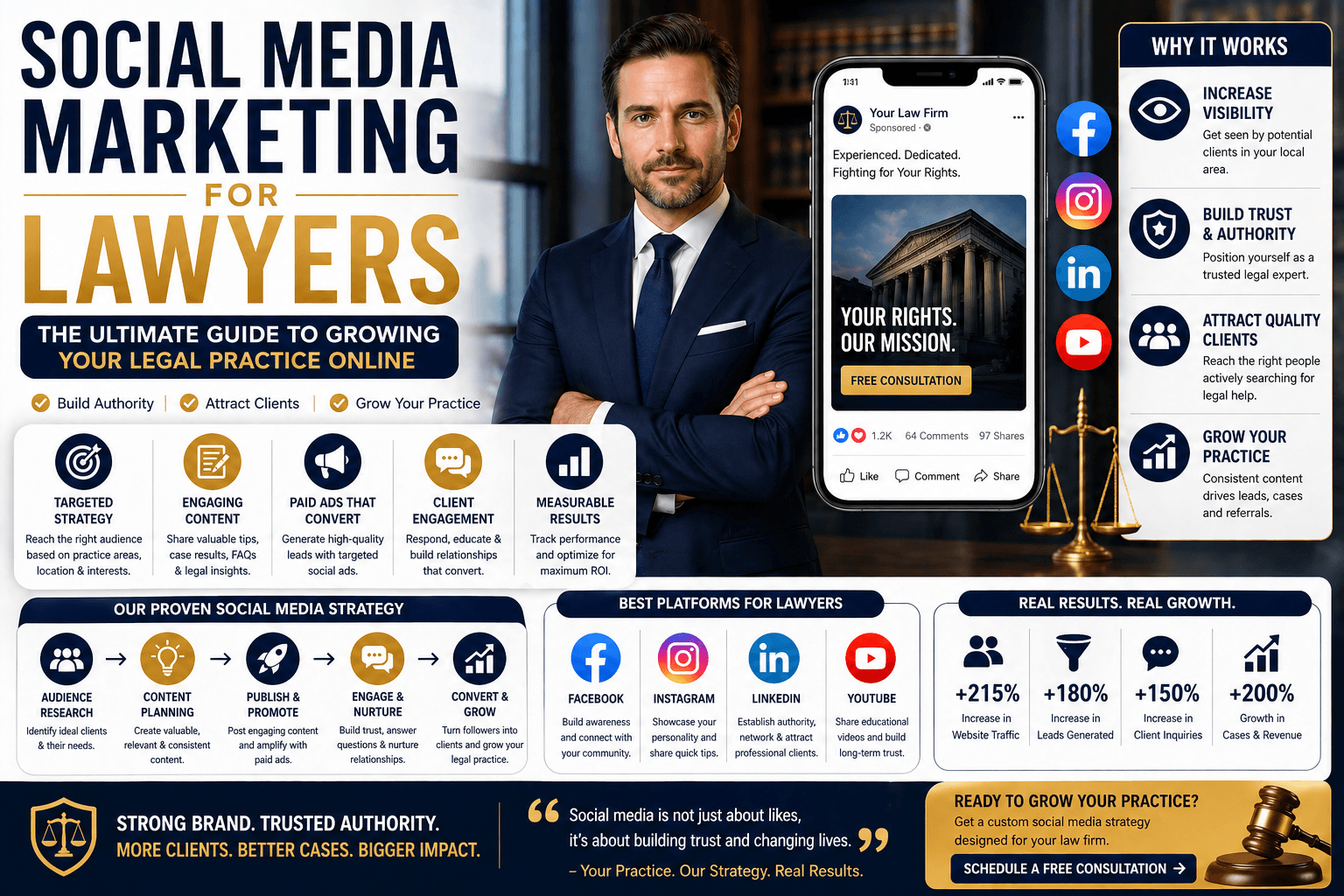
Social media marketing for lawyers has become one of the most essential tools for modern law firms. In a digital-first world, clients search online for legal services before picking up the phone. A strong social media presence not only increases visibility but also builds trust, authority, and client engagement.
By leveraging platforms like LinkedIn, Facebook, Instagram, and YouTube, lawyers can share knowledge, connect with clients, and showcase their expertise to a wider audience.
Why Social Media Marketing Matters for Lawyers
1. Build Authority and Thought Leadership
Consistently sharing educational content and legal insights positions your firm as a thought leader. Social media marketing for lawyers helps demonstrate expertise in areas like personal injury, corporate law, or intellectual property.
2. Reach a Broader Audience
With social media marketing for lawyers, your firm can reach beyond your local community. This is especially valuable for niche practice areas or B2B legal services.
3. Educate and Engage Potential Clients
Social media posts explaining legal processes make complex topics more understandable and approachable for potential clients.
4. Cost-Effective Promotion
Unlike traditional advertising, social media marketing for lawyers allows for precise targeting, making campaigns more cost-effective while still delivering measurable ROI.
Choosing the Right Social Media Platforms
Different platforms work for different goals:
- LinkedIn – Best for professional networking, sharing articles, and B2B client engagement.
- Facebook – Engages local audiences and supports community-focused content.
- Instagram – Great for visual storytelling, behind-the-scenes posts, and connecting with younger clients.
- Twitter/X – Ideal for sharing news, updates, and quick legal tips.
- YouTube – Excellent for explainer videos, webinars, and visual legal education.
Tip: Focus on 2–3 platforms where your target audience is most active to maximize results.
Types of Content Lawyers Should Share
- Educational Articles and Blog Posts – For example, “Top 5 Things to Know Before Filing for Divorce.”
- Case Studies – Anonymized success stories demonstrate credibility.
- Legal News Updates – Share new laws, regulations, or landmark cases.
- FAQs and Tips – Short, digestible content that answers common questions.
- Video Content – Live Q&A sessions, explainer videos, or client testimonials.
- Infographics – Simplify legal topics visually to boost engagement.
- Behind-the-Scenes Posts – Showcase your team, culture, and community involvement.
Using these content types consistently is a key part of effective social media marketing for lawyers.
Creating an Effective Social Media Strategy
Step 1: Define Goals
Are you aiming to grow your audience, generate leads, or build authority?
Step 2: Identify Your Audience
Understand your clients’ demographics, legal needs, and social media habits.
Step 3: Plan a Content Calendar
Scheduling posts ahead of time ensures consistency and relevance.
Step 4: Engage with Followers
Respond promptly to comments, questions, and messages to foster trust.
Step 5: Competitor Analysis
Monitor competitors’ content and engagement to identify gaps or opportunities.
Step 6: Optimize and Adjust
Use analytics to fine-tune your strategy for better results over time.
Advanced Social Media Marketing Techniques
- Repurpose Content – Turn blog posts into LinkedIn articles, Instagram posts, or YouTube scripts.
- Live Sessions and Webinars – Build credibility and engage clients in real-time.
- SEO-Friendly Posts – Include relevant keywords and hashtags in captions and posts.
- Collaborations – Partner with influencers, experts, or local businesses.
- Automated Chatbots – Handle inquiries and bookings efficiently.
These techniques take social media marketing for lawyers from basic to highly effective.
Social Media Advertising for Law Firms
Paid campaigns can increase reach significantly:
- Facebook & Instagram Ads – Target by location, age, and interests.
- LinkedIn Sponsored Content – Reach professionals for B2B legal services.
- Retargeting Ads – Engage visitors who have already shown interest in your services.
Always include a clear call-to-action, such as “Schedule a Free Consultation” or “Download Our Legal Guide.”
Measuring Success and Analytics
Key performance indicators for social media marketing for lawyers include:
- Engagement Rate – Likes, comments, shares
- Click-Through Rate – Traffic to your website or landing pages
- Leads Generated – Inquiries or consultation requests
- Follower Growth – Brand visibility
Tools like Google Analytics, LinkedIn Analytics, and Facebook Insights help track these metrics effectively.
Ethical Considerations and Legal Compliance
Lawyers must follow strict guidelines on social media:
- Do not offer direct legal advice online.
- Keep client information confidential.
- Disclose sponsorships or partnerships.
- Follow state bar advertising rules.
Social media marketing for lawyers must balance marketing with ethics to maintain trust.
Common Mistakes Lawyers Make on Social Media
- Posting inconsistently or infrequently
- Over-promoting services instead of educating
- Ignoring engagement and messages
- Not tracking analytics or refining strategy
- Violating ethical rules or soliciting clients improperly
Avoiding these mistakes ensures your campaigns are professional and effective.
Case Studies: Law Firms Excelling on Social Media
- Corporate Law Firm – Uses LinkedIn and webinars to educate and attract startups.
- Personal Injury Law Firm – Leverages Instagram and Facebook ads with video testimonials.
- IP Law Firm – Publishes YouTube videos and LinkedIn posts to teach clients about IP law.
Key takeaway: Consistency, valuable content, and platform-specific strategies deliver measurable results.
FAQ – Social Media Marketing for Lawyers
1. Why is social media marketing important for law firms?
Social media helps law firms build trust, showcase expertise, and connect with potential clients. Platforms like LinkedIn, Facebook, and Instagram allow lawyers to share valuable insights, success stories, and legal updates to establish credibility.
2. Which social media platforms are best for lawyers?
- LinkedIn – Ideal for professional networking and B2B connections.
- Facebook – Good for community engagement and client education.
- Instagram – Effective for brand storytelling and client awareness campaigns.
- X (formerly Twitter) – Useful for sharing legal news and thought leadership.
3. How can lawyers maintain compliance on social media?
Lawyers must follow advertising and ethics rules set by their local bar associations. This includes avoiding misleading claims, respecting client confidentiality, and properly disclaiming case outcomes or testimonials.
4. What type of content should law firms post?
- Legal tips and insights
- Case studies (anonymized for privacy)
- Client testimonials and success stories
- Firm news, awards, and events
- Educational videos and blog links
5. How often should a law firm post on social media?
Consistency is key. Posting 2–4 times per week on major platforms is recommended, but quality and relevance are more important than quantity.
6. Can social media actually generate clients for lawyers?
Yes! By sharing helpful, authoritative content, law firms can attract potential clients, improve brand visibility, and foster long-term trust, ultimately leading to inquiries and consultations.
7. Should law firms run paid social media campaigns?
Paid campaigns can target specific demographics, geographic areas, or legal needs, which is especially effective for specialized practice areas like personal injury, family law, or estate planning.
8. How do law firms measure success on social media?
Key metrics include:
- Engagement (likes, shares, comments)
- Follower growth
- Website traffic from social posts
- Leads or inquiries generated
Conclusion
Social media marketing for lawyers is no longer optional. By sharing valuable content, engaging with audiences, running targeted campaigns, and maintaining ethical standards, law firms can grow their brand, generate leads, and educate clients effectively.