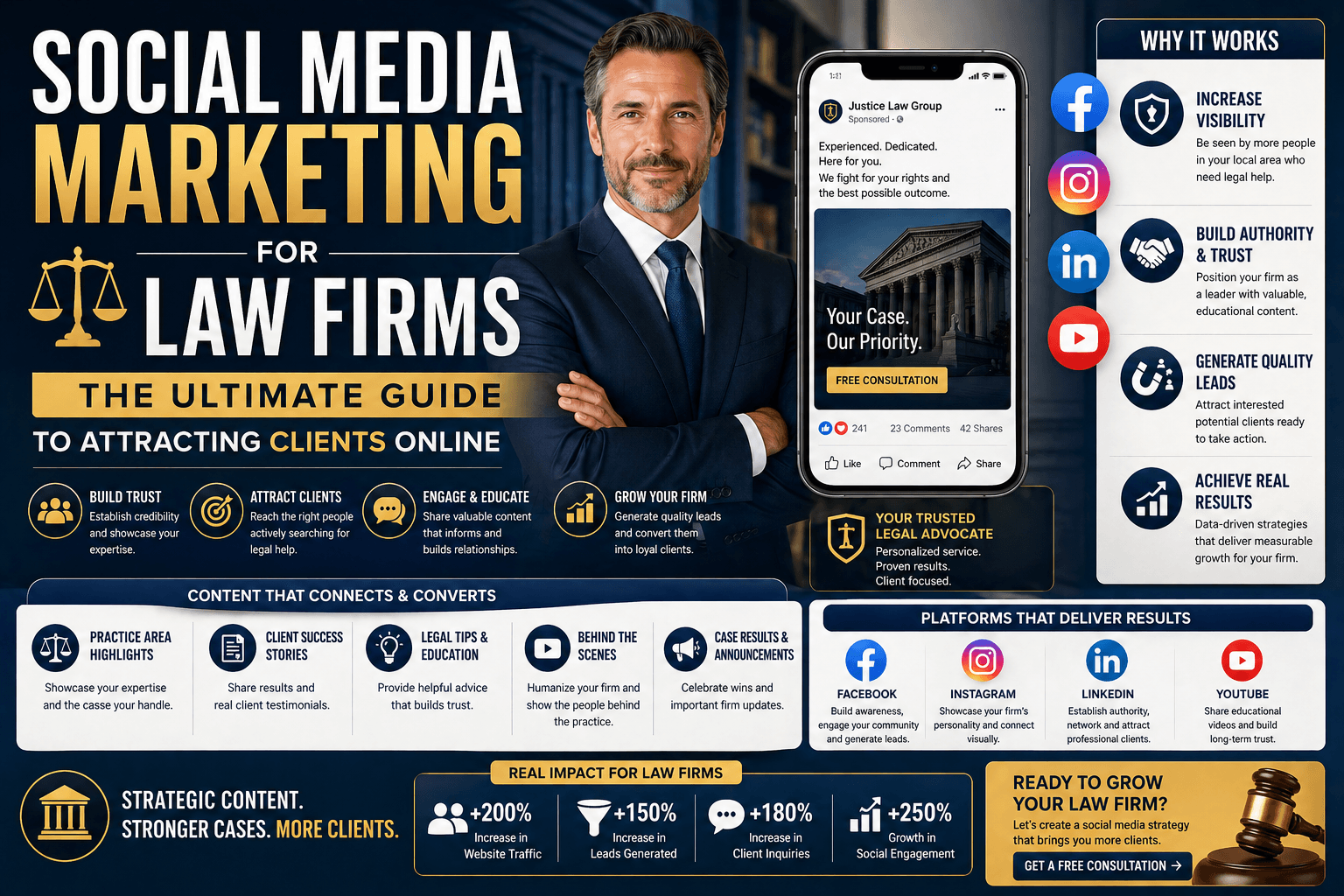
In today’s digital-first landscape, potential clients research law firms online before making contact. Social media marketing for law firms is no longer optional—it is an essential strategy to increase visibility, establish credibility, and generate qualified leads.
By leveraging platforms such as Facebook, LinkedIn, Instagram, and Twitter/X, law firms can educate clients, showcase expertise, and engage with local communities, all while differentiating themselves from competitors. This guide explores everything attorneys need to know about social media marketing, from organic strategies to paid campaigns, compliance considerations, and performance measurement.
Why Social Media Marketing Matters for Law Firms
Legal services are inherently trust-based. Clients want to work with lawyers they know, like, and trust. Social media provides law firms with a platform to:
- Showcase Expertise: Share case studies, legal insights, or FAQs.
- Build Credibility and Trust: Regular, informative posts signal professionalism and reliability.
- Engage with Prospective Clients: Answer questions, provide tips, and respond to messages.
- Increase Visibility in Local Searches: Social activity enhances SEO and strengthens brand presence.
- Generate Leads: Paid campaigns and targeted posts can directly drive consultation bookings.
Without a structured social media strategy, law firms risk losing visibility to competitors who are actively engaging online.
Common Challenges Law Firms Face on Social Media
- Compliance and Advertising Restrictions
Legal advertising is highly regulated. Posts must comply with state bar rules, avoiding misleading claims or guarantees. - Low Engagement
Legal content can seem dense. Law firms often struggle to make posts relatable or engaging to their audience. - Platform Selection Confusion
Not all social media platforms are equally effective for all legal services. Choosing the wrong platform wastes time and resources. - Inconsistent Posting
Irregular posting diminishes credibility and lowers organic reach.
Key Platforms for Social Media Marketing for Law Firms
1. LinkedIn
Best For: B2B legal services, corporate law, professional networking
Content Ideas: Articles, professional insights, case studies, client success stories
Tips: Use LinkedIn Ads to target companies or professionals in specific industries.
2. Facebook
Best For: Local law firms, personal legal services
Content Ideas: Educational posts, community engagement, events, webinars
Tips: Facebook Lead Ads can collect consultation inquiries directly.
3. Instagram
Best For: Visual storytelling and brand personality
Content Ideas: Office culture, staff introductions, infographic legal tips, short Reels
Tips: Use Instagram Stories to highlight FAQs or legal myths.
4. Twitter/X
Best For: Legal updates, current affairs, thought leadership
Content Ideas: Legal commentary, law changes, blog promotion
Tips: Use hashtags relevant to local law and trending topics to increase reach.
Organic vs Paid Social Media Marketing
Organic Marketing
- Focuses on building a loyal audience over time
- Includes posting articles, videos, infographics, and engaging directly with followers
- Cost-effective but slower to generate results
Paid Marketing
- Involves boosting posts, running sponsored ads, or retargeting campaigns
- Provides precise audience targeting based on demographics, location, interests, and behavior
- Delivers faster, measurable results in terms of leads and consultations
Tip: Combine both strategies for maximum reach. Organic content builds credibility while paid ads amplify visibility to targeted prospects.
Creating Effective Content for Law Firms
Content is the backbone of social media marketing. High-quality, engaging posts help establish authority and attract leads.
1. Educational Posts
- Explain legal processes in simple terms
- Example: “5 Things You Must Know Before Filing a Divorce”
- Format: Short paragraphs, bullet points, or infographics
2. Case Studies & Client Success Stories
- Showcase anonymized results of cases
- Emphasize problem, solution, and outcome
3. Video Content
- Short 30–60 second videos explaining common legal questions
- Example: “What to Do After a Car Accident”
4. Behind-the-Scenes & Culture
- Introduce lawyers and staff
- Share pro bono work or community engagement
5. Interactive Content
- Quizzes (“Do You Need a Will?”)
- Polls about common legal myths
- Encourage followers to comment or ask questions
Paid Social Media Marketing for Law Firms
Paid campaigns accelerate visibility and can target specific local or professional audiences.
Best Practices:
- Target Your Ideal Client: Use location, age, interests, and professional criteria.
- Choose the Right Objective: Lead generation, website clicks, or brand awareness
- A/B Test Creatives: Test multiple images, headlines, and CTAs to identify what resonates
- Use Retargeting: Re-engage website visitors who didn’t convert
- Optimize Landing Pages: Ensure ad clicks lead to high-converting consultation forms
Compliance Tips for Legal Social Media Marketing
- Avoid Guarantees: Do not promise results in posts or ads
- Use Disclaimers: For educational content, clarify it does not constitute legal advice
- Check Local Regulations: Each state or country may have different advertising rules for law firms
- Get Approvals: Internal review by partners or compliance team before posting
Measuring Success
Metrics to track the effectiveness of social media marketing for law firms:
| Objective | Metrics |
|---|---|
| Awareness | Impressions, reach, followers |
| Engagement | Likes, shares, comments, video views |
| Lead Generation | Form submissions, consultation bookings |
| Conversion | Conversion rate, cost per lead, ROI |
Regularly monitor and adjust campaigns for maximum effectiveness.
Advanced Strategies
- Use Lookalike Audiences to target people similar to existing clients
- Dynamic Retargeting for potential clients who visited your website
- LinkedIn Sponsored Content for B2B corporate legal services
- Video Ads on Instagram/Facebook to increase engagement and trust
- Cross-Platform Campaigns for maximum reach
Trends in Social Media Marketing for Law Firms (2026)
- AI-Generated Content: Use AI for blog summaries, social posts, and FAQs
- Short-Form Video Content: Reels, TikToks, and Stories are highly engaging
- Interactive Tools: Polls, quizzes, and chatbots improve lead capture
- Hyperlocal Targeting: Ads and content tailored to specific cities or regions
- Analytics-Driven Strategy: Real-time data to adjust campaigns instantly
FAQ – Social Media Marketing for Law Firms
Q1: What is social media marketing for law firms?
Social media marketing for law firms is the strategic use of platforms like Facebook, LinkedIn, Instagram, and Twitter/X to promote legal services, educate potential clients, and generate leads online.
Q2: Why is social media marketing important for law firms?
It allows law firms to increase visibility, build credibility, engage clients, and attract new leads in a competitive market.
Q3: Which social media platforms work best for law firms?
- LinkedIn: Professional networking and B2B legal services
- Facebook: Local engagement and lead generation
- Instagram: Visual storytelling and brand personality
- Twitter/X: Legal news, updates, and thought leadership
Q4: How often should law firms post content?
Law firms should post 2–4 times per week, including a mix of educational content, firm news, client success stories, and interactive posts.
Q5: Can law firms run paid social media campaigns?
Yes. Paid campaigns on platforms like Facebook, LinkedIn, and Instagram can target specific demographics, retarget website visitors, and increase consultations and leads.
Q6: What types of content are most effective?
- Educational posts explaining legal processes
- Case studies or anonymized client success stories
- Short video content addressing common legal questions
- Behind-the-scenes posts showing firm culture
- Interactive content like polls or quizzes
Q7: How can law firms measure social media marketing success?
Track metrics such as engagement, website clicks, leads generated, and conversion rates to ensure your campaigns deliver measurable ROI.
Q8: Does social media marketing improve local SEO for law firms?
Yes. Location-targeted content, client reviews, and consistent social presence improve local search visibility, complementing your SEO strategy alongside social media marketing for law firms.
Final Thoughts
Social media marketing for law firms is essential for establishing authority, engaging potential clients, and generating leads in today’s competitive digital environment. By combining organic content, paid campaigns, and compliance-focused strategies, law firms can:
- Increase online visibility
- Build trust and credibility
- Generate high-quality leads
- Strengthen relationships with current and prospective clients
Consistency, quality content, and continuous optimization are the keys to success. Law firms that embrace social media strategically will gain a competitive advantage, attract more clients, and grow sustainably in the digital era.