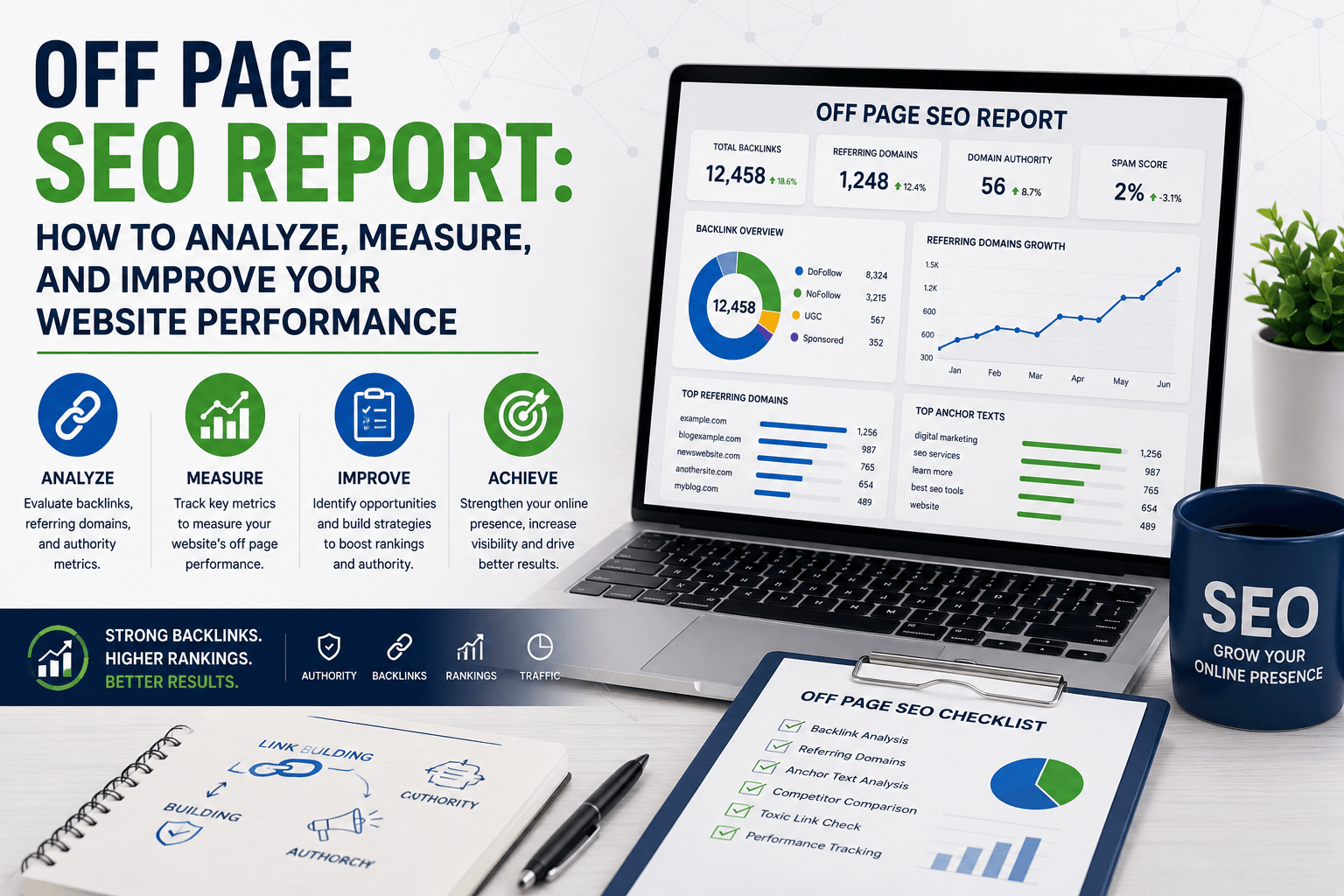
An off page SEO report is an essential document that evaluates the performance of your website’s off-page optimization efforts. It provides valuable insights into backlinks, referring domains, brand mentions, social signals, local citations, and other external SEO factors that influence your search engine rankings.
Whether you’re an SEO professional, digital marketer, or business owner, regularly reviewing an off-page SEO report helps you identify strengths, uncover opportunities, and develop a more effective link-building strategy.
This comprehensive guide explains what an off-page SEO report is, why it matters, the metrics it should include, and how to create one that drives measurable SEO results.
What Is an Off Page SEO Report?
An off page SEO report is a detailed analysis of all SEO activities performed outside your website that affect your search engine visibility. It measures the quality and impact of external signals such as backlinks, referring domains, brand authority, online mentions, and referral traffic.
Unlike on-page SEO reports, which focus on website content and technical optimization, off-page reports evaluate how other websites and online platforms contribute to your site’s authority and rankings.
Why Is an Off Page SEO Report Important?
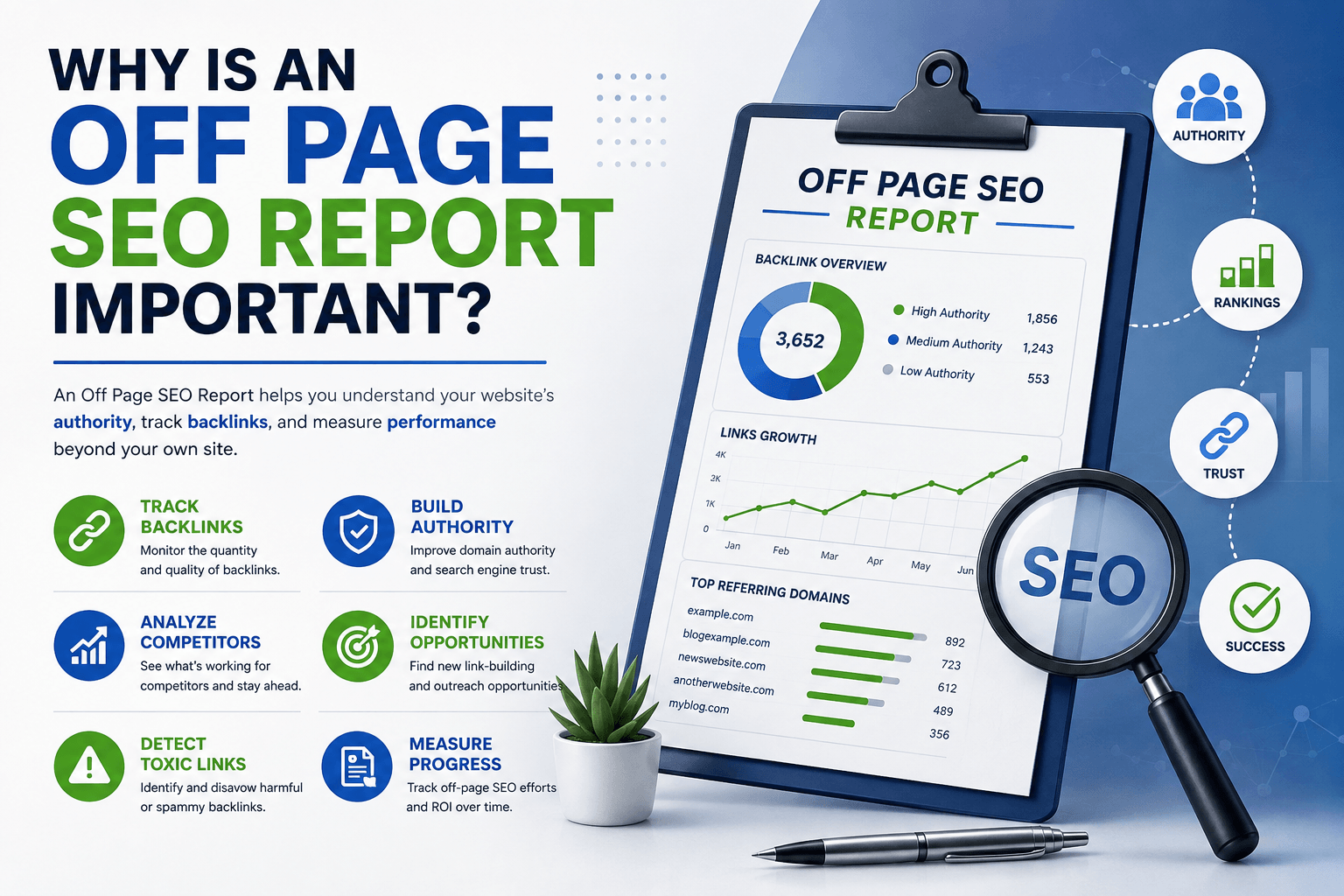
Monitoring off-page SEO helps you understand whether your link-building and digital marketing efforts are delivering positive results.
Benefits include:
- Tracking backlink growth
- Measuring domain authority improvements
- Identifying toxic backlinks
- Monitoring referral traffic
- Evaluating competitor backlink strategies
- Improving Google rankings
- Discovering new link-building opportunities
- Building long-term website authority
Without regular reporting, it becomes difficult to know which off-page strategies are producing the best results.
Key Metrics to Include in an Off Page SEO Report
1. Total Backlinks
Your report should show the total number of backlinks pointing to your website.
Include:
- New backlinks
- Lost backlinks
- Follow links
- Nofollow links
Quality matters more than quantity.
2. Referring Domains
A higher number of unique referring domains generally indicates stronger website authority.
Track:
- New referring domains
- Lost domains
- High-authority referring websites
- Industry relevance
3. Domain Authority
Domain Authority (DA) estimates the strength of your website compared to competitors.
Although it isn’t a Google ranking factor, it’s useful for measuring overall SEO progress.
4. Page Authority
Identify which pages attract the strongest backlinks and authority.
Popular pages often include:
- Blog posts
- Ultimate guides
- Research articles
- Free tools
5. Anchor Text Distribution
Review the anchor text used in incoming backlinks.
A healthy profile contains:
- Branded anchors
- Partial-match keywords
- Exact-match keywords (used sparingly)
- Generic anchors
- Naked URLs
Avoid excessive keyword-rich anchor text.
6. Link Quality
Evaluate every backlink based on:
- Domain authority
- Website relevance
- Editorial placement
- Spam score
- Organic traffic
Prioritize quality over quantity.
7. Toxic Backlinks
Identify harmful links that could negatively impact rankings.
Signs include:
- Spam websites
- Link farms
- Irrelevant directories
- Low-quality blog networks
Regular audits help maintain a healthy backlink profile.
8. Brand Mentions
Track mentions of your business across:
- News websites
- Industry blogs
- Forums
- Podcasts
- Social media
Even unlinked mentions contribute to online authority.
9. Referral Traffic
Referral traffic reveals which backlinks actually send visitors to your website.
Analyze:
- Top referring websites
- Sessions
- Bounce rate
- Conversion rate
High-performing referral sources deserve additional outreach.
10. Competitor Backlink Analysis
Compare your backlink profile with competitors.
Review:
- Shared backlinks
- Missed opportunities
- High-authority domains
- Link growth trends
Competitive analysis uncovers valuable outreach prospects.
Best Tools for Creating an Off Page SEO Report
Several SEO tools simplify off-page reporting.
Popular options include:
- Google Search Console
- Google Analytics 4
- Ahrefs
- Semrush
- Moz Pro
- Majestic
- Screaming Frog
- BuzzSumo
Combining multiple tools provides a more complete picture of your off-page performance.
How to Create an Off Page SEO Report
Follow these steps:
Step 1: Collect Backlink Data
Export backlink information from your preferred SEO tool.
Include:
- Referring domains
- Anchor text
- Link type
- Authority metrics
Step 2: Analyze Link Quality
Separate valuable backlinks from low-quality ones.
Focus on:
- Relevant websites
- Editorial links
- Trusted domains
Step 3: Measure Link Growth
Compare reports monthly.
Track:
- New backlinks
- Lost backlinks
- Referring domains
- Domain authority changes
Step 4: Review Competitors
Analyze competitors ranking above your website.
Identify:
- Their strongest backlinks
- Guest posting opportunities
- Resource pages
- PR mentions
Step 5: Document Recommendations
Every report should include actionable improvements.
Examples:
- Acquire links from industry blogs
- Recover lost backlinks
- Replace broken links
- Improve outreach campaigns
- Build digital PR strategies
Best Practices for Off Page SEO Reporting
Follow these recommendations:
- Update reports monthly.
- Focus on high-quality backlinks.
- Monitor toxic links regularly.
- Compare competitor performance.
- Measure referral traffic.
- Track keyword ranking improvements.
- Record outreach success rates.
- Review brand mentions consistently.
- Analyze link diversity.
- Set measurable SEO goals.
Common Mistakes in Off Page SEO Reporting
Avoid these errors:
- Focusing only on backlink quantity
- Ignoring toxic backlinks
- Not monitoring lost links
- Overlooking referral traffic
- Forgetting competitor analysis
- Ignoring anchor text diversity
- Measuring vanity metrics only
- Creating reports without recommendations
A successful report combines meaningful data with actionable insights.
Off Page SEO Report Template
A professional report should include:
| Section | Description |
|---|---|
| Executive Summary | Overall SEO performance |
| Backlink Overview | Total backlinks and growth |
| Referring Domains | New and lost domains |
| Link Quality | Authority and relevance |
| Anchor Text | Distribution analysis |
| Referral Traffic | Top traffic sources |
| Brand Mentions | Online visibility |
| Competitor Analysis | Backlink comparison |
| Toxic Links | Harmful backlink review |
| Recommendations | Next action plan |
Benefits of Regular Off Page SEO Reports
Businesses that monitor off-page SEO consistently can:
- Improve Google rankings
- Build stronger authority
- Increase referral traffic
- Discover new backlink opportunities
- Strengthen brand reputation
- Identify SEO issues early
- Improve ROI from SEO campaigns
- Make data-driven marketing decisions
Conclusion
An off page SEO report is one of the most valuable tools for measuring your website’s authority and external SEO performance. By tracking backlinks, referring domains, brand mentions, referral traffic, and competitor strategies, you can identify opportunities that improve rankings and long-term organic growth.
Instead of focusing only on backlink quantity, prioritize high-quality, relevant links and monitor your progress with consistent monthly reports. A well-structured off-page SEO report provides the insights needed to refine your strategy, strengthen your online presence, and achieve sustainable SEO success.
Frequently Asked Questions (FAQs)
1. What is an off page SEO report?
An off page SEO report analyzes external SEO factors such as backlinks, referring domains, brand mentions, referral traffic, and link quality to measure website authority and search performance.
2. Why is an off page SEO report important?
An off page SEO report helps identify strengths, weaknesses, backlink opportunities, toxic links, and competitor strategies, enabling better SEO decisions.
3. What should an off page SEO report include?
A complete off page SEO report should include backlink analysis, referring domains, domain authority, anchor text distribution, referral traffic, competitor comparison, toxic backlinks, and actionable recommendations.
4. How often should I create an off page SEO report?
Most SEO professionals recommend generating an off page SEO report every month to monitor progress, measure campaign performance, and adjust strategies as needed.
5. Which tools are best for creating an off page SEO report?
Popular tools for creating an off page SEO report include Google Search Console, Google Analytics 4, Ahrefs, Semrush, Moz Pro, Majestic, and Screaming Frog.