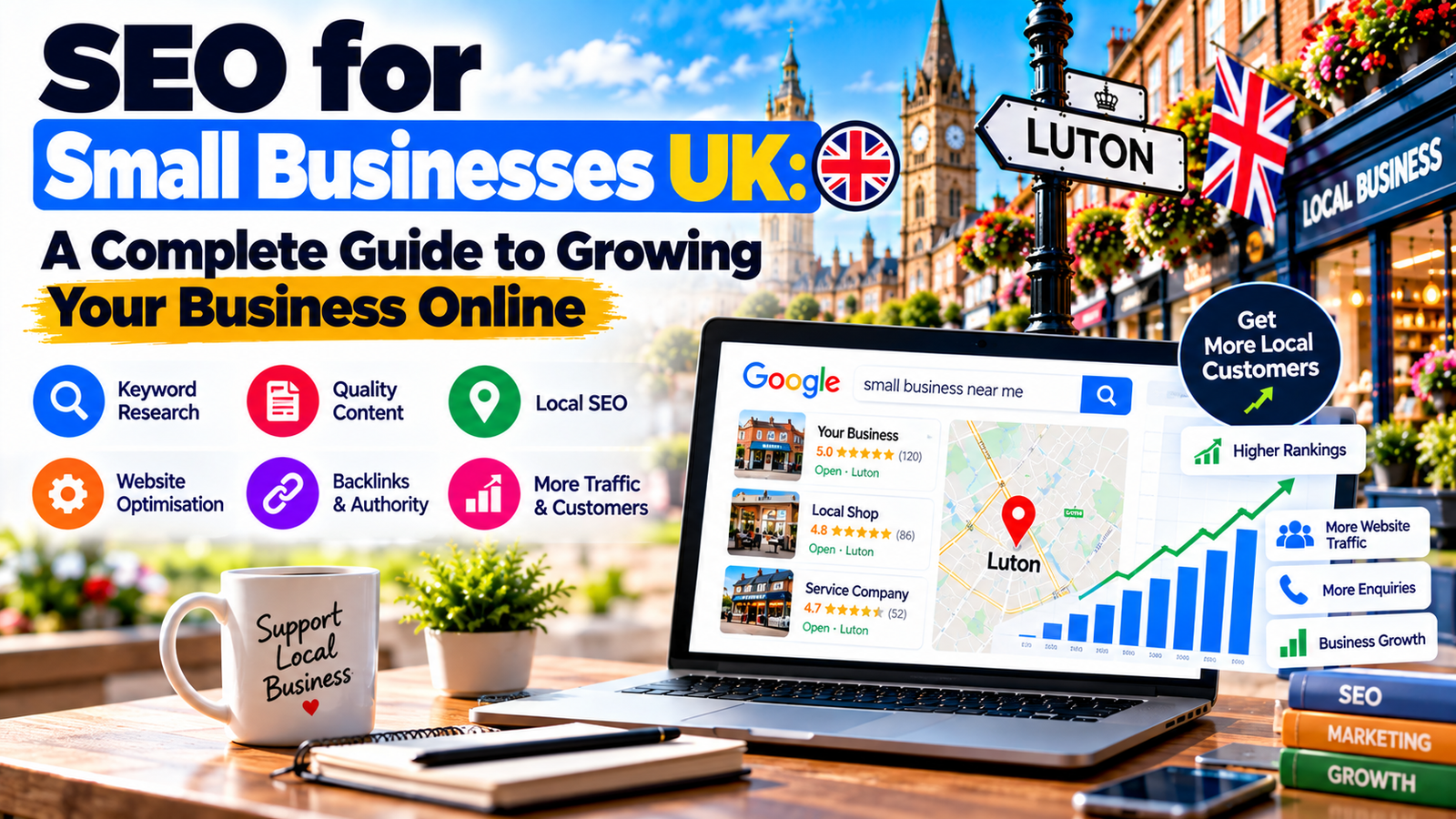
In today’s competitive digital marketplace, having a website is not enough to attract customers. Small businesses across the UK need to appear in search engine results when potential customers look for their products or services. This is where SEO for small businesses UK becomes essential.
Search engine optimisation (SEO) helps businesses improve their online visibility, attract relevant website visitors, and generate more enquiries and sales without relying entirely on paid advertising. Whether you run a local shop, an online store, a trades business, or a professional service, a well-planned SEO strategy can help you compete with larger companies.
In this guide, we explore the most effective SEO strategies for small businesses in the UK, including local SEO, keyword research, website optimisation, content marketing, and performance tracking.
What Is SEO for Small Businesses in the UK?
SEO for small businesses involves improving a website and its online presence so that search engines can understand its content and show it to people searching for relevant products or services.
Unlike large companies with substantial marketing budgets, small businesses often need cost-effective strategies that deliver sustainable results. SEO helps businesses target specific audiences, reach customers in relevant locations, and build trust through useful content and a professional online presence.
For example, a plumber in Luton might optimise their website for “emergency plumber in Luton”, while an online clothing store could target searches related to its products and customer needs.
A successful SEO strategy combines technical improvements, relevant content, keyword targeting, and a positive user experience.
10 Powerful SEO Strategies for Small Businesses UK
1. Conduct Keyword Research
Keyword research helps you understand what your potential customers search for on Google. Choosing relevant keywords allows you to create content that matches their needs and search intent.
Start by identifying the main products or services your business offers. Then research the phrases customers might use when looking for those services.
For example:
- SEO services for small businesses
- Local SEO agency UK
- Affordable SEO services UK
- Website design for small businesses
- SEO consultant in Luton
Focus on relevant keywords rather than simply choosing terms with the highest search volume. More specific phrases can help you reach people who are looking for exactly what you offer.
2. Optimise Your Website Pages
On-page SEO helps search engines understand each page and its relevance to a search query. It also makes your content easier for visitors to navigate.
To improve your website’s on-page SEO:
- Include your primary keyword naturally in the page title and main heading.
- Write clear, descriptive meta titles and meta descriptions.
- Use logical H2 and H3 headings.
- Create informative content that answers customer questions.
- Add descriptive alt text to relevant images.
- Use internal links to connect related pages.
Avoid keyword stuffing. Your content should sound natural and provide genuine value to readers.
3. Improve Your Google Business Profile
For businesses serving customers in specific locations, a Google Business Profile can support local visibility on Google Search and Maps.
Complete your profile with accurate business information, including your name, address or service area, telephone number, opening hours, website, and relevant business categories.
You should also upload genuine photographs, update your profile when information changes, and respond professionally to customer reviews.
A well-maintained profile can help potential customers discover your business and contact you. However, local rankings depend on several factors, and no profile can guarantee a particular position.
4. Focus on Local SEO
Local SEO is especially important for small businesses that serve customers in a particular town, city, or region.
For example, a business operating in Bedfordshire might create relevant pages for Luton, Bedford, Dunstable, or other areas it genuinely serves.
Effective local SEO activities include:
- Targeting location-specific keywords.
- Creating useful local service pages.
- Keeping business information consistent across directories.
- Earning genuine customer reviews.
- Building relationships with relevant local organisations.
- Optimising your Google Business Profile.
Make every location page useful and unique. Avoid creating multiple pages that differ only by town name, as these may provide little value to visitors.
5. Publish High-Quality Content
Content marketing helps small businesses demonstrate expertise, answer customer questions, and attract visitors searching for useful information.
You can publish blog articles, service guides, tutorials, frequently asked questions, case studies, and buying guides related to your industry.
For example, a digital marketing agency could write articles about local SEO, website optimisation, Google Ads, and SEO pricing for UK businesses.
Good content should answer a specific question, provide accurate information, and help readers decide what to do next. Update older articles when information becomes outdated and link relevant articles to your service pages.
6. Make Your Website Mobile-Friendly
Many people use smartphones to research businesses, compare services, and make purchases. A website that is difficult to use on a mobile device may discourage potential customers.
Check that your website:
- Adapts to different screen sizes.
- Has readable text and clear navigation.
- Uses buttons that are easy to tap.
- Loads important content efficiently.
- Provides a simple contact or checkout process.
You can use Google Search Console and PageSpeed Insights to identify technical and usability issues. Improving the mobile experience supports visitors and can contribute to broader SEO performance.
7. Improve Website Speed and Technical SEO
Technical SEO helps search engines crawl, understand, and index your website. It also supports a better experience for visitors.
Start by checking for broken links, incorrect redirects, duplicate pages, indexing problems, and missing or incorrect sitemap information.
Other useful improvements include:
- Creating and submitting an XML sitemap where appropriate.
- Using HTTPS to secure your website.
- Fixing important crawl and indexing errors.
- Improving Core Web Vitals where possible.
- Using structured data when it accurately describes your content.
- Ensuring important pages can be reached through internal links.
Technical SEO does not require every business to make complicated changes immediately. Prioritise issues that prevent important pages from being found or used effectively.
8. Build Quality Backlinks
Backlinks are links from other websites to your website. Relevant, trustworthy backlinks can help search engines understand your website’s place within your industry.
Small businesses can develop links naturally by publishing useful resources, working with legitimate local organisations, participating in relevant industry events, and earning coverage from local publications.
You can also look for genuine business directories and professional associations that are relevant to your company.
Avoid buying large quantities of low-quality links or participating in link schemes designed to manipulate search rankings. Focus on relevance, credibility, and long-term value.
9. Encourage Genuine Customer Reviews
Customer reviews can influence how people perceive your business and whether they decide to contact you. They are particularly useful for businesses that depend on local customers.
Make it easy for satisfied customers to leave honest feedback. You can request reviews after a completed purchase or service, provided you follow the relevant platform’s policies.
Respond politely to both positive and negative feedback. Address legitimate complaints professionally and avoid sharing private customer information.
Never buy fake reviews or offer incentives in ways that violate platform policies. Authentic customer feedback is more valuable for building lasting trust.
10. Track SEO Performance and Improve Your Strategy
SEO requires ongoing measurement and improvement. Tracking results helps you understand which activities are working and where additional effort is needed.
Useful tools include Google Search Console for search performance and indexing information, Google Analytics for website engagement and conversions, and Google Business Profile performance data where available.
Monitor metrics such as:
- Organic clicks and search impressions.
- Rankings for relevant search queries.
- Website enquiries and qualified leads.
- Phone calls and contact form submissions.
- Sales or bookings attributed to organic search.
- Performance of important landing pages.
Do not judge success by rankings alone. The ultimate goal is to attract relevant visitors and turn them into customers.
How Much Does SEO Cost for Small Businesses in the UK?
The cost of SEO depends on your business goals, website condition, industry competition, target locations, and the amount of work required.
Small businesses may choose to manage SEO themselves, hire a freelancer, work with an agency, or combine in-house activities with professional support.
Typical planning ranges might look like this:
| SEO service | Illustrative budget |
|---|---|
| DIY SEO using free tools | £0–£100 per month, excluding your time |
| Basic local SEO support | £200–£500 per month |
| Ongoing small-business SEO | £500–£1,000 per month |
| More competitive or multi-location SEO | £1,000+ per month |
These figures are illustrative budgeting estimates, not verified market averages or fixed industry prices. Actual quotes vary considerably, and one-off projects may be priced differently.
Before hiring an SEO provider, ask what the package includes, who will complete the work, how results will be measured, and whether there are additional costs. Be cautious of guaranteed rankings or promises of immediate results.
Common SEO Mistakes Small Businesses Should Avoid
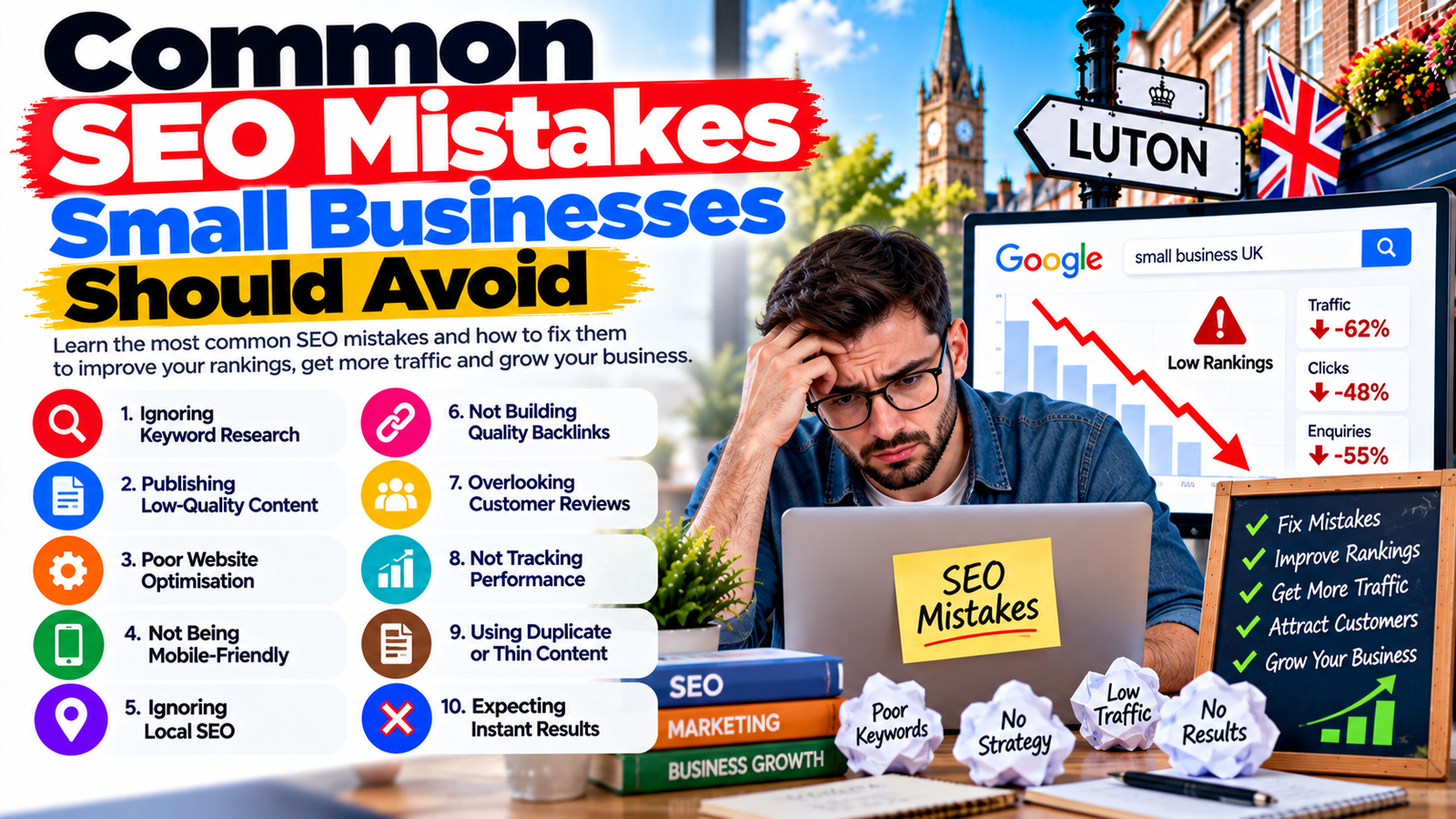
Even a well-designed website can struggle to attract organic traffic if important SEO issues are overlooked.
Common mistakes include:
- Targeting keywords that are unrelated to customer needs.
- Publishing thin or duplicated content.
- Ignoring mobile usability and website performance.
- Using inconsistent business information online.
- Neglecting Google Business Profile updates.
- Building low-quality or manipulative backlinks.
- Failing to measure enquiries and sales.
- Expecting immediate results from SEO.
A consistent strategy focused on customers, technical quality, and useful information is generally more sustainable than chasing quick ranking improvements.
How Long Does SEO Take to Show Results?
SEO is a long-term marketing activity, and results vary depending on competition, website authority, technical condition, and the work completed.
Some improvements, such as fixing indexing problems or correcting inaccurate business information, may have an impact sooner. Building visibility for competitive search terms often takes considerably longer.
Instead of expecting instant rankings, establish clear goals and review performance regularly. Track improvements in search visibility, relevant traffic, leads, and sales over time.
Why Should Small Businesses Invest in SEO?
SEO can support long-term business growth by helping potential customers find relevant products and services through search engines.
Key benefits include:
Greater online visibility: Your business can become easier to discover when people search for relevant services.
More relevant website traffic: Targeting appropriate search queries can attract visitors who are interested in what you offer.
Stronger local presence: Local SEO helps eligible businesses improve their visibility for geographically relevant searches.
Better customer trust: Helpful content, accurate information, and genuine reviews can make your business appear more credible.
Sustainable marketing opportunities: Unlike paid advertising, organic search traffic does not require paying for every individual click, although SEO still requires time and investment.
SEO does not guarantee traffic, enquiries, or sales. Results depend on the quality of your strategy, your market, and the experience you provide to customers.
Conclusion
SEO for small businesses in the UK is an effective way to improve online visibility, reach relevant audiences, and create opportunities for sustainable growth. By researching keywords, optimising website pages, strengthening local SEO, publishing useful content, and monitoring performance, businesses can build a stronger digital presence.
You do not need to implement every strategy at once. Start with the improvements most likely to help your customers, establish measurable goals, and expand your efforts as your business grows.
If you need additional support, working with an experienced SEO consultant or agency can help you develop a strategy suited to your business, target audience, and budget.
Ready to grow your business online? Start improving your SEO today and build a website that helps more potential customers discover your services.
Frequently Asked Questions About SEO for Small Businesses UK
1. What Is SEO for Small Businesses UK?
SEO for Small Businesses UK is the process of improving a small business website’s visibility on Google and other search engines. SEO for Small Businesses UK includes keyword research, on-page SEO, technical SEO, content marketing, and local SEO to help businesses attract more customers and increase website traffic.
2. Why Is SEO for Small Businesses UK Important?
SEO for Small Businesses UK is important because it helps small businesses reach customers who are actively searching for their products or services. With effective SEO for Small Businesses UK, companies can improve search rankings, increase organic traffic, build customer trust, and generate more enquiries without relying entirely on paid advertising.
3. How Much Does SEO for Small Businesses UK Cost?
The cost of SEO for Small Businesses UK depends on the website’s condition, industry competition, business goals, and required services. Basic SEO for Small Businesses UK may involve DIY optimisation, while professional SEO services can include keyword research, content creation, technical improvements, and monthly reporting.
4. What Are the Best SEO Strategies for Small Businesses UK?
The best SEO strategies for small businesses in the UK include keyword research, high-quality content creation, website optimisation, local SEO, and link building. A successful SEO for Small Businesses UK strategy should focus on relevant keywords, helpful content, a user-friendly website, and measurable business results.
5. Can SEO for Small Businesses UK Increase Website Traffic?
Yes, SEO for Small Businesses UK can help increase relevant organic website traffic by improving visibility for searches related to your products and services. Effective SEO for Small Businesses UK targets customer search intent, improves website content, and makes important pages easier for search engines to discover.
6. How Long Does SEO for Small Businesses UK Take to Work?
SEO for Small Businesses UK does not produce guaranteed immediate results. Some website improvements may show benefits sooner, but stronger rankings and sustainable organic growth can take several months or longer, depending on competition, website quality, and the work completed.
7. Is Local SEO Part of SEO for Small Businesses UK?
Yes, local SEO is an important part of SEO for Small Businesses UK for companies serving specific towns, cities, or regions. Local SEO involves optimising your Google Business Profile, targeting location-based keywords, collecting genuine customer reviews, and maintaining consistent business information across relevant directories.
8. Can I Do SEO for Small Businesses UK Without Hiring an Agency?
Yes, you can start SEO for Small Businesses UK yourself by using Google Search Console, researching keywords, improving website pages, publishing useful articles, and optimising your Google Business Profile. However, professional SEO for Small Businesses UK support may be helpful for complex technical issues and highly competitive search terms.
9. Is SEO for Small Businesses UK Better Than Paid Advertising?
SEO for Small Businesses UK can build long-term organic visibility, while paid advertising can generate traffic through paid campaigns. Many small businesses use both strategies to reach potential customers, manage marketing costs, and support business growth.
10. How Do I Choose the Right SEO Services for Small Businesses UK?
To choose the right SEO services for small businesses in the UK, compare experience, deliverables, pricing, communication, and reporting. A reliable provider of SEO for Small Businesses UK should explain its strategy clearly, set realistic expectations, and focus on relevant traffic, enquiries, and conversions rather than guaranteeing first-page rankings.
11. What Tools Help With SEO for Small Businesses UK?
Useful tools for SEO for Small Businesses UK include Google Search Console, Google Analytics, Google Keyword Planner, and Google PageSpeed Insights. These tools help small businesses monitor search performance, research keywords, analyse website traffic, and identify opportunities for improvement.
12. How Can SEO for Small Businesses UK Help Grow My Business?
SEO for Small Businesses UK can support business growth by improving online visibility, attracting relevant visitors, and helping potential customers discover your products or services. With consistent optimisation, useful content, and performance tracking, SEO for Small Businesses UK can become a valuable part of your long-term digital marketing strategy.
Free SEO audit call
Not getting enough enquiries from Google?
I’m Asad Saimon, a UK-based SEO consultant in Luton with ten years’ experience. Book a free 20-minute call and I’ll show you the three biggest things holding your site back — no charge, no obligation, and you work with me directly, not an account manager.