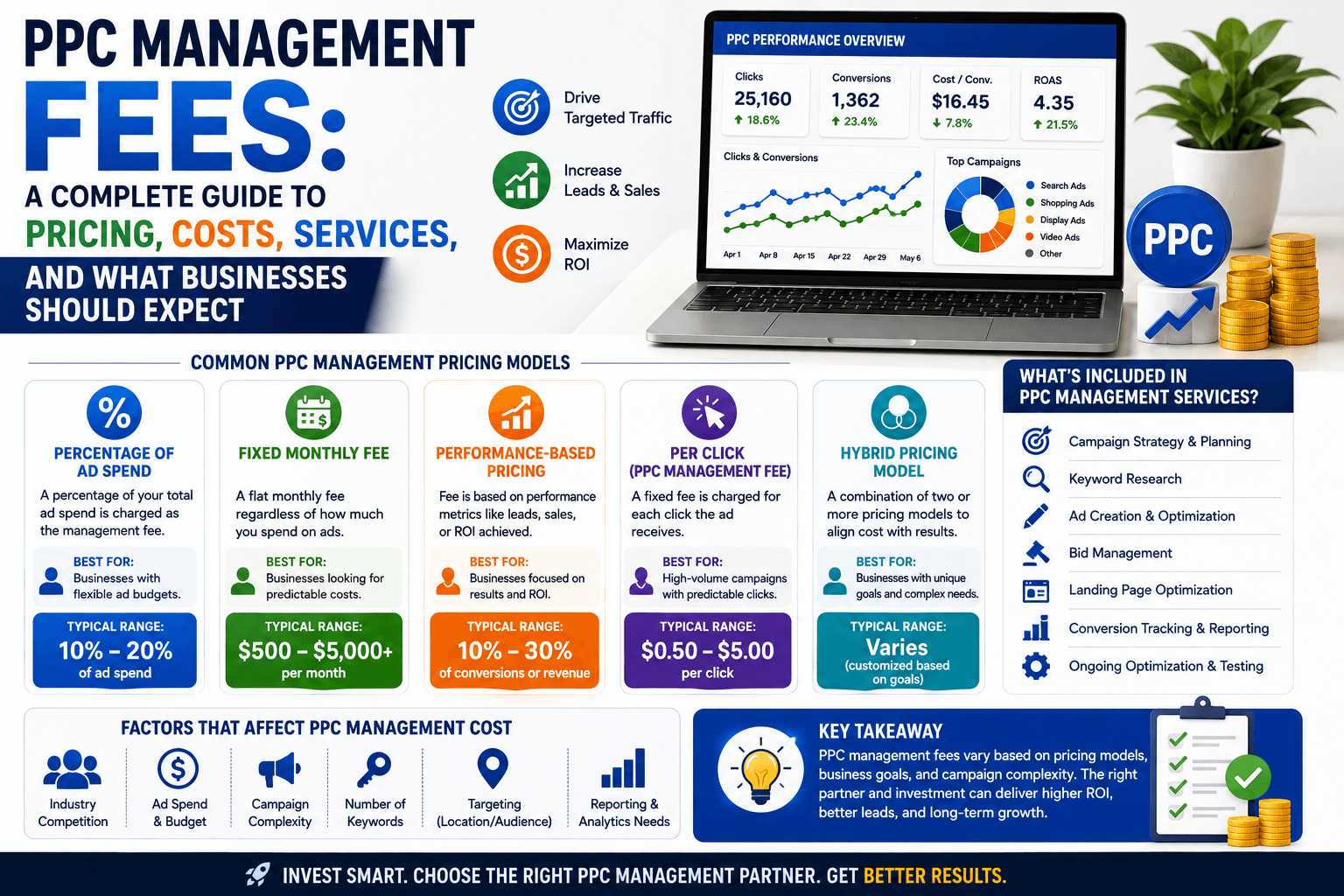
Pay-per-click (PPC) advertising has become one of the most effective digital marketing strategies for businesses looking to generate immediate traffic, leads, and sales. Platforms like Google Ads, Microsoft Ads, Facebook Ads, LinkedIn Ads, and Amazon Ads allow businesses to reach potential customers at the exact moment they are searching for products or services.
However, running successful PPC campaigns is not as simple as creating an advertisement and waiting for customers. Effective PPC advertising requires continuous keyword research, campaign optimization, audience targeting, budget management, conversion tracking, and performance analysis.
Because of this complexity, many businesses choose to work with PPC specialists or digital marketing agencies. This leads to an important question:
How much do PPC management fees cost, and what should businesses expect to pay?
PPC management fees vary depending on several factors, including advertising budget, campaign complexity, industry competition, platforms used, and the level of expertise provided by the agency or consultant.
In this detailed guide, we will explain everything you need to know about PPC management fees, including pricing models, average costs, included services, factors affecting pricing, and tips for choosing the right PPC management partner.
What Are PPC Management Fees?
PPC management fees are the costs charged by a PPC professional, freelancer, or agency for managing and optimizing paid advertising campaigns on behalf of a business.
These fees are separate from your advertising budget.
For example:
A business spends:
- Google Ads budget: $10,000 per month
- PPC management fee: $1,500 per month
The total monthly PPC investment would be:
- Advertising spend: $10,000
- Management cost: $1,500
- Total investment: $11,500
The advertising budget goes directly to platforms such as Google or Meta, while the PPC management fee pays for the expertise, strategy, and ongoing campaign optimization.
Why Do Businesses Pay PPC Management Fees?
Many business owners wonder whether they should manage PPC campaigns themselves or hire professionals.
While platforms like Google Ads make it easy to create campaigns, achieving profitable results requires advanced knowledge and experience.
Professional PPC management helps businesses:
Reduce Wasted Advertising Spend
Without proper optimization, PPC campaigns can waste money by targeting:
- Irrelevant keywords
- Low-quality audiences
- Poor-performing locations
- Unprofitable search terms
A PPC specialist continuously analyzes campaign data to remove waste and improve efficiency.
Improve Return on Investment (ROI)
The main goal of PPC advertising is not simply generating clicks. The goal is generating valuable actions such as:
- Sales
- Phone calls
- Lead submissions
- Product purchases
- Appointment bookings
Professional management focuses on improving conversion rates and maximizing revenue.
Save Time and Resources
Managing PPC campaigns requires daily attention, including:
- Monitoring performance
- Adjusting bids
- Testing advertisements
- Updating keywords
- Reviewing competitors
- Creating reports
For many businesses, outsourcing PPC management allows internal teams to focus on other priorities.
Common PPC Management Pricing Models
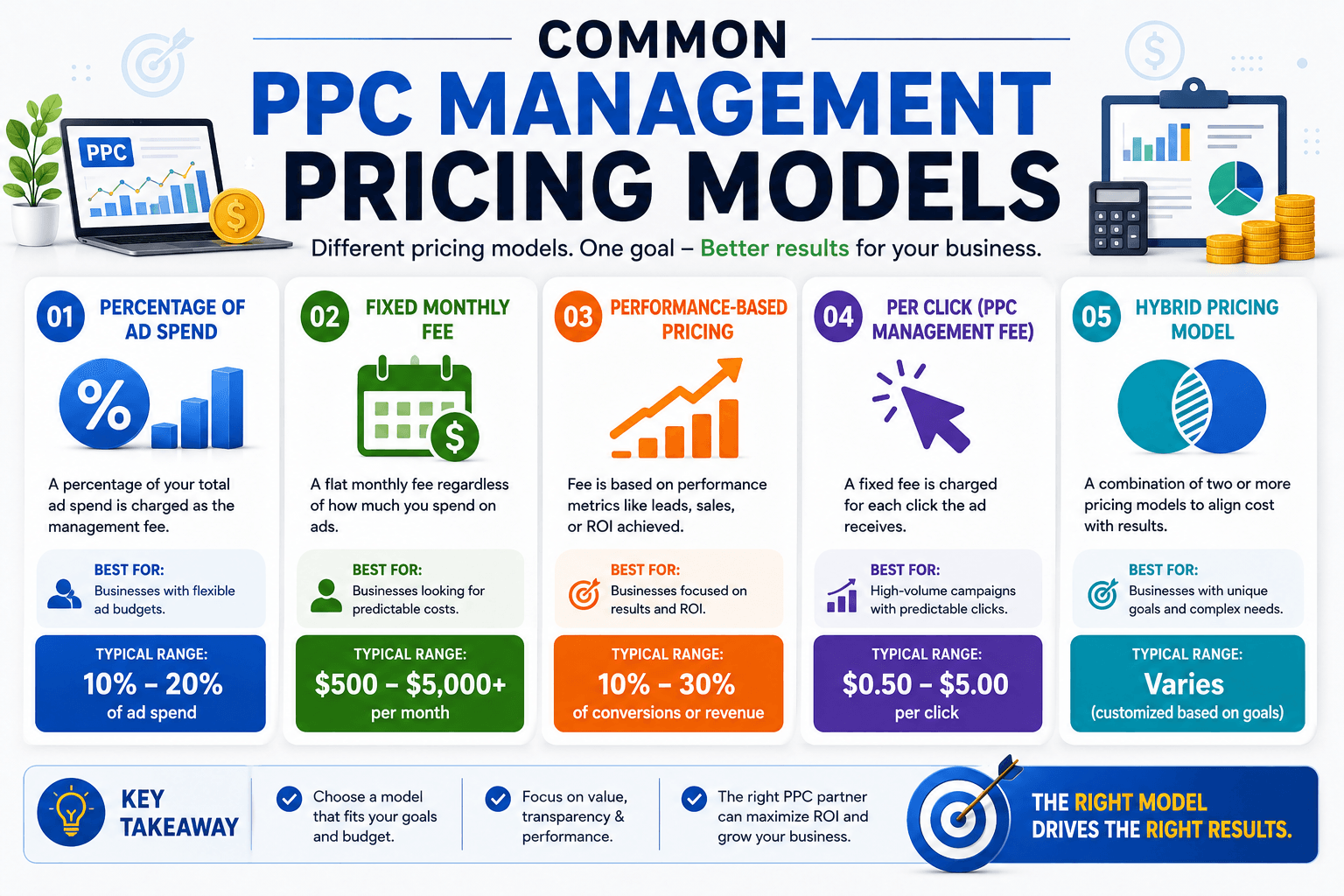
PPC agencies and consultants use different pricing models depending on business needs.
1. Percentage of Ad Spend Pricing
The percentage-of-spend model is one of the most common PPC pricing structures.
Under this model, the agency charges a percentage of the monthly advertising budget.
Typical fees:
10%–20% of monthly ad spend
Example:
Monthly advertising budget: $20,000
Agency management fee: 15%
Management cost:
$20,000 × 15% = $3,000
Total monthly PPC investment:
$23,000
Advantages:
- Scales with advertising budget
- Suitable for growing campaigns
- Common among professional agencies
Disadvantages:
- Businesses with large budgets may pay higher fees
- Does not always reflect campaign complexity
2. Flat Monthly PPC Management Fees
Many agencies offer fixed monthly pricing packages.
Instead of charging based on ad spend, businesses pay a predictable monthly fee.
Typical pricing:
Small Business PPC Management:
$500–$2,000 per month
Medium Business PPC Management:
$2,000–$5,000 per month
Enterprise PPC Management:
$5,000–$15,000+ per month
Flat pricing is popular because businesses know exactly what they will spend each month.
3. Hourly PPC Consulting Fees
Some businesses only need occasional PPC support rather than full campaign management.
PPC consultants may charge hourly rates.
Average hourly pricing:
- Beginner consultants: $50–$100/hour
- Experienced specialists: $100–$200/hour
- Expert consultants: $200–$300+/hour
Hourly consulting is useful for:
- PPC audits
- Account reviews
- Strategy planning
- Team training
- Campaign troubleshooting
4. One-Time PPC Setup Fees
Before campaigns begin, many agencies charge an initial setup fee.
Typical setup costs:
$500–$3,000+
A PPC setup package may include:
- Account creation
- Campaign structure planning
- Keyword research
- Competitor research
- Conversion tracking setup
- Analytics integration
- Initial ad creation
After setup, businesses usually move to monthly management fees.
Average PPC Management Fees by Business Size
Different businesses require different levels of PPC support.
| Business Size | Monthly PPC Management Fees |
|---|---|
| Small local business | $500–$2,000 |
| Growing business | $2,000–$5,000 |
| National company | $5,000–$10,000 |
| Enterprise company | $10,000+ |
These prices can vary depending on industry competition, campaign goals, and advertising platforms.
Factors That Influence PPC Management Fees
1. Monthly Ad Budget
The size of your advertising budget directly affects management requirements.
A campaign spending $1,000 per month requires less monitoring than a campaign spending $100,000 per month.
Large campaigns require:
- More testing
- More reporting
- More optimization
- More strategic planning
2. Industry Competition
Some industries have much higher PPC costs because many businesses compete for the same customers.
Examples of competitive industries:
- Lawyers
- Insurance companies
- Real estate
- Financial services
- Medical services
- SaaS companies
Competitive industries usually require more advanced strategies and higher management fees.
3. Number of Advertising Platforms
Managing one platform is simpler than managing multiple channels.
Examples:
Basic PPC management:
- Google Search Ads only
Advanced PPC management:
- Google Search Ads
- Display Ads
- Shopping Ads
- YouTube Ads
- Facebook Ads
- LinkedIn Ads
- Remarketing campaigns
More platforms usually increase management costs.
4. Campaign Complexity
A simple lead generation campaign may require minimal work.
However, complex campaigns may involve:
- Multiple products
- Different customer segments
- Geographic targeting
- Conversion funnels
- Remarketing strategies
- Shopping feeds
- Landing page optimization
Greater complexity means more time and expertise.
Services Included in PPC Management Fees
A professional PPC management package typically includes:
PPC Strategy Development
Before launching campaigns, specialists analyze:
- Business goals
- Target audience
- Competitors
- Customer journey
- Budget allocation
Keyword Research
Keyword research identifies the terms potential customers use when searching.
A PPC specialist analyzes:
- Search volume
- Competition level
- User intent
- Cost per click
- Conversion potential
Campaign Setup
Proper campaign structure improves performance.
Setup includes:
- Campaign organization
- Ad groups
- Keywords
- Target locations
- Audience settings
- Bid strategies
Ad Copywriting
Successful PPC ads require persuasive messaging.
Professionals create ads designed to improve:
- Click-through rates
- Quality scores
- Conversion rates
Bid Management
PPC platforms use auction systems.
Managers adjust bids based on:
- Competition
- Performance data
- Conversion value
- Customer acquisition costs
Conversion Tracking
Tracking allows businesses to understand which campaigns generate results.
Common tracked actions include:
- Purchases
- Form submissions
- Phone calls
- Downloads
- Registrations
A/B Testing
Professional PPC managers continuously test:
- Headlines
- Descriptions
- Landing pages
- Keywords
- Audiences
- Bidding strategies
Testing helps identify what produces better results.
Hidden Costs Businesses Should Consider
When calculating PPC expenses, businesses should consider additional costs.
Landing Page Development
A high-performing landing page can significantly improve conversions.
Costs may include:
- Design
- Copywriting
- Development
- Testing
Marketing Tools
Professional PPC management may require tools for:
- Keyword research
- Competitor analysis
- Reporting
- Conversion tracking
Creative Services
Display and social advertising may require:
- Graphic design
- Video creation
- Image editing
How to Evaluate If PPC Management Fees Are Worth It
PPC management fees should be judged based on results, not just price.
A good PPC partner should help improve:
- Cost per conversion
- Conversion volume
- Return on ad spend (ROAS)
- Customer acquisition cost
- Overall profitability
A low-cost PPC manager who wastes your advertising budget can be more expensive than a higher-priced expert who delivers profitable results.
Questions to Ask Before Hiring a PPC Management Agency
Before choosing a PPC provider, ask:
1. What Experience Do You Have in My Industry?
Industry knowledge can improve campaign performance.
2. How Do You Measure Success?
Good agencies focus on business outcomes, not just clicks.
3. What Reports Will I Receive?
Regular reporting should include:
- Campaign performance
- Spending analysis
- Conversion data
- Optimization recommendations
4. How Often Will You Optimize My Campaign?
PPC campaigns require continuous improvement.
Common PPC Management Mistakes to Avoid
Choosing the Cheapest Provider
Low fees often mean limited strategy and minimal optimization.
Focusing Only on Clicks
More clicks do not always mean more sales.
Ignoring Conversion Tracking
Without tracking, businesses cannot measure profitability.
Running Campaigns Without Optimization
PPC requires ongoing adjustments based on performance data.
PPC Management Fees vs DIY PPC Management
Some businesses attempt to manage PPC campaigns internally.
DIY PPC Advantages:
- Lower upfront costs
- Full control
- Direct platform access
DIY PPC Challenges:
- Requires expertise
- Takes significant time
- Higher risk of wasted spending
- Requires ongoing learning
For businesses spending significant amounts on advertising, professional management often provides better long-term value.
Final Conclusion: Are PPC Management Fees Worth Paying?
PPC management fees are an important investment for businesses that want to maximize the performance of their paid advertising campaigns.
The cost depends on factors such as:
- Advertising budget
- Industry competition
- Campaign complexity
- Number of platforms
- Required services
While PPC management fees can range from a few hundred dollars per month to thousands for larger campaigns, the right PPC partner can help businesses generate more leads, increase sales, reduce wasted spending, and achieve better advertising results.
Instead of choosing a PPC provider based only on price, businesses should focus on experience, transparency, strategy, and proven results.
A well-managed PPC campaign is not simply an expense—it is a growth investment that can deliver measurable business success.