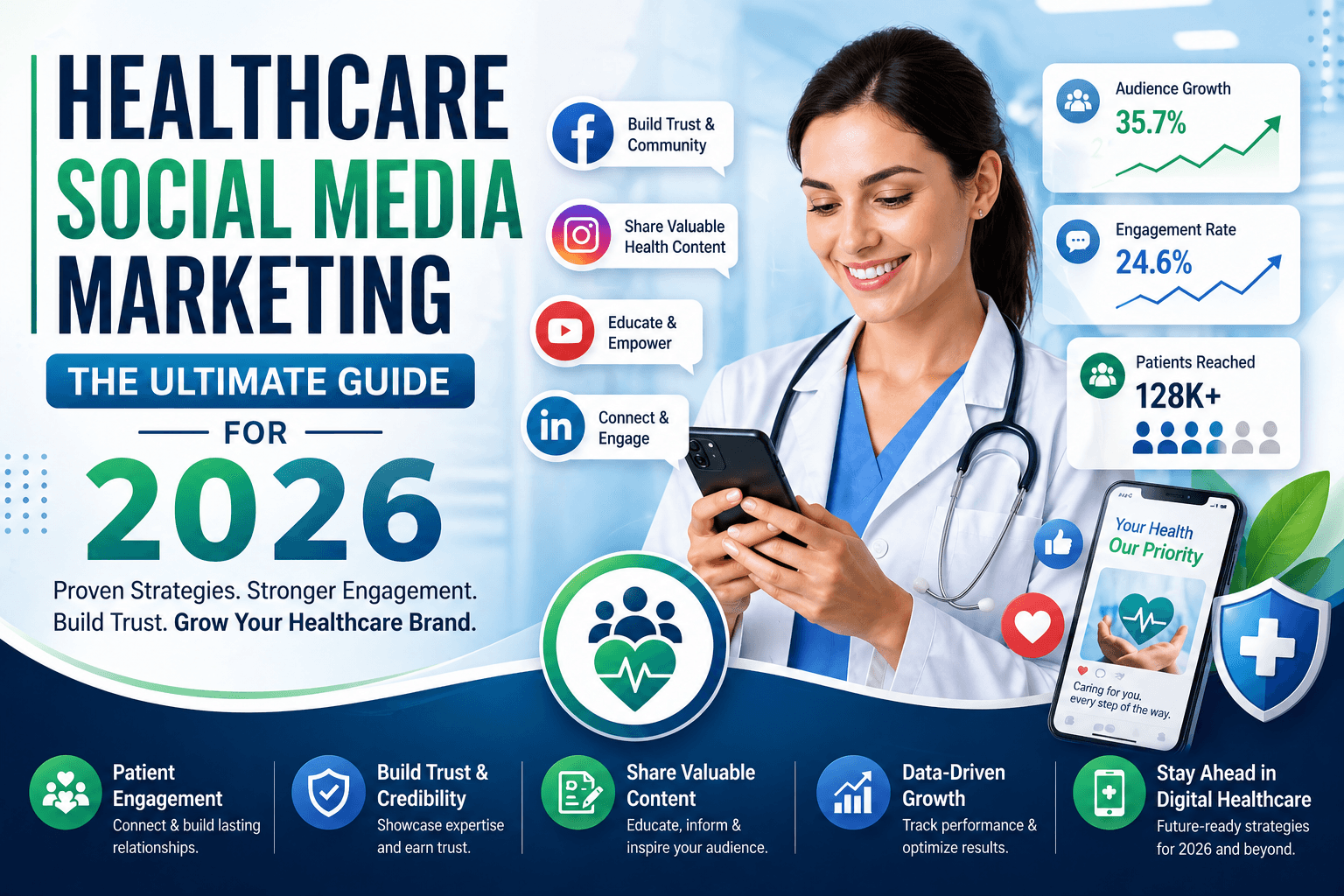
In today’s digital-first world, social media has become an essential tool for healthcare providers. Patients are increasingly turning to online platforms not just for information but for engagement, community, and trust. A strong social media strategy can elevate a clinic, hospital, or private practice, increasing visibility, patient engagement, and ultimately, appointments.
This comprehensive guide explores everything you need to know about healthcare social media marketing, from platform selection and content creation to compliance, analytics, and advanced strategies for patient acquisition.
1. The Importance of Social Media in Healthcare
Social media is no longer optional. Healthcare consumers rely on platforms like Facebook, Instagram, LinkedIn, TikTok, and YouTube to:
- Research providers before booking appointments. Studies show over 70% of patients check social media profiles of doctors, clinics, and hospitals.
- Seek educational content. From chronic disease management to preventive care tips, patients want clear, accessible guidance.
- Engage with healthcare communities. Social media creates a sense of trust and belonging.
A strong social media presence allows healthcare providers to humanize their brand, connect with patients, and demonstrate authority.
2. Top Social Media Platforms for Healthcare Marketing
Different platforms serve different purposes. Choosing the right mix ensures your content reaches the right audience efficiently.
2.1 Facebook
Facebook is ideal for community-building and engagement:
- Long-form content: Articles, patient stories, educational posts
- Event promotion: Free health camps, webinars, vaccination drives
- Live Q&A sessions: Answer patient questions in real-time
- Targeted ads: Geographically focused campaigns to attract local patients
Tip: Use Facebook Groups to create specialized communities for patients with specific conditions (e.g., diabetes support groups).
2.2 Instagram
Instagram is visual-first, perfect for storytelling:
- Infographics and educational posts about health and wellness
- Reels: Short, engaging videos for tips, awareness campaigns, or behind-the-scenes content
- Instagram Stories: Quick polls, Q&A, or appointment reminders
- Influencer collaborations: Partner with healthcare influencers for awareness
Tip: Keep visuals professional and clear. Avoid any misleading claims.
2.3 LinkedIn
LinkedIn is your professional credibility hub:
- Share research updates, certifications, or awards
- Publish articles on medical breakthroughs
- Network with other healthcare professionals
- Highlight partnerships or collaborations
Tip: Position your clinic as an industry thought leader by regularly posting authoritative content.
2.4 TikTok
TikTok is increasingly popular among younger demographics:
- Share quick tips on wellness or preventive care
- Use trending sounds to increase reach
- Host mini-educational series (e.g., 60-second health hacks)
Tip: Keep videos accurate, concise, and engaging. Avoid complicated medical jargon.
2.5 YouTube
YouTube is ideal for long-form educational content:
- Tutorials on managing chronic conditions
- Patient testimonials (with consent)
- Detailed explanations of procedures or treatment options
Tip: Optimize video titles, descriptions, and tags with relevant healthcare keywords for SEO.
3. Types of Content That Work in Healthcare
Healthcare marketing requires a careful balance between education, engagement, and promotion. Here’s a breakdown of effective content types:
3.1 Educational Content
- How-to guides for managing conditions
- Wellness tips and preventive care
- Infographics explaining symptoms or treatment options
3.2 Patient Stories
- Success stories and testimonials (HIPAA-compliant)
- Before-and-after visuals (with consent)
- Highlighting patient journeys to build trust
3.3 Live Sessions and Webinars
- Q&A sessions to answer common health questions
- Live demonstrations for wellness exercises or therapies
- Virtual events like awareness campaigns
3.4 Visual and Video Content
- Short videos for social media
- Infographics for complex medical topics
- Animations explaining procedures
3.5 Promotional Content
- Announce new services
- Seasonal health campaigns (flu shots, checkups)
- Special offers for consultations or screenings
4. Paid Social Media Advertising
Organic reach is valuable, but paid advertising can significantly amplify your campaigns:
4.1 Facebook Ads
- Target local patients by location, age, or interests
- Use conversion campaigns to drive appointments
- Retarget website visitors with reminders
4.2 Instagram Ads
- Sponsored posts to increase reach
- Video ads for awareness campaigns
- Carousel ads to showcase multiple services
4.3 LinkedIn Ads
- B2B targeting for healthcare professionals
- Sponsored content for research or collaboration offers
4.4 TikTok Ads
- Reach younger audiences for preventive care awareness
- Use trending challenges for health campaigns
Tip: Always include a strong call-to-action (CTA) like Book Appointment, Learn More, or Register Now.
5. Compliance and Privacy in Healthcare Marketing
Healthcare marketing is highly regulated. Providers must adhere to privacy laws:
- HIPAA compliance (in the U.S.)
- Avoid sharing identifiable patient information without consent
- Fact-check all content to avoid misinformation
- Be transparent in promotional campaigns
Tip: Use anonymized patient stories or general educational content for marketing.
6. Measuring Social Media Success
Track performance with KPIs to understand ROI:
- Engagement metrics: Likes, shares, comments
- Website traffic: Number of visits from social media posts
- Conversions: Appointments booked or inquiries generated
- Reach and impressions: How many people saw your posts
Tools to use: Facebook Insights, Instagram Analytics, LinkedIn Analytics, Google Analytics.
7. Advanced Strategies for Healthcare Social Media
7.1 Storytelling
- Humanize your brand with patient journeys
- Showcase staff expertise and passion
7.2 Influencer Collaborations
- Partner with trusted healthcare influencers for awareness campaigns
- Use local influencers to increase community trust
7.3 SEO for Social Content
- Optimize posts with keywords and hashtags
- Include location-based targeting for local SEO
- Use structured data for FAQ posts and snippets
7.4 Community Engagement
- Respond to comments and messages promptly
- Encourage reviews and testimonials
- Host online support groups
8. Future Trends in Healthcare Social Media Marketing
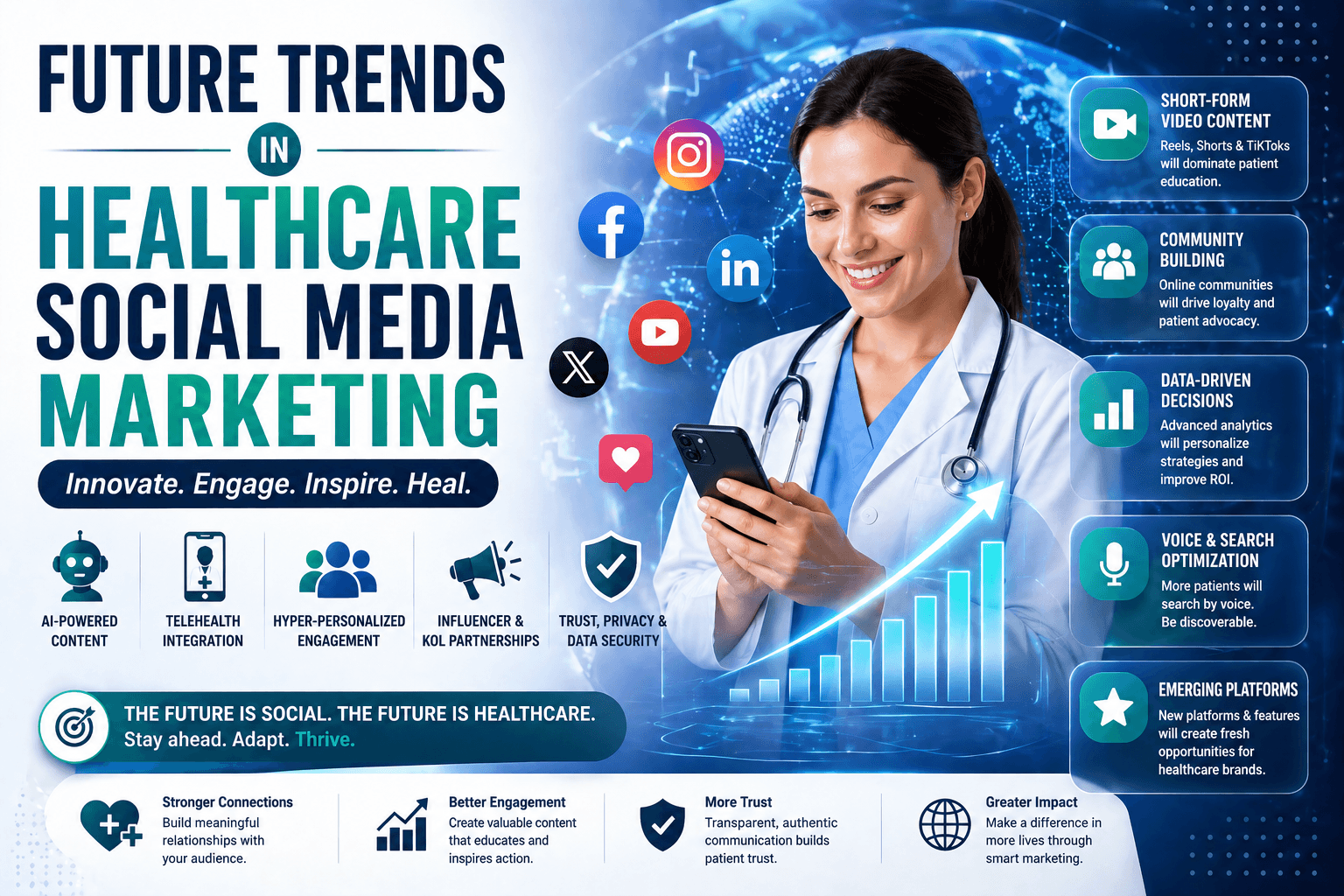
- AI-driven personalization: Deliver content tailored to user behavior
- AR/VR experiences: Virtual tours of clinics or procedure explanations
- Voice search optimization: Patients using smart devices to find providers
- Video-first content: Increased preference for short-form video education
9. Case Studies: Successful Healthcare Social Media Campaigns
Example 1: Local Clinic Awareness Campaign
- Goal: Increase flu shot signups
- Platform: Facebook + Instagram
- Strategy: Infographics + short videos + paid local ads
- Result: 35% increase in appointments over 4 weeks
Example 2: Hospital Patient Engagement
- Goal: Educate about heart health
- Platform: LinkedIn + YouTube
- Strategy: Educational video series, staff interviews
- Result: High engagement, 50% increase in website inquiries
Conclusion
Healthcare social media marketing is more than posting updates—it’s about educating, engaging, and building trust with patients. With the right strategy, content, and compliance approach, healthcare providers can expand their reach, improve patient engagement, and grow their practice.
FAQ Section (SEO & SGE Friendly)
Q1: What is healthcare social media marketing?
A1: Healthcare social media marketing involves using platforms like Facebook, Instagram, and LinkedIn to educate patients, build trust, and promote healthcare services online.
Q2: Why is healthcare social media marketing important for clinics?
A2: It helps increase visibility, engage patients, showcase expertise, and drive appointments, making your healthcare practice more credible and accessible online.
Q3: Which social media platforms work best for healthcare marketing?
A3: Facebook and Instagram are ideal for patient engagement, LinkedIn for professional credibility, TikTok for younger audiences, and YouTube for educational videos.
Q4: How can I measure the success of healthcare social media marketing?
A4: Track engagement metrics, website traffic, appointment conversions, reach, and impressions using tools like Google Analytics, Facebook Insights, and Instagram Analytics.
Q5: What content works best in healthcare social media marketing?
A5: Educational posts, patient stories, infographics, live Q&A sessions, videos, and promotional content with clear calls-to-action generate the most engagement.