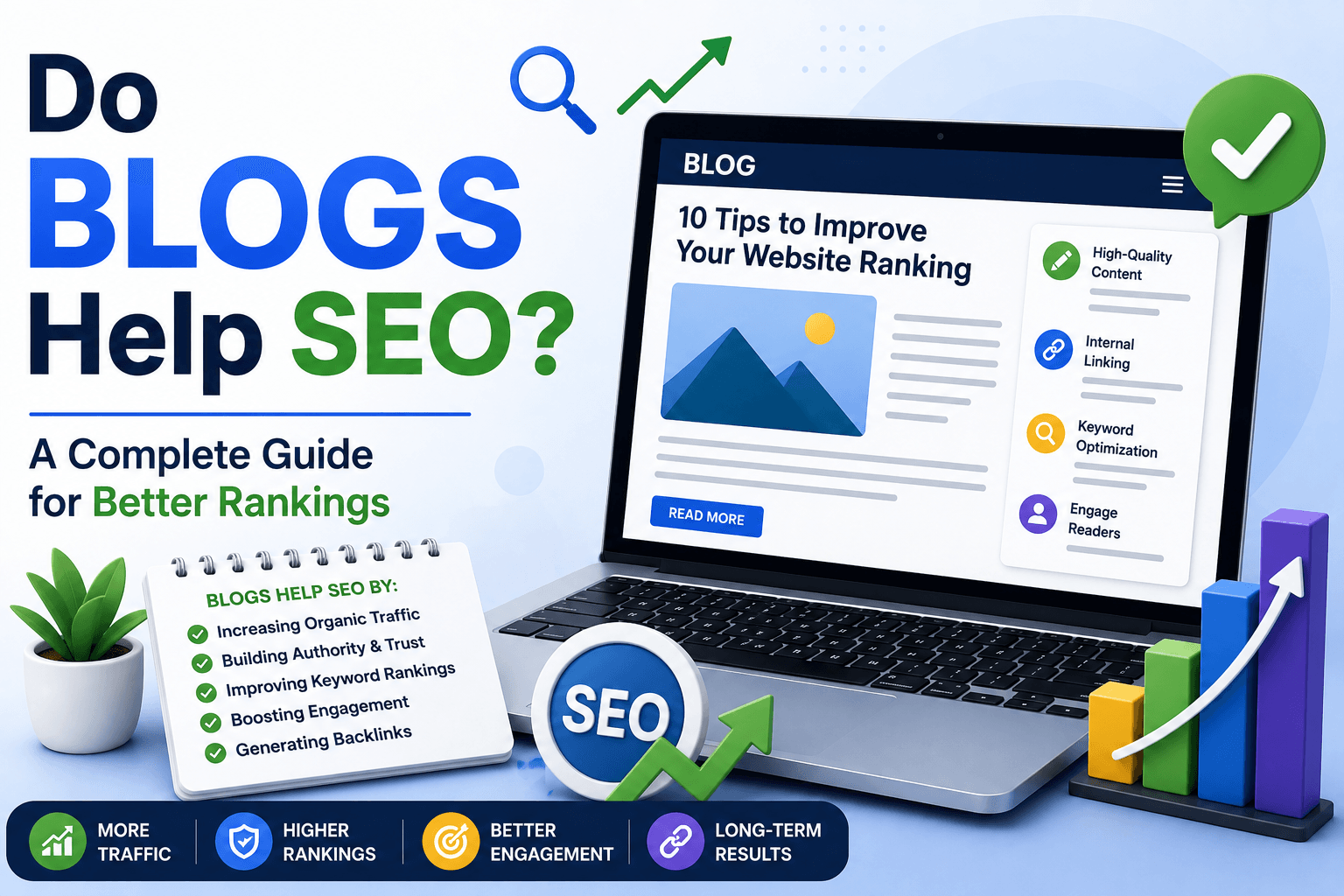
Many business owners ask the same question before investing time in content: do blogs help seo? The simple answer is yes. Blogging can help your website rank better, attract more visitors, build trust, and bring in potential customers from Google.
But blogging only helps SEO when it is done with a clear strategy. Posting random articles without keyword research, useful content, or proper optimization may not bring strong results. A blog should answer real questions, target the right keywords, and guide readers toward your products or services.
In this article, we will explain how blogs help SEO, why they are important, and how to use blog content to grow your website traffic.
What Is Blogging for SEO?
SEO blogging means creating blog posts that are designed to rank in search engines. These posts usually answer questions, solve problems, explain topics, or guide readers through a decision.
For example, if someone searches for “how to improve website traffic,” a helpful blog post can appear in Google and bring that visitor to your website.
A strong SEO blog post usually includes:
- A clear keyword
- Helpful information
- Proper headings
- Internal links
- Optimized title and meta description
- Easy-to-read content
- Relevant images
- Strong user intent
So, when people ask do blogs help seo, the answer depends on how well the blog is planned and written.
How Do Blogs Help SEO?
Blogs help SEO in several important ways. They give your website more opportunities to rank, answer customer questions, and build authority in your industry.
1. Blogs Help You Target More Keywords
Your main website pages usually target service or product keywords. But people also search for informational questions before they are ready to buy.
Blog posts allow you to target these extra keywords.
For example:
- How does SEO work?
- Why is website content important?
- How long does SEO take?
- What is on-page SEO?
- Do blogs help seo?
Each blog post gives your website a new chance to appear in search results. The more useful content you publish, the more keywords your website can rank for.
2. Blogs Bring Organic Traffic
One of the biggest benefits of blogging is organic traffic. Organic traffic means visitors who come from search engines without paid ads.
If your blog answers a popular question and ranks well, it can bring visitors to your website every month. This makes blogging a long-term SEO asset.
Unlike paid ads, blog traffic does not stop immediately when you stop spending money. A well-optimized blog can continue bringing visitors for months or even years.
3. Blogs Build Website Authority
Google wants to rank websites that show expertise and trust. When your website has many helpful blog posts around a topic, it can build topical authority.
For example, if your website is about SEO services and you publish helpful content about keyword research, on-page SEO, technical SEO, link building, and content strategy, Google can better understand your website topic.
This can help your entire website become stronger in search results.
4. Blogs Improve Internal Linking
Internal links are links from one page of your website to another. Blogs are great for internal linking because they can connect related topics and guide users to important pages.
For example, a blog about “how to improve rankings” can link to your SEO service page. A blog about “meta descriptions” can link to your on-page SEO service page.
Internal links help:
- Search engines crawl your website
- Users find related content
- Important pages get more authority
- Visitors stay longer on your site
This is another reason why the answer to do blogs help seo is yes.
Search engines like websites that are active and updated. Regular blogging shows that your website is not outdated.
Fresh content can help your website stay relevant, especially in industries where trends, tools, and best practices change over time.
You do not need to publish every day. But posting high-quality blog content consistently can support long-term SEO growth.
Do Blogs Help SEO for Small Businesses?
Yes, blogs can help small businesses compete with larger companies. Many small businesses cannot rank immediately for highly competitive keywords. But they can rank for long-tail keywords through blog posts.
Long-tail keywords are longer, more specific search terms.
Example:
Instead of targeting:
SEO service
A small business can target:
how can SEO help small business websites
Long-tail keywords usually have lower competition and stronger user intent. This makes them easier to rank for and useful for attracting qualified visitors.
What Makes a Blog SEO-Friendly?
Not every blog post will help SEO. A blog must be written and structured properly.
1. Start With Keyword Research
Before writing, you need to know what people are searching for. Keyword research helps you choose topics that have real search demand.
Good blog keywords should be:
- Relevant to your business
- Easy enough to compete for
- Useful for your audience
- Connected to your services or products
Without keyword research, you may write content that nobody searches for.
2. Match Search Intent
Search intent means the reason behind a search. If someone searches “do blogs help seo,” they want an explanation, not a sales page.
Your blog should answer the question clearly and give helpful details. If your content does not match search intent, users may leave quickly, and Google may not rank your page well.
3. Use Proper Headings
Headings make your blog easier to read. They also help search engines understand your content structure.
Use:
- H1 for the main title
- H2 for main sections
- H3 for smaller points
A clear heading structure improves readability and SEO.
4. Write Helpful Content
Google wants helpful content, not keyword-stuffed content. Your blog should solve the reader’s problem.
Good blog content should be:
- Clear
- Original
- Practical
- Easy to understand
- Well-organized
- Focused on the topic
Do not write only for search engines. Write for people first, then optimize for SEO.
5. Add Internal Links
Internal links help connect your blog posts with your important pages. This improves SEO and can help convert readers into customers.
For example, if you offer SEO services, your blog posts should naturally link to your service pages when relevant.
6. Optimize Meta Title and Description
Your meta title and meta description appear in search results. They can influence whether people click your page.
A good meta title should include the main keyword and create interest.
Example:
Do Blogs Help SEO? 7 Reasons Blogging Improves Ranking
A good meta description should explain the benefit of reading the post.
Example:
Learn how blogs help SEO by improving rankings, targeting keywords, building authority, and bringing more organic traffic to your website.
How Often Should You Blog for SEO?
There is no perfect number for every website. Some websites may benefit from one blog per week. Others may need two to four blogs per month.
Quality is more important than quantity. One useful, well-optimized blog post is better than five weak articles.
A good starting plan is:
- Publish 2 to 4 high-quality blogs per month
- Update old blogs every few months
- Focus on keywords with clear intent
- Link blogs to important service pages
- Track rankings and traffic
Consistency matters. SEO results usually grow over time.
Common Blogging Mistakes That Hurt SEO
Blogging can help SEO, but mistakes can reduce results.
Common mistakes include:
- Writing without keyword research
- Using weak titles
- Ignoring search intent
- Publishing thin content
- Copying content from other websites
- Not adding internal links
- Forgetting image optimization
- Not updating old posts
- Stuffing the same keyword too many times
- Writing only for search engines
If you avoid these mistakes, your blog has a better chance of ranking.
How Long Does Blogging Take to Improve SEO?
Blogging is not an instant SEO solution. It usually takes time for Google to crawl, index, and rank new content.
You may start seeing small results in a few weeks, but strong results often take 3 to 6 months or longer. The timeline depends on your website authority, competition, content quality, and keyword difficulty.
The key is to publish useful content consistently and improve old posts when needed.
Is Blogging Still Worth It for SEO?
Yes, blogging is still worth it when done correctly. People use Google every day to search for answers, tips, comparisons, and solutions. Blog content helps your website appear in those searches.
A blog can support your SEO strategy by:
- Bringing new visitors
- Building trust
- Supporting service pages
- Answering customer questions
- Improving keyword coverage
- Increasing internal links
- Creating long-term traffic
So, if you are wondering do blogs help seo, the answer is yes, but only when your blog content is strategic, helpful, and properly optimized.
Final Thoughts
Blogs can be one of the most powerful tools for SEO. They help your website target more keywords, attract organic traffic, build authority, and connect users to your main pages.
However, blogging is not just about publishing content. You need the right keywords, useful information, clean structure, internal links, and consistent updates.
If you want better rankings and more organic traffic, blogging should be a key part of your SEO strategy.
FAQs About Do Blogs Help SEO
Do blogs help SEO for business websites?
Yes, blogs help SEO for business websites by creating more pages that can rank on Google. A well-written blog can target helpful keywords, answer customer questions, and bring more organic traffic to your website.
Do blogs help SEO if my website is new?
Yes, do blogs help SEO for new websites? Absolutely. Blog posts can help new websites build topical authority, target low-competition keywords, and get early visibility in search results.
How often should I publish blogs for SEO?
You should publish blogs consistently, but quality matters more than quantity. For many websites, posting 2 to 4 helpful blogs per month is a good starting point for SEO growth.
Do blogs help SEO more than service pages?
Blogs and service pages work together. Service pages target buyer keywords, while blogs target informational keywords. So, when people ask do blogs help SEO, the answer is yes because blogs support your main website pages.
What type of blogs help SEO the most?
The best blogs for SEO are helpful, keyword-focused, and written around real user questions. How-to guides, comparison posts, list articles, and answer-based blogs usually perform well.
Do blogs help SEO without backlinks?
Yes, do blogs help SEO without backlinks? They can, especially for low-competition keywords. However, backlinks can make blog posts stronger and help them rank faster in competitive search results.
Can old blogs still help SEO?
Yes, old blogs can still help SEO if they are updated regularly. Refreshing old content with new information, better headings, and stronger internal links can improve rankings.
How long does it take for blogs to help SEO?
Blogs can take a few weeks to several months to show results. The timeline depends on your website authority, keyword difficulty, content quality, and how well the blog is optimized.
Do blogs help SEO for local businesses?
Yes, do blogs help SEO for local businesses by targeting local questions and service-related keywords. For example, a local SEO agency can publish blogs that answer common customer questions in its area.
How do I know if my blogs are helping SEO?
You can check Google Search Console and Google Analytics to track clicks, impressions, keyword rankings, traffic, and conversions. If your blogs are bringing visitors from search, they are helping SEO.