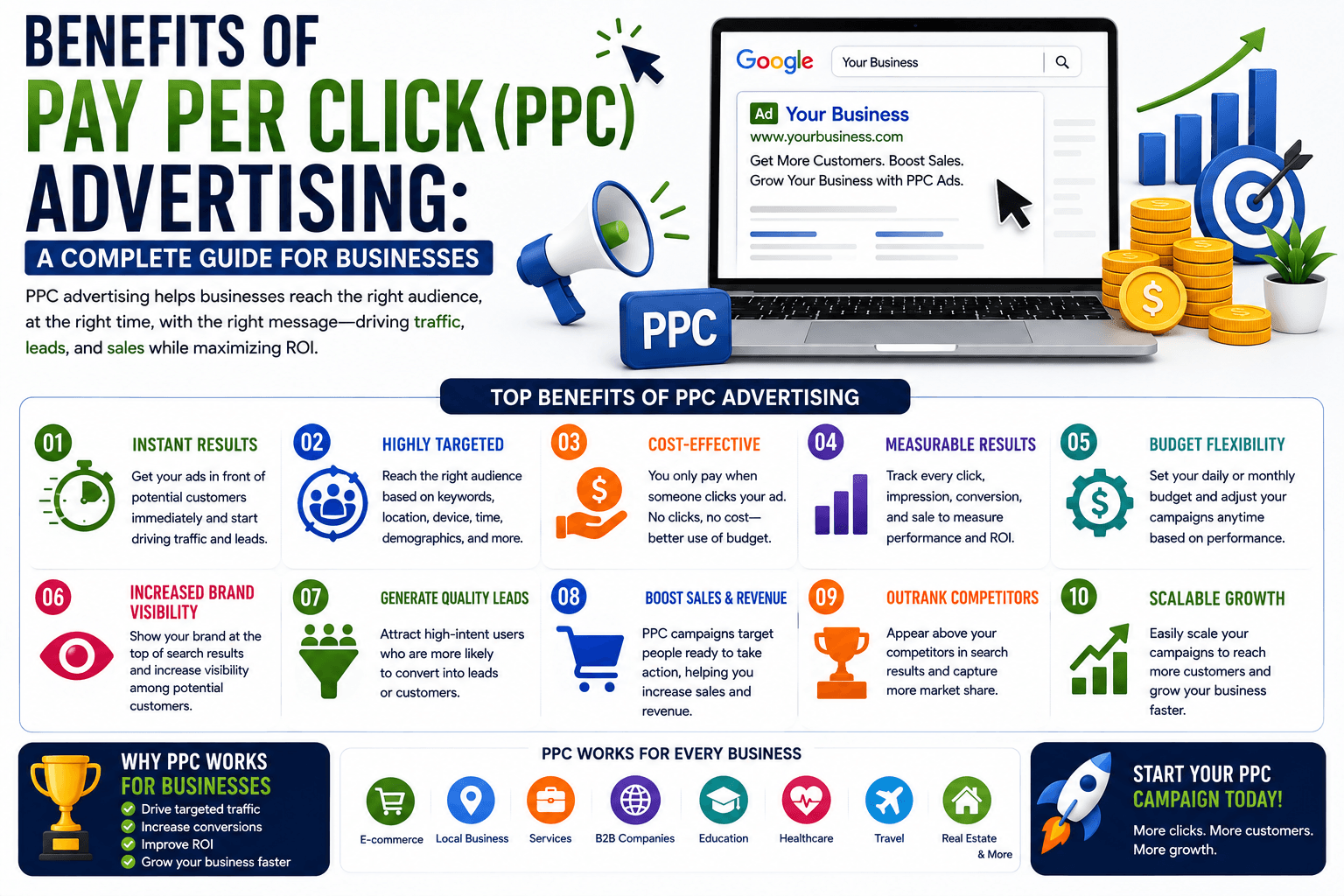
Benefits of Pay Per Click advertising make it one of the most powerful digital marketing strategies for businesses looking to increase online visibility, attract targeted customers, and generate measurable results. In today’s competitive digital marketplace, companies need effective advertising solutions that provide quick results and better control over marketing budgets.
Pay Per Click (PPC) advertising allows businesses to display ads to potential customers across search engines, social media platforms, and websites. Unlike traditional advertising methods, businesses only pay when users click on their advertisements, making PPC a cost-effective and performance-driven marketing approach.
With the growing competition in online markets, understanding the benefits of Pay Per Click can help businesses create successful advertising campaigns, improve customer reach, and increase return on investment (ROI).
What Is Pay Per Click (PPC) Advertising?
Pay Per Click, commonly known as PPC, is a digital advertising model where advertisers pay a specific amount each time a user clicks on their advertisement. These advertisements can appear on search engines, social media platforms, websites, mobile applications, and other digital channels.
For example, when a person searches for a product or service on a search engine, sponsored advertisements may appear at the top of the search results. Businesses bid on specific keywords related to their products or services, and their ads are displayed to users who are actively searching for those terms.
The main goal of PPC advertising is to attract qualified visitors who are more likely to become customers. Instead of waiting for users to discover a website organically, businesses can immediately reach people who already have an interest in their offerings.
How Does PPC Advertising Work?
PPC advertising works through an auction-based system. Advertisers select keywords that are relevant to their business and create advertisements based on those keywords. When a user searches for a related term, the advertising platform evaluates different factors, including bid amount, ad quality, and relevance, to determine which ads appear.
The cost of each click depends on several factors, including:
- Competition for the keyword
- Quality of the advertisement
- Landing page experience
- Target audience
- Industry demand
A successful PPC campaign is not only about spending more money. Businesses that create relevant ads and provide valuable user experiences can often achieve better results with optimized budgets.
Major Benefits of Pay Per Click Advertising
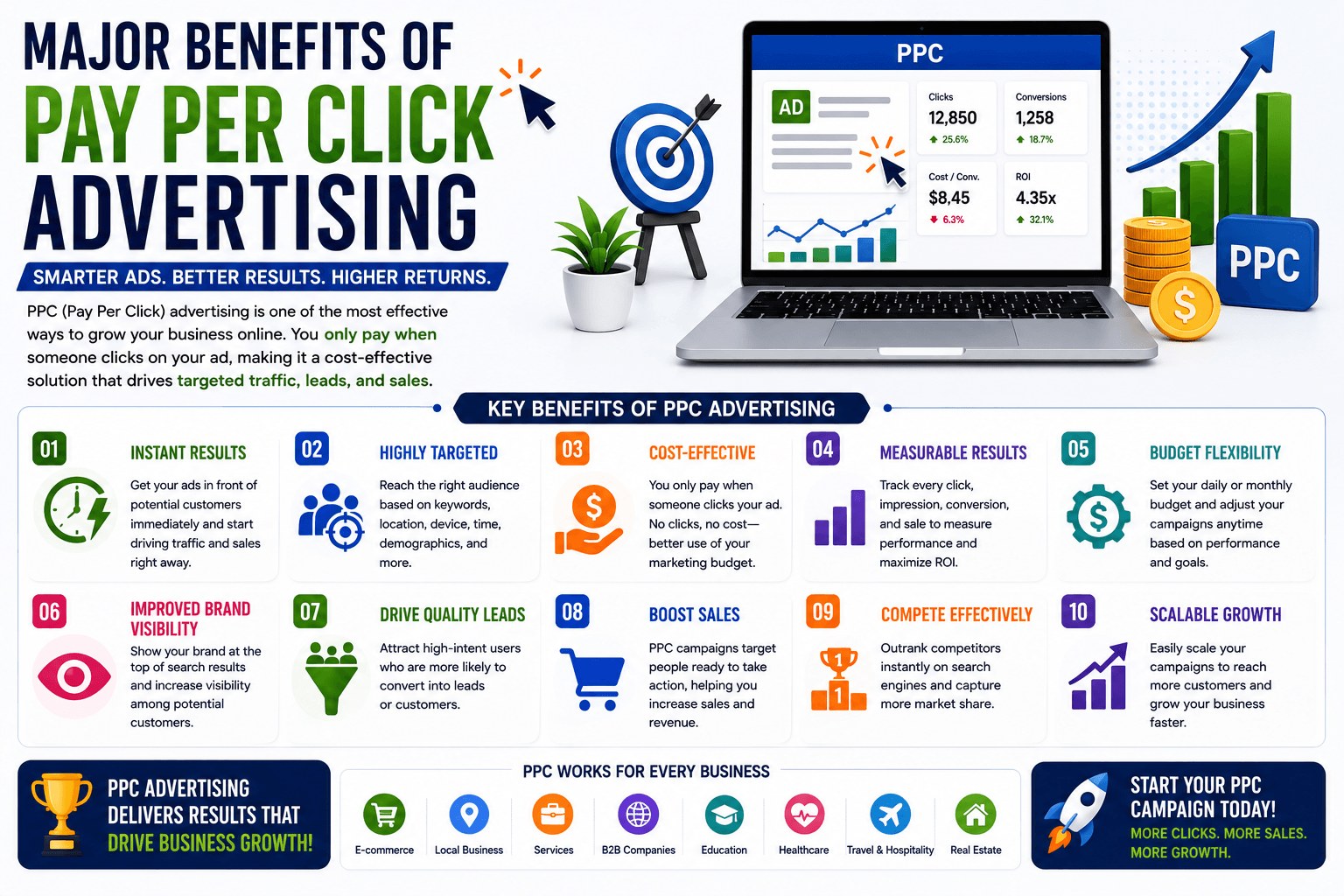
1. Provides Immediate Website Traffic
One of the biggest advantages of PPC advertising is its ability to generate immediate traffic. Traditional marketing strategies such as SEO often require significant time before achieving strong rankings and visibility.
With PPC, businesses can launch campaigns and begin attracting visitors almost instantly. This is especially valuable for:
- New websites
- Product launches
- Seasonal promotions
- Limited-time offers
- Special events
For businesses that need fast results, PPC provides a direct way to reach potential customers without waiting for long-term organic growth.
2. Helps Reach the Right Target Audience
PPC advertising allows businesses to target specific groups of people instead of showing advertisements to random users. Advanced targeting options help advertisers focus on customers who are most likely to purchase their products or services.
Businesses can target audiences based on:
- Geographic location
- Age
- Gender
- Language
- Interests
- Online activity
- Search behavior
- Previous website visits
For example, a local restaurant can display ads only to people within a specific area, while an online store can target customers across multiple countries.
This level of targeting improves advertising efficiency and reduces wasted spending.
3. Increases Brand Visibility
Even if users do not immediately click on an advertisement, PPC helps businesses increase brand awareness. Appearing at the top of search results or across popular websites keeps a brand visible to potential customers.
Repeated exposure helps users become familiar with a company, making them more likely to choose that brand when they are ready to make a purchase.
For new businesses trying to establish themselves in a competitive market, PPC can accelerate brand recognition.
4. Offers Complete Budget Control
A common concern among businesses is controlling advertising costs. PPC solves this problem by allowing advertisers to set their own budgets and spending limits.
Businesses can decide:
- How much they want to spend daily
- Maximum cost per click
- Which keywords to target
- When advertisements should run
- Which locations should see their ads
This flexibility makes PPC suitable for businesses of all sizes. A small business can start with a limited budget and increase investment as results improve.
5. Provides Accurate Performance Measurement
One of the strongest advantages of PPC advertising is detailed performance tracking. Unlike traditional advertising methods, PPC provides clear data about campaign effectiveness.
Businesses can measure:
- Number of clicks
- Website visits
- Leads generated
- Sales conversions
- Advertising costs
- Customer acquisition costs
- Return on investment
This information allows marketers to identify successful strategies and improve underperforming campaigns.
Data-driven decision-making helps businesses spend their marketing budget more effectively.
6. Generates High-Quality Leads
PPC advertising helps businesses attract users who are already interested in specific products or services. Because advertisements are often displayed based on search intent, visitors from PPC campaigns are usually more valuable than general website visitors.
For example, someone searching for “buy professional accounting software” is more likely to become a customer than someone who simply visits a website without a specific purpose.
By targeting users with strong purchase intent, PPC improves the chances of generating qualified leads.
7. Improves Conversion Rates
PPC campaigns can be designed specifically to increase conversions. Advertisers can create customized landing pages, attractive offers, and clear calls-to-action that encourage visitors to take action.
Common PPC conversion goals include:
- Purchasing products
- Filling out contact forms
- Booking appointments
- Downloading resources
- Registering for services
With continuous testing and optimization, businesses can improve conversion rates and achieve better campaign performance.
8. Helps Businesses Compete With Larger Companies
Small and medium-sized businesses often struggle to compete with large companies that have established websites and strong brand recognition. PPC provides an opportunity for smaller businesses to appear alongside major competitors.
By selecting the right keywords, creating relevant advertisements, and optimizing campaigns, smaller companies can reach potential customers without requiring years of online authority.
PPC creates a more balanced competitive environment where strategy and optimization matter as much as budget size.
9. Supports Search Engine Optimization (SEO)
PPC and SEO are often viewed as separate strategies, but they can work together effectively. PPC provides immediate traffic while SEO builds long-term organic visibility.
PPC data can help businesses discover:
- High-performing keywords
- Customer search behavior
- Effective advertising messages
- Popular products or services
These insights can improve SEO strategies and content creation.
10. Allows Remarketing to Previous Visitors
Many customers do not make a purchase during their first website visit. Remarketing campaigns allow businesses to reconnect with users who have previously interacted with their website.
For example, an online store can show advertisements to visitors who viewed a product but did not complete a purchase.
Remarketing helps businesses stay connected with potential customers and encourages them to return and complete their buying journey.
11. Provides Flexible Testing Opportunities
PPC platforms allow businesses to test different advertising approaches and identify what works best.
Advertisers can experiment with:
- Different headlines
- Ad descriptions
- Images
- Keywords
- Target audiences
- Landing pages
- Offers
This process, known as A/B testing, helps businesses continuously improve their campaigns and achieve better results.
12. Increases Return on Investment (ROI)
When managed correctly, PPC advertising can deliver excellent returns because businesses only pay for actual clicks and can optimize campaigns based on performance data.
By focusing on profitable keywords, improving conversion rates, and reducing unnecessary spending, companies can increase their overall marketing efficiency.
The ability to track every dollar spent and every result generated makes PPC one of the most accountable forms of advertising.
Common Types of PPC Advertising
Search Advertising
Search ads appear on search engine results pages when users search for specific keywords. These ads are highly effective because they reach people who are actively looking for solutions.
Display Advertising
Display ads appear on websites, apps, and online platforms. They are useful for increasing brand awareness and reaching broader audiences.
Social Media PPC Advertising
Social platforms allow businesses to advertise based on user interests, behaviors, and demographics. These campaigns are effective for building engagement and generating leads.
Shopping Advertising
Shopping ads display product images, prices, and details directly in search results. They are commonly used by eCommerce businesses to increase product sales.
Video Advertising
Video PPC campaigns allow businesses to promote their products and services through video advertisements on digital platforms.
Best Practices for Successful PPC Campaigns
To achieve better results from PPC advertising, businesses should follow these best practices:
- Conduct detailed keyword research
- Write compelling ad copy
- Use relevant landing pages
- Track important performance metrics
- Test different advertisements
- Optimize campaigns regularly
- Remove underperforming keywords
- Focus on customer intent
- Monitor competitors
- Adjust budgets based on results
A successful PPC campaign requires continuous analysis and improvement rather than simply launching advertisements and waiting for results.
Challenges of PPC Advertising
Although PPC offers many benefits, businesses should also understand its challenges. Poorly managed campaigns can result in wasted budget and low returns.
Common PPC challenges include:
- High competition for popular keywords
- Increasing advertising costs
- Incorrect targeting
- Poor landing page experience
- Lack of campaign optimization
- Limited understanding of analytics
Working with experienced marketers or investing time in learning PPC management can help overcome these challenges.
Conclusion
Pay Per Click advertising is one of the most powerful digital marketing strategies available today. It helps businesses reach targeted customers, increase website traffic, generate quality leads, and achieve measurable marketing goals.
The biggest advantages of PPC include fast results, precise targeting, budget flexibility, detailed tracking, and improved conversion opportunities. Whether a business is small, medium, or large, PPC can provide valuable opportunities to compete in the digital marketplace.
However, success with PPC depends on proper planning, continuous optimization, and a clear understanding of customer behavior. When executed effectively, PPC advertising can become a valuable investment that drives long-term business growth and increases online success.
Frequently Asked Questions About Benefits of Pay Per Click
The benefits of Pay Per Click advertising include faster website traffic, better audience targeting, measurable results, flexible budget control, increased brand awareness, and higher conversion opportunities. Businesses use PPC advertising to reach potential customers who are actively searching for their products and services.
2. Why are the benefits of Pay Per Click important for businesses?
The benefits of Pay Per Click are important because they help businesses achieve marketing goals faster and more efficiently. PPC allows companies to display advertisements to the right audience, control advertising costs, and measure campaign performance accurately.
3. How do businesses get the benefits of Pay Per Click advertising?
Businesses can get the maximum benefits of Pay Per Click by selecting relevant keywords, creating engaging advertisements, optimizing landing pages, and regularly analyzing campaign data. A well-planned PPC strategy helps improve traffic, leads, and sales.
4. What are the biggest benefits of Pay Per Click for small businesses?
The biggest benefits of Pay Per Click for small businesses include affordable advertising options, precise customer targeting, quick results, and the ability to compete with larger brands. PPC allows small businesses to advertise according to their budget and business objectives.
5. How do the benefits of Pay Per Click help increase sales?
The benefits of Pay Per Click help increase sales by attracting users who already have an interest in specific products or services. When ads appear for relevant searches, businesses can reach potential customers at the right stage of their buying journey.
6. Can businesses measure the benefits of Pay Per Click campaigns?
Yes, businesses can measure the benefits of Pay Per Click campaigns through important metrics such as clicks, conversions, cost per click (CPC), conversion rates, and return on investment (ROI). These insights help improve advertising performance.
7. What are the benefits of Pay Per Click compared to traditional advertising?
The benefits of Pay Per Click compared to traditional advertising include better targeting, lower waste of budget, real-time tracking, and improved control over campaign spending. Businesses can focus their ads on users who are more likely to become customers.
8. How can companies maximize the benefits of Pay Per Click?
Companies can maximize the benefits of Pay Per Click by performing keyword research, testing different advertisements, improving landing pages, monitoring competitors, and continuously optimizing campaigns.
9. Are the benefits of Pay Per Click suitable for all industries?
Yes, the benefits of Pay Per Click can be valuable for almost every industry, including eCommerce, healthcare, education, technology, real estate, and professional services. The success depends on proper targeting, strategy, and campaign management.
10. What is the long-term value of the benefits of Pay Per Click?
The long-term value of the benefits of Pay Per Click comes from improved brand visibility, customer insights, increased conversions, and better marketing decisions. PPC data can also support other digital marketing strategies like SEO and content marketing.