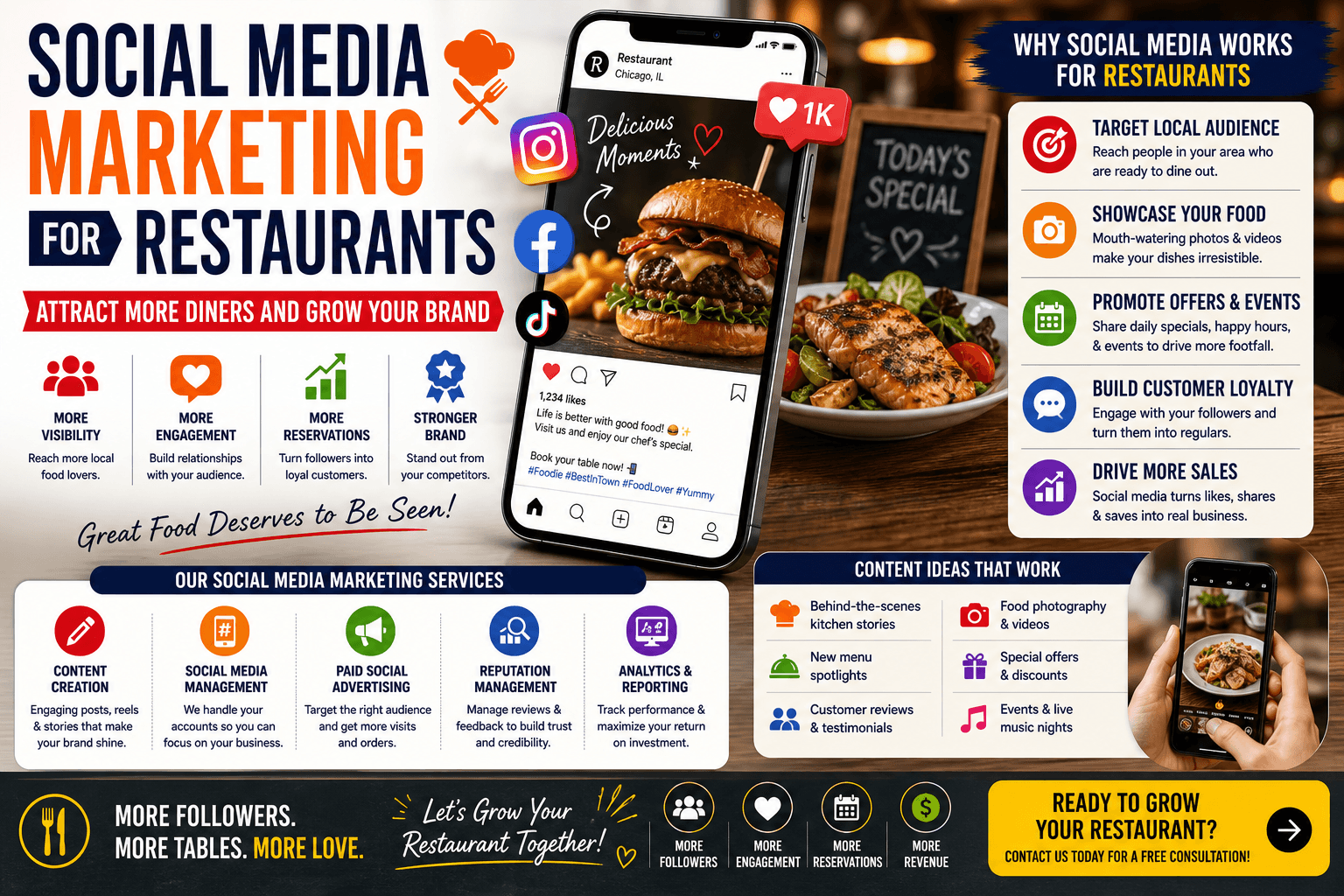
Restaurants depend on visibility, trust, and customer attention. People often check social media before choosing where to eat, what to order, or which restaurant to visit with friends and family. That is why social media marketing for restaurants has become one of the most effective ways to bring in new customers and keep existing diners engaged.
From mouth-watering food photos to short videos, customer reviews, promotions, and behind-the-scenes content, social media gives restaurants a direct way to connect with their audience. With the right strategy, your restaurant can increase bookings, drive more orders, build brand loyalty, and stand out from competitors.
Why Social Media Marketing Matters for Restaurants
Restaurant customers make fast decisions. They may see a dish on Instagram, watch a short TikTok video, check Facebook reviews, or click a story about a daily special. If your restaurant is active and attractive online, you have a better chance of turning viewers into paying customers.
Social media marketing for restaurants helps with:
- Increasing brand awareness
- Promoting menu items
- Bringing in more dine-in customers
- Growing online orders
- Sharing special offers
- Building customer loyalty
- Promoting events
- Improving local visibility
- Encouraging reviews and user-generated content
A strong social media presence helps your restaurant stay fresh in people’s minds. When customers are hungry, your posts can influence where they decide to eat.
Know Your Restaurant Audience
Before posting content, you need to understand who your ideal customers are. A casual burger spot, fine dining restaurant, vegan café, pizza shop, family restaurant, and seafood place will all need different content styles.
Ask yourself:
- Who usually visits your restaurant?
- Are they families, students, workers, couples, tourists, or local residents?
- What food items do they love most?
- What time do they usually order or visit?
- Which platforms do they use most?
- What kind of content makes them respond?
When you understand your audience, your content becomes more relevant and more likely to drive action.
Best Social Media Platforms for Restaurants
Instagram is one of the best platforms for restaurants because food is highly visual. High-quality photos, Reels, Stories, and customer posts can make your dishes look more appealing.
Restaurants can use Instagram to share:
- Food photos
- Menu highlights
- Reels of food preparation
- Customer reviews
- Chef specials
- Behind-the-scenes clips
- Limited-time offers
Facebook is useful for local restaurants because it supports reviews, events, community posts, ads, and business information. Many customers still use Facebook to check opening hours, menus, location, and updates.
Restaurants can use Facebook for:
- Promotions
- Events
- Customer updates
- Local ads
- Reviews
- Group sharing
- Special announcements
TikTok
TikTok is powerful for short, creative restaurant videos. A simple video of food being cooked, plated, sliced, poured, or served can get strong engagement.
TikTok content ideas include:
- Food preparation videos
- Trending sounds
- Staff moments
- Customer reactions
- Funny restaurant content
- Signature dish videos
- Before-and-after cooking clips
Google Business Profile and Social Sharing
While not a social media platform in the traditional sense, your Google Business Profile also plays a major role in restaurant marketing. Social media posts can support your Google presence by driving brand searches, customer reviews, and local interest.
Create Content That Makes People Hungry
The most important part of social media marketing for restaurants is content. Your posts should make people want to visit, order, book a table, or share your restaurant with someone else.
Great restaurant content includes:
Food Photography
Clear, bright, and appetizing food photos can make a big difference. Show your most popular dishes, drinks, desserts, and specials in a way that feels fresh and inviting.
Short Videos
Videos often perform better than static posts. Show food being prepared, sauces being poured, cheese melting, drinks being mixed, or plates being served.
Behind-the-Scenes Content
People like seeing the human side of a restaurant. Share clips of your chef, kitchen team, servers, preparation process, and daily routine.
Customer Reviews
Positive reviews build trust. Turn customer feedback into simple social media posts or Stories.
Menu Highlights
Feature one dish at a time. Explain what makes it special, what ingredients are used, and why customers love it.
Limited-Time Offers
Promote lunch deals, happy hour specials, weekend menus, seasonal dishes, and holiday offers.
User-Generated Content
Encourage customers to tag your restaurant in their photos and videos. Reposting customer content helps build community and trust.
Use Local Marketing to Reach Nearby Customers
Restaurants mainly depend on local customers. Your social media should clearly show where you are located and who you serve.
Local social media tips include:
- Use location tags in posts and Stories
- Mention your city or neighborhood
- Use local hashtags
- Partner with nearby businesses
- Promote local events
- Share community involvement
- Run ads targeting nearby customers
For example, if your restaurant is in a busy downtown area, you can create posts for lunch breaks, office workers, weekend visitors, and dinner reservations.
Paid Ads for Restaurant Growth
Organic posts are important, but paid advertising can help restaurants reach more people faster. Social media ads allow you to target users by location, interests, age, behavior, and dining preferences.
Restaurants can use paid ads to promote:
- Online ordering
- Table reservations
- New menu items
- Grand openings
- Happy hour deals
- Catering services
- Holiday specials
- Events
- Delivery offers
A good ad should include a strong image or video, simple copy, and a clear call to action like “Order Now,” “Book a Table,” or “View Menu.”
Build Trust Through Consistency
Posting once in a while is not enough. Restaurants need a consistent content schedule to stay visible. Regular posting keeps your audience engaged and reminds customers to visit again.
A simple weekly plan could include:
- Monday: Weekly special
- Tuesday: Behind-the-scenes video
- Wednesday: Customer review
- Thursday: Menu highlight
- Friday: Weekend promotion
- Saturday: Short food video
- Sunday: Family meal or brunch post
Consistency helps make your restaurant look active, reliable, and popular.
Engage With Your Customers
Social media is not only about posting. It is also about communication. Restaurants should reply to comments, answer questions, respond to messages, and thank customers for reviews.
Good engagement includes:
- Replying to comments quickly
- Answering menu questions
- Thanking customers for tagging your restaurant
- Responding professionally to complaints
- Asking questions in captions
- Running polls in Stories
- Encouraging customers to share their experience
This creates a stronger relationship with your audience and makes customers feel valued.
Track Your Social Media Results
To know if your strategy is working, you need to track performance. Do not focus only on likes. Look at the numbers that connect to real restaurant growth.
Important metrics include:
- Reach
- Engagement
- Profile visits
- Website clicks
- Menu clicks
- Reservation clicks
- Online orders
- Messages
- Follower growth
- Ad performance
- Cost per result
Tracking results helps you understand what content works best and where to improve.
Common Mistakes Restaurants Should Avoid
Many restaurants post on social media without a clear strategy. This can lead to poor results and wasted time.
Avoid these mistakes:
- Posting low-quality food photos
- Not showing prices or menu details when needed
- Ignoring customer comments
- Posting inconsistently
- Using too many generic posts
- Not using video content
- Running ads without tracking results
- Forgetting local targeting
- Not adding clear calls to action
- Posting only promotional content
The best restaurant social media content feels useful, visual, local, and personal.
Why Hire Experts for Social Media Marketing for Restaurants?
Running a restaurant is already demanding. Managing content, ads, captions, videos, analytics, and customer engagement can take a lot of time. Hiring a professional team can help your restaurant build a stronger online presence while you focus on operations.
A social media marketing team can help with:
- Content strategy
- Food photography planning
- Video ideas
- Caption writing
- Paid ad campaigns
- Local targeting
- Brand design
- Monthly content calendars
- Performance reports
- Competitor research
Professional social media marketing for restaurants can help turn online attention into real customers, reservations, and orders.
FAQs About Social Media Marketing for Restaurants
1. What is social media marketing for restaurants?
Social media marketing for restaurants is the process of using platforms like Instagram, Facebook, TikTok, and YouTube to promote a restaurant, attract diners, increase reservations, and grow online orders.
2. Why is social media marketing for restaurants important?
Social media marketing for restaurants is important because customers often check food photos, reviews, videos, and updates before choosing where to eat. A strong social media presence helps your restaurant stay visible and trusted.
3. Which platforms are best for social media marketing for restaurants?
The best platforms for social media marketing for restaurants are Instagram, Facebook, TikTok, and YouTube. Instagram and TikTok are great for food videos, while Facebook works well for local updates, reviews, events, and promotions.
4. How can social media marketing for restaurants increase sales?
Social media marketing for restaurants can increase sales by promoting popular dishes, special offers, online ordering links, table reservations, catering services, and limited-time menu items to the right audience.
5. What type of content works best for restaurants?
Food photos, short videos, behind-the-scenes clips, customer reviews, menu highlights, chef specials, and user-generated content work best. These content types make social media marketing for restaurants more engaging and more likely to drive action.
6. How often should restaurants post on social media?
Most restaurants should post at least 3 to 5 times per week. A consistent social media marketing for restaurants plan helps keep your brand active, fresh, and visible to local customers.
7. Do restaurants need paid ads on social media?
Yes, paid ads can make social media marketing for restaurants more effective. Ads help restaurants reach nearby customers, promote offers, increase online orders, and bring more people to the restaurant.
8. Can social media marketing for restaurants help with reservations?
Yes. Social media marketing for restaurants can encourage reservations by sharing table booking links, promoting special dining experiences, posting event updates, and using clear calls to action like “Book Your Table.”
9. Is social media marketing for restaurants good for small restaurants?
Yes, social media marketing for restaurants is very useful for small restaurants. It helps them compete with larger brands, reach local diners, build trust, and promote their food without needing a huge marketing budget.
10. How do restaurants measure social media success?
Restaurants can measure success by tracking reach, engagement, profile visits, website clicks, menu views, reservation clicks, online orders, messages, and ad results. These numbers show whether social media marketing for restaurants is helping the business grow.
11. Can social media marketing for restaurants improve brand loyalty?
Yes. Social media marketing for restaurants helps build loyalty by keeping customers engaged with regular updates, special offers, customer appreciation posts, and real behind-the-scenes content.
12. Should I hire an agency for social media marketing for restaurants?
Hiring an agency for social media marketing for restaurants can save time and improve results. A professional team can manage content, ads, captions, posting schedules, local targeting, and monthly performance reports.
Conclusion
Social media gives restaurants a powerful way to attract diners, promote menu items, and build customer loyalty. With strong visuals, consistent posting, local targeting, paid ads, and real engagement, your restaurant can stay visible and competitive.
A smart social media marketing for restaurants strategy does more than get likes. It helps bring people through the door, increase online orders, and create a brand that customers remember when they are ready to eat.