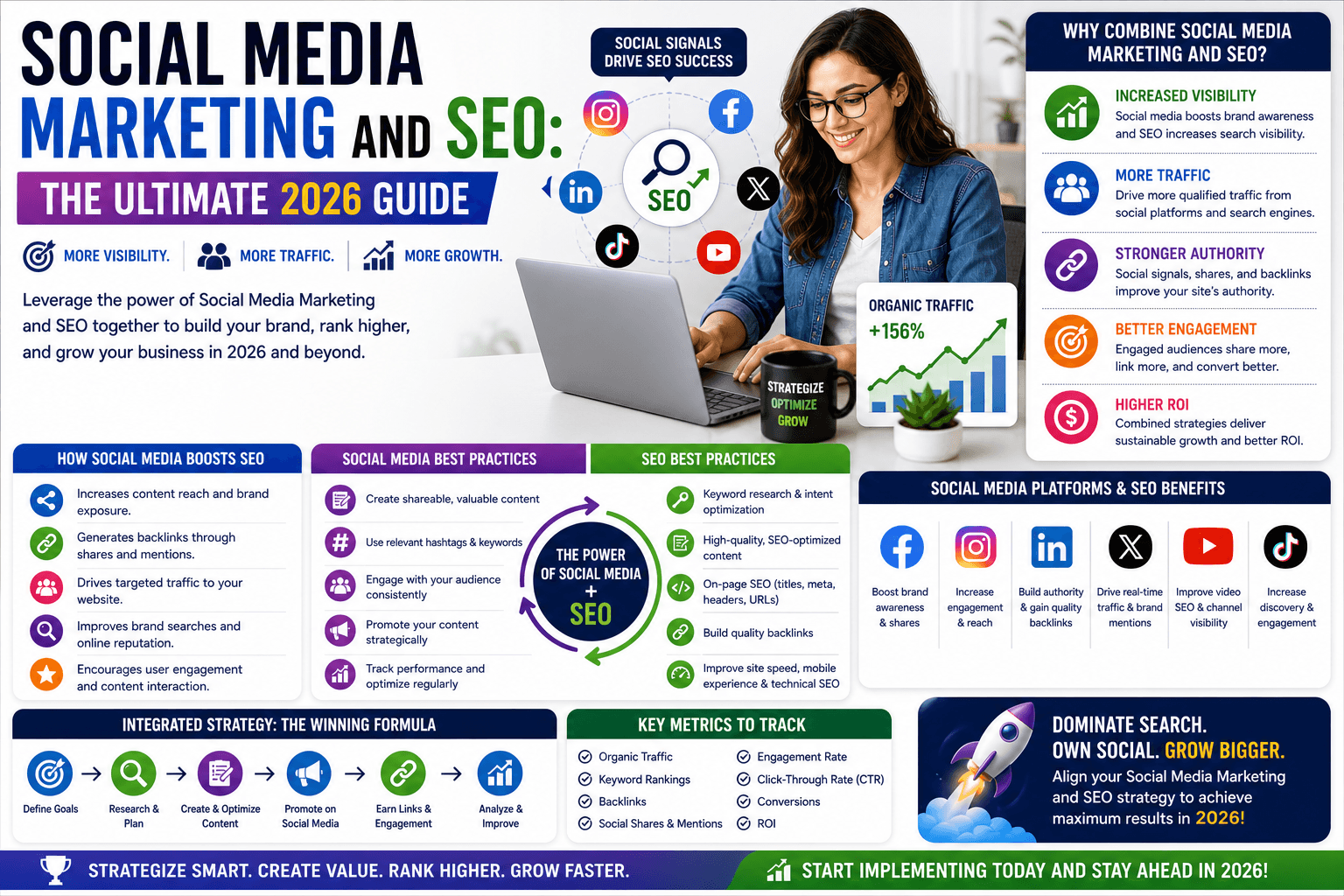
In the digital era, businesses can no longer rely on just one channel for visibility. Social media marketing and SEO have emerged as two pillars of online success. While SEO drives organic traffic from search engines, social media marketing builds engagement, brand awareness, and community loyalty. Together, they create a powerful synergy that can dramatically improve your digital presence.
This guide covers everything: from understanding the roles of each, how they complement each other, step-by-step strategies, tools, case studies, and FAQs for marketers of all levels.
Table of Contents
- What is Social Media Marketing?
- What is SEO?
- How Social Media Marketing Supports SEO
- How SEO Supports Social Media Marketing
- Combined Strategies for Maximum Impact
- Step-by-Step Action Plan
- Tools to Integrate Social Media Marketing and SEO
- Common Mistakes to Avoid
- Case Studies: Real-World Success
- FAQs About Social Media Marketing and SEO
- Conclusion
1. What is Social Media Marketing?
Social media marketing (SMM) is the use of social platforms like Facebook, Instagram, LinkedIn, Twitter, TikTok, and Pinterest to promote a brand, product, or service.
Core Objectives:
- Audience Engagement: Create meaningful interactions with your followers.
- Content Distribution: Share blog posts, videos, infographics, and other content.
- Brand Awareness: Build recognition and trust among potential customers.
- Lead Generation: Encourage users to take action (subscribe, download, purchase).
- Community Building: Foster a loyal online community around your brand.
Social media marketing is not just posting content—it’s a strategic approach to connecting with your audience, influencing their decisions, and supporting overall marketing goals.
2. What is SEO?
Search Engine Optimization (SEO) is the process of optimizing your website and content to rank higher on search engines like Google, Bing, and Yahoo. SEO focuses on:
- On-page SEO: Keywords, meta tags, headings, URLs, internal linking
- Off-page SEO: Backlinks, social mentions, influencer partnerships
- Technical SEO: Site speed, mobile-friendliness, schema markup, crawlability
The ultimate goal of SEO is to increase organic traffic, enhance user experience, and improve visibility in search results.
3. How Social Media Marketing Supports SEO
While social media signals don’t directly impact Google rankings, SMM indirectly boosts SEO in several ways:
3.1 Driving Website Traffic
Every social post that links back to your website increases traffic, improving metrics like time on site, bounce rate, and pageviews, which are factors Google considers for ranking.
3.2 Generating Backlinks
Content shared widely on social media has a higher chance of being linked by other websites, increasing your site’s authority and SEO strength.
3.3 Enhancing Brand Awareness
Strong social media presence increases branded searches. When users search for your brand, Google often shows your social profiles alongside website results, improving SERP real estate.
3.4 Supporting Content Marketing
Social media helps distribute SEO-optimized blog posts, videos, and infographics, which can attract links, engagement, and higher organic visibility.
3.5 Boosting Local SEO
For local businesses, social platforms like Google Business Profile, Facebook, and Instagram reinforce local search signals. Check-ins, reviews, and social mentions help local rankings.
4. How SEO Supports Social Media Marketing
SEO and content optimization also enhance social media performance:
- Optimized content increases the shareability of posts.
- Keyword-rich descriptions improve the visibility of social media posts in search engines.
- Landing pages optimized for SEO improve conversion rates when traffic comes from social channels.
- Analytics insights from SEO help tailor social campaigns to target high-performing keywords.
5. Combined Strategies for Maximum Impact
5.1 Align Content Strategy
Ensure your social media posts and blog content target similar keywords and audience segments. Use SEO insights to identify trending topics and integrate them into your social media calendar.
5.2 Cross-Promote SEO Content
Share blogs, guides, or videos on social media with optimized captions and hashtags to increase reach and engagement.
5.3 Encourage User Engagement
Comments, shares, and likes on social media signal popularity. Popular content is more likely to be cited or linked by other sites, helping SEO.
5.4 Monitor Analytics
Use both Google Analytics and social insights to track which posts drive traffic, engagement, and conversions. Adjust strategy accordingly.
5.5 Leverage Influencer Marketing
Influencers can amplify content reach, increase backlinks, and generate social proof, which indirectly boosts SEO.
6. Step-by-Step Action Plan
- Audit Current SEO and Social Media: Identify strengths, weaknesses, and opportunities.
- Keyword Research: Find relevant keywords for blog posts and social campaigns.
- Content Creation: Produce SEO-optimized content that can also be shared on social platforms.
- Social Sharing Plan: Schedule posts across multiple channels with hashtags and keywords.
- Monitor Performance: Track traffic, engagement, and conversions from both channels.
- Adjust and Optimize: Use analytics to improve future campaigns.
7. Tools to Integrate Social Media Marketing and SEO
- Hootsuite / Buffer / Sprout Social – Schedule and analyze posts
- Google Analytics – Track referral traffic from social media
- Ahrefs / SEMrush / Moz – Keyword research and backlink analysis
- BuzzSumo – Identify trending topics and content
- Canva / Adobe Suite – Create shareable visual content
8. Common Mistakes to Avoid
- Posting without considering SEO or keywords
- Ignoring engagement metrics on social media
- Over-promoting products without valuable content
- Not linking social content back to your website
- Inconsistent posting schedule
9. Case Studies: Real-World Success
Case Study 1: HubSpot
- HubSpot optimized blog content for SEO and promoted posts via social media.
- Result: 50% increase in organic traffic and 30% more social shares in 6 months.
Case Study 2: Buffer
- Buffer leveraged social posts to distribute SEO content.
- Result: Gained high-quality backlinks and improved Google rankings for targeted keywords.
Case Study 3: Local Business
- A small restaurant integrated SEO-focused blog posts with Instagram posts.
- Result: Local search traffic increased by 70%, and reservations grew 40% through social engagement.
Frequently Asked Questions (FAQs) About Social Media Marketing and SEO
Q1: What is social media marketing and SEO?
A: Social media marketing and SEO are complementary digital strategies. Social media marketing drives engagement and traffic through platforms like Facebook and Instagram, while SEO improves a website’s visibility on search engines.
Q2: How does social media marketing impact SEO?
A: Although not a direct ranking factor, social media marketing and SEO work together by increasing website traffic, generating backlinks, and enhancing brand visibility, which indirectly supports search rankings.
Q3: Can SEO improve the effectiveness of social media marketing?
A: Yes. Optimized content for social media marketing and SEO ensures your posts are discoverable, shareable, and linked back to your website, boosting both search visibility and engagement.
Q4: Which platforms are most effective for integrating social media marketing and SEO?
A: Platforms like Facebook, LinkedIn, Instagram, Twitter, and YouTube are ideal because content shared there can drive traffic, engagement, and backlinks that benefit SEO.
Q5: How often should I post content for social media marketing and SEO purposes?
A: Posting consistently is key. Share SEO-optimized content 3–5 times per week on each platform while monitoring engagement and traffic to adjust the strategy.
Q6: Are there tools to manage social media marketing and SEO together?
A: Yes. Tools like Hootsuite, Buffer, SEMrush, Ahrefs, Google Analytics, and BuzzSumo help track performance, schedule content, and measure SEO impact from social media campaigns.
Conclusion
Social media marketing and SEO are no longer separate silos—they are complementary strategies that work together to enhance online visibility, drive traffic, and generate conversions. By integrating both strategically, businesses can:
- Increase website traffic and engagement
- Improve search engine rankings
- Generate high-quality leads
- Build long-term brand authority
Marketers who combine SEO best practices with social media campaigns will gain a significant competitive advantage in the digital landscape. Start implementing these strategies today to see measurable results.