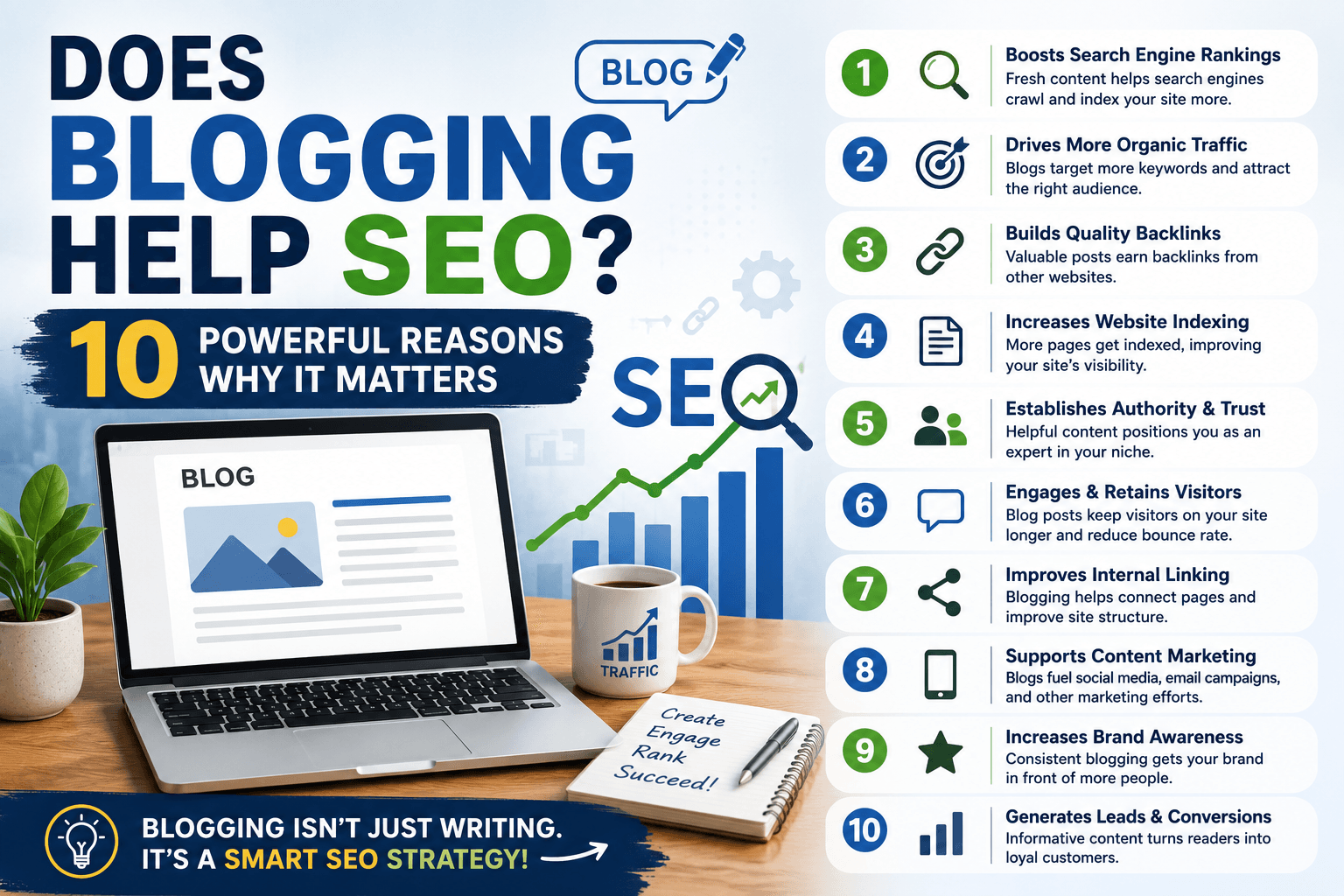
Blogging is one of the most effective ways to improve search engine optimization (SEO) and increase website visibility online. In today’s competitive digital landscape, businesses, bloggers, and website owners constantly look for ways to attract more visitors from Google and other search engines. Fortunately, blogging plays a major role in helping websites rank higher and gain organic traffic.
However, many people still ask an important question: does blogging help SEO?
The simple answer is yes. Blogging helps SEO by creating fresh content, targeting keywords, improving internal linking, increasing engagement, and building authority. Moreover, high-quality blog posts give search engines more pages to index, which increases your chances of ranking for different search queries.
In this complete guide, you will learn exactly how blogging improves SEO, why it matters for online growth, and how to create blog content that ranks well on Google.
What Is Blogging in SEO?
Blogging in SEO refers to publishing informative, optimized content on your website to improve search engine rankings and attract organic traffic.
Typically, blog posts focus on:
- Answering user questions
- Solving problems
- Targeting keywords
- Providing useful information
- Increasing website authority
As a result, blogs help search engisnes better understand your website and its relevance to specific topics.
Does Blogging Help SEO?
Yes, blogging significantly helps SEO when done correctly. In fact, websites with active blogs often receive more indexed pages, backlinks, and organic traffic than websites without blogs.
Additionally, blogging helps search engines discover fresh content regularly. Since Google values updated and informative pages, consistent blogging can improve your rankings over time.
Furthermore, blogs create opportunities to target long-tail keywords that may be difficult to rank for using only service or product pages.
How Blogging Helps SEO
1. Blogging Increases Keyword Opportunities
Every blog post gives you another opportunity to target important keywords related to your business or niche.
For example, instead of targeting only one broad keyword, blogs allow you to rank for:
- Long-tail keywords
- Question-based searches
- Informational queries
- Local SEO terms
Consequently, your website becomes visible for a wider range of search terms.
2. Blogging Creates Fresh Content
Search engines prefer websites that update content regularly. Therefore, publishing new blog posts signals that your website is active and relevant.
Fresh content helps:
- Improve crawl frequency
- Increase indexing
- Boost website relevance
- Keep visitors engaged
As a result, blogging supports long-term SEO growth.
3. Blogging Improves Internal Linking
Blog posts make internal linking easier and more effective.
For example, you can link blog articles to:
- Service pages
- Product pages
- Related blog posts
- Contact pages
Because of this, search engines can better understand your website structure and distribute authority across important pages.
4. Blogging Helps Build Authority
High-quality blog content demonstrates expertise and trustworthiness.
When users consistently find valuable information on your website, they are more likely to:
- Trust your brand
- Share your content
- Return to your website
- Link to your articles
Consequently, your website gains stronger authority in your industry.
5. Blogging Increases Organic Traffic
One of the biggest SEO benefits of blogging is increased organic traffic.
Each optimized blog post becomes another entry point for search engine visitors. Over time, multiple blog articles can generate thousands of monthly visits from Google.
Additionally, evergreen blog content can continue attracting traffic for years.
6. Blogging Supports Backlink Growth
Useful blog posts naturally attract backlinks from other websites.
For example, people often link to:
- Guides
- Tutorials
- Statistics
- Case studies
- Expert opinions
Since backlinks remain a major Google ranking factor, blogging can improve your domain authority significantly.
7. Blogging Improves User Engagement
Engaging blog content encourages visitors to spend more time on your website.
As a result, blogging can improve:
- Time on page
- Bounce rate
- User interaction
- Page views
These positive user signals may help support better SEO performance.
8. Blogging Helps Target Search Intent
Different users search with different intentions.
Some users want:
- Information
- Solutions
- Comparisons
- Reviews
- Tutorials
Blogging allows you to create content specifically designed for each type of search intent. Consequently, your website becomes more relevant to user needs.
9. Blogging Supports Local SEO
Businesses can use blogging to improve local search visibility.
For example, local blogs can target:
- City names
- Local events
- Regional keywords
- Community topics
As a result, local businesses may attract nearby customers more effectively.
10. Blogging Helps Websites Rank for More Pages
The more quality pages your website has, the more opportunities you have to rank on Google.
Without a blog, most websites only have:
- Homepages
- Service pages
- Product pages
However, blogging expands your searchable content dramatically.
Best Blogging Practices for SEO
Focus on High-Quality Content
Google rewards useful and informative content. Therefore, always prioritize quality over quantity.
High-quality blogs should:
- Answer questions clearly
- Provide accurate information
- Be easy to read
- Include helpful formatting
Use Keywords Naturally
Keywords are important for SEO. However, overusing them can hurt readability and rankings.
Instead:
- Use keywords naturally
- Include semantic variations
- Avoid keyword stuffing
Optimize Headings Properly
Use heading structures correctly:
- One H1 title
- Multiple H2 sections
- Supporting H3 subsections
This improves readability and SEO structure.
Add Internal Links
Internal links help users and search engines navigate your site.
Therefore, connect related blog posts whenever possible.
Improve Readability
Readable content keeps visitors engaged longer.
For better readability:
- Use short paragraphs
- Add bullet points
- Include transition words
- Write clearly
Optimize Meta Titles and Descriptions
SEO titles and meta descriptions improve click-through rates from search results.
Always include:
- Main keyword
- Power words
- Clear benefits
Common Blogging Mistakes That Hurt SEO
Keyword Stuffing
Repeating the same keyword too often can hurt rankings and readability.
Thin Content
Short, low-value content rarely performs well in search engines.
Ignoring Search Intent
Content should match what users actually want to learn.
Poor Formatting
Large blocks of text reduce readability and user engagement.
Duplicate Content
Copying content from other websites can damage SEO performance.
How Long Does Blogging Take to Improve SEO?
SEO blogging is a long-term strategy. Generally, results may take:
- Several weeks
- A few months
- Sometimes longer
However, consistent blogging usually delivers stronger long-term traffic growth compared to short-term marketing methods.
Does Blogging Still Matter for SEO in 2026?
Absolutely. Even with AI-generated search results and changing algorithms, blogging remains essential for SEO.
In fact, high-quality content is becoming more important because search engines prioritize:
- Helpful information
- Expertise
- User satisfaction
- Topical authority
Therefore, businesses that continue publishing valuable blog content are more likely to succeed online.
Frequently Asked Questions About Does Blogging Help SEO
Does blogging help SEO for small businesses?
Yes, blogging helps SEO for small businesses by increasing online visibility, targeting more keywords, and attracting organic traffic from search engines. Additionally, regular blogging helps businesses build authority in their industry.
How does blogging help SEO rankings?
Blogging helps SEO rankings because it creates fresh content, improves internal linking, increases keyword opportunities, and supports backlink growth. As a result, search engines may rank your website higher over time.
Does blogging help SEO even for new websites?
Yes, blogging helps SEO for new websites by giving search engines more content to crawl and index. Furthermore, optimized blog posts can help new websites compete for long-tail keywords more easily.
How often should I blog for SEO?
For better SEO results, businesses should publish blog content consistently. In most cases, posting one to four high-quality blog articles per month can improve SEO performance steadily.
Does blogging help SEO traffic long-term?
Absolutely. Blogging helps SEO traffic long-term because evergreen blog posts can continue attracting visitors for months or even years after publishing.
What type of blog content is best for SEO?
The best blog content for SEO includes:
- How-to guides
- Tutorials
- List articles
- Industry tips
- Product comparisons
- Frequently asked questions
Additionally, informative content that matches user intent performs best in search results.
Does blogging help SEO with backlinks?
Yes, blogging helps SEO by attracting backlinks from other websites. For example, valuable guides and research articles are more likely to earn natural links.
Can blogging improve local SEO?
Yes, blogging supports local SEO when businesses create content targeting local keywords, city names, and community topics. Consequently, local customers can find the business more easily online.
Does blogging help SEO without paid advertising?
Yes, blogging helps SEO organically without relying on paid ads. Although SEO takes time, quality blog content can generate consistent traffic without ongoing advertising costs.
Why does Google value blog content?
Google values blog content because blogs often provide updated, relevant, and helpful information for users. Therefore, websites with quality blogs may perform better in search rankings.
Does blogging help SEO for eCommerce websites?
Yes, blogging helps SEO for eCommerce websites by targeting informational keywords that product pages may not rank for. Additionally, blog content can attract potential customers earlier in the buying journey.
Does blogging help SEO if the blog posts are short?
Generally, longer and more detailed blog posts perform better in search engines. However, shorter blog posts can still help SEO if they provide useful information and satisfy user intent.
Does blogging help SEO with Google indexing?
Yes, blogging helps SEO by giving Google more pages to crawl and index. As a result, your website may appear in more search results over time.
Why does blogging help SEO better than static pages?
Blogging helps SEO better than static pages because blogs are updated more frequently and target a wider range of keywords. Furthermore, blog posts often answer specific user questions.
Does blogging help SEO for affiliate websites?
Absolutely. Blogging helps SEO for affiliate websites by creating content around product reviews, comparisons, tutorials, and buying guides that attract search traffic.
Does blogging help SEO even without backlinks?
Yes, blogging helps SEO even without backlinks because optimized content improves keyword targeting, internal linking, and topical authority. However, backlinks can improve results even more.
Does blogging help SEO on mobile search?
Yes, blogging helps SEO on mobile devices when blog posts are optimized for readability, page speed, and mobile-friendly formatting.
Can old blog posts still help SEO?
Yes, old blog posts can continue helping SEO for years if they remain relevant and updated regularly. In fact, evergreen content often becomes a major traffic source.
Does blogging help SEO through social sharing?
Yes, blogging can indirectly help SEO through social sharing because popular content may attract more visibility, traffic, and backlinks from other websites.
How quickly does blogging help SEO results appear?
SEO blogging results usually take time. In most cases, blogging helps SEO gradually over several months as search engines crawl, index, and rank your content.
Final Thoughts
So, does blogging help SEO? Without question, yes.
Blogging improves SEO by increasing keyword visibility, generating organic traffic, improving internal linking, building authority, and helping websites rank for more search terms.
Moreover, consistent blogging creates long-term growth opportunities that continue delivering value over time.
Whether you run a personal blog, business website, or eCommerce store, investing in high-quality blog content can significantly improve your search engine performance and online visibility.
When done correctly, blogging becomes one of the most powerful tools for sustainable SEO success.