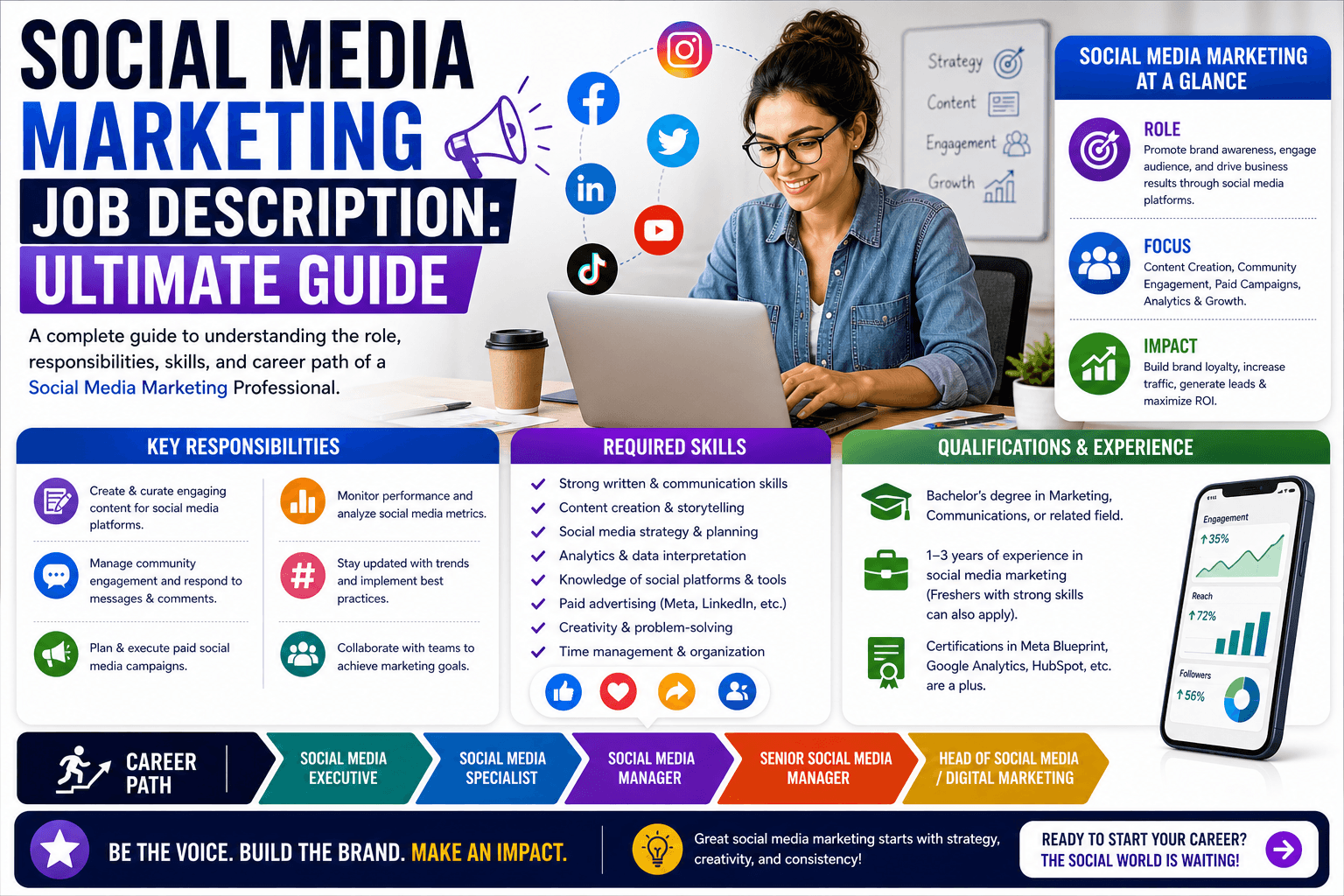
Social media has revolutionized the way brands connect with their audience. The role of a social media marketer has evolved from simply posting content to managing full-scale campaigns, analyzing data, and shaping a brand’s online identity. A clear understanding of the social media marketing job description is vital for businesses looking to hire the right talent and for individuals aspiring to build a successful career in digital marketing.
What is a Social Media Marketing Role?
A social media marketing professional is responsible for managing a brand’s presence across platforms such as Facebook, Instagram, Twitter, LinkedIn, TikTok, Pinterest, and emerging channels. The primary goal is to engage the target audience, increase brand awareness, drive website traffic, and ultimately generate leads and sales.
Unlike traditional marketing roles, social media marketing combines creativity, analytical thinking, and strategy, requiring a unique set of skills.
Key Responsibilities
The responsibilities of a social media marketer are diverse and dynamic, including:
1. Content Creation & Management
- Designing visually appealing graphics, videos, and animations tailored for each social platform.
- Writing compelling copy for posts, ads, captions, and stories that resonate with the audience.
- Planning and maintaining a social media calendar to ensure consistent posting.
- Optimizing content for engagement, reach, and conversions.
2. Social Media Strategy Development
- Researching competitors and analyzing industry trends to create effective campaigns.
- Identifying target audiences and segmenting strategies accordingly.
- Setting measurable goals, KPIs, and benchmarks to track performance.
- Collaborating with marketing, PR, and creative teams for aligned campaigns.
3. Community Engagement
- Responding to comments, messages, mentions, and reviews promptly.
- Building strong relationships with followers to increase loyalty and trust.
- Monitoring online conversations about the brand and industry.
- Managing crises or negative feedback professionally.
4. Paid Advertising & Campaign Management
- Planning and executing social media advertising campaigns using platforms like Facebook Ads Manager, LinkedIn Ads, TikTok Ads, and Google Display Network.
- Monitoring campaign performance, adjusting targeting, ad creatives, and budgets to maximize ROI.
- A/B testing ad content to identify high-performing creatives.
5. Analytics & Reporting
- Tracking metrics such as reach, engagement rate, click-through rates, conversion rates, and follower growth.
- Using analytics tools like Google Analytics, Sprout Social, Buffer, or Hootsuite.
- Preparing detailed performance reports and presenting insights to management.
- Making data-driven decisions to improve future campaigns.
6. Brand Awareness & Reputation Management
- Ensuring brand consistency across all social platforms.
- Promoting campaigns that align with company values and messaging.
- Leveraging social media to enhance brand reputation and visibility.
Required Skills for a Social Media Marketer
A successful social media marketer must possess a combination of technical and soft skills:
- Creativity – Ability to produce unique and engaging content.
- Communication – Excellent writing, verbal, and visual communication skills.
- Analytical Thinking – Ability to interpret data and derive actionable insights.
- Technical Proficiency – Knowledge of social media management tools, analytics platforms, and basic graphic/video editing tools.
- Adaptability – Ability to stay updated with ever-changing social media trends and algorithms.
- Time Management – Handling multiple campaigns and deadlines efficiently.
Typical Qualifications
Most companies prefer candidates with:
- A Bachelor’s degree in Marketing, Communications, Business, or a related field.
- Proven experience managing social media accounts or campaigns.
- Familiarity with SEO, content marketing, and digital marketing principles.
- Certifications from platforms like HubSpot, Facebook Blueprint, or Google Digital Garage are advantageous.
Daily Responsibilities: A Day in the Life
A social media marketer’s day can include:
- Reviewing analytics from previous posts and campaigns.
- Creating and scheduling posts for different platforms.
- Responding to audience interactions and messages.
- Brainstorming new content ideas and campaigns with the creative team.
- Managing paid social media campaigns and ad budgets.
- Reporting weekly or monthly metrics to stakeholders.
Career Growth & Opportunities
Social media marketing is a high-demand field, with numerous career advancement opportunities:
- Social Media Manager – Oversees the overall social strategy.
- Content Strategist – Focuses on long-term content planning and campaigns.
- Digital Marketing Manager – Manages broader digital campaigns across channels.
- Brand Manager – Responsible for overall brand communication and positioning.
- Marketing Director or CMO – Senior leadership role, shaping the entire marketing vision.
Common Challenges in the Role
- Keeping up with ever-changing social media algorithms.
- Managing online crises or negative feedback.
- Measuring ROI accurately across different campaigns.
- Creating content that consistently engages the audience.
- Balancing creativity with data-driven decisions.
Social Media Marketing Tools You Should Know
- Scheduling & Management: Hootsuite, Buffer, Sprout Social, Later
- Analytics: Google Analytics, Facebook Insights, LinkedIn Analytics
- Design & Content Creation: Canva, Adobe Photoshop, Adobe Premiere Pro
- Advertising Platforms: Facebook Ads Manager, LinkedIn Ads, TikTok Ads
Frequently Asked Questions (FAQs) About Social Media Marketing Job Description
Q1: What exactly is a social media marketing job description?
A: A social media marketing job description outlines the roles, responsibilities, and skills expected from a social media professional. It helps both employers and candidates understand the position clearly.
Q2: What skills are commonly listed in a social media marketing job description?
A: Most social media marketing job descriptions highlight skills like content creation, analytics, communication, paid advertising, and community management.
Q3: How does a social media marketing job description differ for small vs. large companies?
A: In smaller companies, a social media marketing job description often includes a wider range of responsibilities, while larger companies may specialize roles like content creator, strategist, or paid ads manager.
Q4: Why is a social media marketing job description important for hiring?
A: Clear social media marketing job descriptions ensure that both employers and candidates have aligned expectations, reducing miscommunication and improving recruitment success.
Q5: Can a social media marketing job description evolve over time?
A: Absolutely. As platforms, trends, and business goals change, a social media marketing job description may be updated to include new tools, responsibilities, and strategies.
Conclusion
The social media marketing job description highlights a role that is both challenging and rewarding. It requires creativity, strategic thinking, and analytical skills. For businesses, hiring the right social media marketer can significantly boost brand awareness, engagement, and revenue. For professionals, it’s an exciting career path with ample opportunities for growth, learning, and creativity.
Social media marketing is more than just posting updates—it’s about building relationships, telling stories, and driving measurable business results in the digital world.