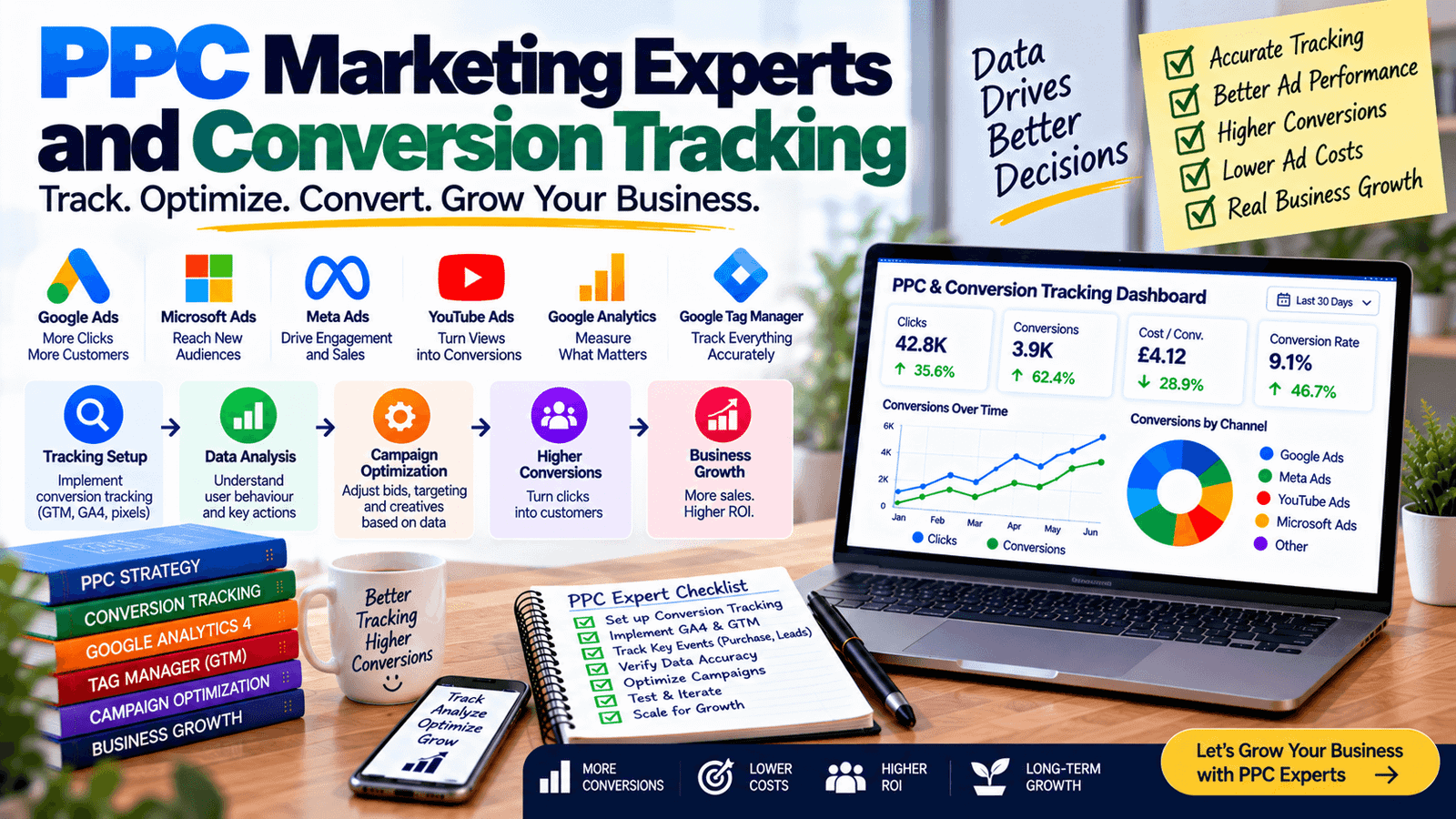
In a competitive digital marketplace, getting your business noticed online is becoming increasingly difficult. Thousands of companies compete for the same customers, keywords, and search queries every day. Having a website is no longer enough. Businesses need a well-planned strategy to attract the right audience, generate qualified traffic, and convert visitors into customers.
This is where SEO PPC services can make a significant difference.
Search engine optimization, commonly known as SEO, focuses on improving a website’s visibility in organic search results. Pay-per-click advertising, or PPC, uses paid advertisements to place businesses in front of potential customers when they search for relevant products and services.
Although SEO and PPC work differently, combining them can create a stronger search marketing strategy. SEO can help businesses develop sustainable organic visibility, while PPC can provide targeted exposure through paid advertising campaigns.
In this complete guide, we will explore what SEO PPC services are, how they work, their benefits, important strategies, costs, common mistakes, performance metrics, and how businesses can choose the right service provider.
What Are SEO PPC Services?
SEO PPC services refer to digital marketing services that combine search engine optimization with pay-per-click advertising.
SEO focuses on unpaid search visibility. PPC focuses on paid search visibility. When these strategies are coordinated, businesses can target potential customers through multiple areas of the search engine results page.
A typical SEO strategy may include:
- Keyword research
- Competitor research
- On-page optimization
- Technical SEO
- Content creation
- Internal linking
- Local SEO
- Website optimization
- Link-building strategies
- Performance monitoring
PPC services may include:
- Google Ads campaign setup
- Keyword research
- Search advertising
- Shopping campaigns
- Display advertising
- Remarketing
- Audience targeting
- Ad copywriting
- Bid management
- Conversion tracking
- Campaign optimization
The exact services depend on the provider and the needs of the business.
Why SEO PPC Services Matter for Modern Businesses
Search engines play an important role in how consumers discover products, services, companies, and information.
Someone looking for a restaurant, software product, lawyer, marketing agency, clothing store, or local service may begin their search online.
If your business does not appear when potential customers search for relevant terms, you may miss valuable opportunities.
SEO PPC services can help address this challenge through two complementary channels.
SEO provides organic visibility
SEO aims to improve your website’s ability to appear in unpaid search results.
PPC provides paid visibility
PPC allows businesses to pay for advertisements that can appear when users search for targeted keywords or meet specific audience criteria.
Using both strategies gives businesses additional opportunities to reach their target audience.
SEO vs PPC: What Is the Difference?
SEO and PPC are often discussed together, but they are not the same thing.
SEO
SEO focuses on organic search visibility.
Businesses generally do not pay a search engine every time someone clicks an organic result. Instead, businesses invest in improving their website, content, technical performance, authority, and relevance.
SEO may take time to produce significant results, especially in competitive industries.
PPC
PPC is a paid advertising model.
Advertisers typically pay when someone clicks an advertisement, although campaign pricing and bidding models can vary depending on the platform and campaign type.
PPC can provide faster visibility, but advertising costs continue as campaigns spend their budgets.
Why Combine SEO and PPC?
Rather than treating SEO and PPC as completely separate channels, businesses can use information from both.
For example, PPC campaigns may reveal:
- High-converting keywords
- Customer search behavior
- Effective advertising messages
- Strong commercial search terms
- Valuable geographic areas
SEO research can also identify:
- Valuable content topics
- Long-tail keywords
- Search intent
- Competitor opportunities
- Questions customers frequently ask
This shared information can make the overall search strategy more informed.
Key Benefits of SEO PPC Services
There are several potential benefits to combining SEO and PPC.
1. Increased Search Visibility
A business can potentially appear in both organic and paid areas of search results.
This creates multiple opportunities for users to discover the brand.
2. Better Keyword Insights
SEO and PPC both rely heavily on keyword research.
PPC data can provide useful information about which search terms attract clicks and conversions.
That information may help inform future SEO content.
3. Faster Market Testing
PPC can be used to test keywords, offers, headlines, and landing pages before investing heavily in long-term SEO content.
4. Long-Term Organic Growth
SEO can help build sustainable organic visibility over time.
Unlike a paid advertisement, an optimized page can continue attracting organic traffic after the initial optimization work.
5. Better Audience Understanding
Search data can reveal what potential customers are looking for, what problems they have, and which products or services interest them.
6. More Conversion Opportunities
Businesses can use SEO and PPC to target customers at different stages of the buying journey.
How SEO PPC Services Work
A professional search marketing strategy normally begins with research.
Step 1: Business and Website Analysis
The first step is understanding the business.
An SEO PPC provider may examine:
- Products
- Services
- Target customers
- Locations
- Competitors
- Existing website traffic
- Existing advertising campaigns
- Conversion goals
- Marketing budget
This information helps create a more relevant strategy.
Step 2: Keyword Research
Keyword research identifies the search terms potential customers use.
A strong keyword strategy considers:
- Search intent
- Relevance
- Competition
- Search volume
- Commercial value
- Conversion potential
Step 3: Competitor Research
Competitor analysis can reveal opportunities and weaknesses.
Marketers may examine:
- Competitor keywords
- Organic rankings
- Paid advertisements
- Landing pages
- Content
- Offers
- Calls to action
Step 4: SEO Optimization
The website can then be optimized based on the research.
This may involve technical improvements, content optimization, metadata, internal linking, and new content creation.
Step 5: PPC Campaign Development
Paid campaigns can be structured around relevant keywords, audiences, products, locations, and business objectives.
Step 6: Conversion Tracking
Tracking should be configured so the business can measure valuable actions.
Step 7: Continuous Optimization
SEO and PPC are not usually one-time activities.
Performance data should be reviewed regularly and used to make improvements.
Keyword Research for SEO PPC Services
Keyword research is one of the most important components of search marketing.
A keyword represents a word or phrase that someone enters into a search engine.
For example, someone looking for a marketing agency may search for:
- SEO agency
- PPC agency
- digital marketing services
- Google Ads management
- SEO PPC services
- PPC management company
Different keywords indicate different levels of intent.
High-Intent Keywords
High-intent keywords often indicate that someone is close to making a purchase or contacting a business.
Examples include:
- Hire PPC agency
- SEO services near me
- Google Ads management company
- PPC marketing agency
Informational Keywords
These searches are usually focused on learning.
Examples include:
- What is PPC?
- How does SEO work?
- How to improve Google rankings
Long-Tail Keywords
Long-tail keywords are more specific search phrases.
For example:
SEO PPC services for small businesses
is more specific than:
SEO services
Long-tail keywords can help businesses target more specific customer needs.
On-Page SEO in SEO PPC Services
On-page SEO focuses on optimizing individual website pages.
Important elements include:
Page Titles
Page titles help search engines and users understand the subject of a page.
A strong title should be relevant and descriptive.
Meta Descriptions
Meta descriptions summarize page content and can encourage users to click a search result.
Headings
H1, H2, and H3 headings organize content and make pages easier to understand.
Keyword Optimization
Keywords should be used naturally in relevant areas of the page.
Avoid excessive repetition because keyword stuffing can make content difficult to read.
Internal Links
Internal links connect relevant pages on a website.
They can help users discover additional information while also helping search engines understand website structure.
Image Optimization
Images should have descriptive file names and appropriate alternative text where relevant.
Technical SEO
Technical SEO focuses on the underlying structure and performance of a website.
Important areas include:
Website Speed
Slow websites can create a poor user experience.
Mobile Optimization
Many users access websites through smartphones, so mobile usability is important.
Crawlability
Search engines need to be able to discover website pages.
Indexing
Important pages should be accessible for indexing.
Website Architecture
A logical structure makes it easier for users and search engines to navigate the site.
Broken Links
Broken internal and external links can negatively affect usability.
Content Marketing and SEO PPC Services
Content plays an important role in SEO.
Businesses can create content around the questions and problems their customers are searching for.
Examples include:
- Blog posts
- Guides
- Tutorials
- FAQs
- Case studies
- Comparison articles
- Product pages
- Service pages
- Industry reports
A good content strategy should focus on usefulness rather than simply inserting keywords.
For example, a company offering PPC management could create content about:
- Google Ads optimization
- PPC keyword research
- Landing page optimization
- PPC conversion tracking
- Common Google Ads mistakes
- PPC budgeting
- E-commerce PPC
This content can attract users who are researching before making a purchasing decision.
Google Ads and SEO PPC Services
Google Ads is one of the most widely used PPC advertising platforms.
Businesses can create campaigns targeting specific search queries, audiences, locations, products, and other criteria.
Google Ads campaigns can include different formats and objectives.
Depending on the business, campaigns may involve:
- Search ads
- Shopping campaigns
- Display advertising
- Video advertising
- Remarketing
- Performance-focused campaign types
The appropriate campaign structure depends on the business model and marketing objectives.
PPC Keyword Management
Selecting keywords is only the beginning.
Campaign managers should also monitor how keywords perform.
Important areas include:
- Click-through rate
- Cost per click
- Conversion rate
- Conversion volume
- Cost per conversion
- Search terms
- Quality and relevance
Search-term analysis can help identify irrelevant queries.
Negative keywords can then be used to reduce exposure to unwanted searches.
PPC Ad Copywriting
Ad copy needs to communicate value quickly.
A good advertisement may include:
- Relevant keyword
- Clear benefit
- Unique selling point
- Offer
- Trust element
- Call to action
For example, instead of using a generic message such as:
Digital Marketing Services
a business might use a more specific message such as:
Grow Qualified Leads With Targeted PPC Campaigns
The exact message should reflect the actual service and customer needs.
Landing Page Optimization
A successful PPC campaign does not guarantee conversions.
The landing page also matters.
Imagine someone clicks an advertisement promising a specific service but arrives on a homepage with no clear connection to the advertisement.
That disconnect can create confusion.
A strong landing page should generally provide:
- Clear headline
- Relevant information
- Simple navigation
- Strong call to action
- Trust signals
- Contact options
- Mobile-friendly experience
The landing page should match the user’s search intent and the promise made in the advertisement.
Conversion Tracking for SEO PPC Services
Conversion tracking allows businesses to understand which marketing activities generate meaningful results.
Possible conversions include:
- Purchases
- Leads
- Phone calls
- Form submissions
- Bookings
- Sign-ups
- Downloads
- Quote requests
Without proper tracking, businesses may know how many people clicked but not whether those visitors generated business value.
Accurate measurement is therefore an important part of SEO PPC services.
Important SEO Metrics
SEO performance can be measured through various indicators.
Organic Traffic
Shows how many visitors arrive through organic search.
Keyword Rankings
Shows how pages perform for targeted search terms.
Organic Conversions
Measures actions generated through organic traffic.
Click-Through Rate
Shows how frequently users click a search result when it is displayed.
Engagement Metrics
Depending on the analytics platform, businesses can examine engagement-related behavior to understand how visitors interact with their websites.
Important PPC Metrics
PPC campaigns have their own performance indicators.
Click-Through Rate
CTR measures how often users click an advertisement after seeing it.
Cost Per Click
CPC indicates the average amount paid for clicks.
Conversion Rate
Conversion rate measures how frequently clicks result in desired actions.
Cost Per Conversion
This indicates the advertising cost associated with generating conversions.
ROAS
Return on ad spend compares revenue generated with advertising expenditure.
Businesses should select metrics that match their goals.
SEO PPC Services for Local Businesses
Local businesses can use search marketing to reach customers within specific geographic areas.
Examples include:
- Restaurants
- Dentists
- Law firms
- Plumbers
- Electricians
- Cleaning companies
- Salons
- Clinics
- Repair services
- Real estate businesses
Local SEO may involve optimizing business information, location pages, reviews, and other local signals.
PPC can target specific locations and search terms.
For example, a local plumbing company might target searches related to emergency plumbing in its service area.
SEO PPC Services for E-Commerce Businesses
E-commerce businesses often have hundreds or thousands of products.
SEO can help optimize:
- Product pages
- Category pages
- Collection pages
- Buying guides
- Product comparisons
PPC can support:
- Product advertising
- Search campaigns
- Remarketing
- Promotional campaigns
- High-intent product searches
E-commerce businesses should also pay close attention to product feeds, conversion tracking, pricing, landing pages, and customer experience.
SEO PPC Services for B2B Companies
B2B businesses often have longer sales cycles.
A potential customer may search for information several times before contacting a company.
SEO can help attract users during the research stage.
PPC can help reach users searching for commercial terms.
B2B campaigns may focus on:
- Lead generation
- Demo requests
- Consultation bookings
- Whitepaper downloads
- Contact forms
- Sales inquiries
The marketing strategy should account for the longer decision-making process.
SEO PPC Services for New Websites
New websites often have little or no organic search authority.
PPC can provide an additional source of targeted traffic while SEO work is developing.
At the same time, SEO can begin building the site’s long-term organic foundation.
A new website strategy might include:
- Technical SEO setup
- Keyword research
- Core service pages
- Helpful content
- Conversion tracking
- PPC campaign testing
- Landing page optimization
- Continuous performance analysis
SEO PPC Services and Remarketing
Not every visitor converts during their first visit.
Remarketing can help businesses reconnect with eligible previous visitors or audiences, depending on the advertising platform and applicable privacy requirements.
For example, an e-commerce business may want to reconnect with people who previously interacted with its website.
Remarketing can be useful for businesses with longer buying journeys.
Common Mistakes Businesses Make
1. Choosing Keywords Without Considering Intent
A keyword may generate traffic but still fail to generate customers if the search intent is wrong.
2. Sending Every PPC Click to the Homepage
Specific advertisements often work better with relevant landing pages.
3. Ignoring Conversion Tracking
Without tracking, businesses may struggle to identify profitable campaigns.
4. Focusing Only on Traffic
Traffic is useful, but business outcomes such as leads and sales are usually more important.
5. Using the Same Strategy Forever
Search behavior, competitors, advertising costs, and customer expectations can change.
Campaigns should be reviewed regularly.
6. Ignoring Mobile Users
A website or landing page that works poorly on mobile devices can lose potential customers.
7. Creating Low-Quality Content
SEO content should provide genuine value rather than simply repeating keywords.
How to Choose the Right SEO PPC Services Provider
Choosing a provider is an important business decision.
Consider the following factors.
Experience
Ask about previous experience with businesses similar to yours.
Strategy
A provider should be able to explain how SEO and PPC will work together.
Reporting
Ask what reports will be provided and which metrics will be tracked.
Communication
Regular communication makes it easier to discuss changes and campaign priorities.
Transparency
You should understand what you are paying for and what work will be performed.
Conversion Tracking
Make sure the provider understands how to measure the actions that matter to your business.
Realistic Expectations
Be cautious of providers promising guaranteed rankings or guaranteed advertising results without considering market conditions and other variables.
How Much Do SEO PPC Services Cost?
The cost of SEO PPC services can vary considerably.
Pricing can depend on:
- Business size
- Website size
- Industry
- Competition
- Number of keywords
- Number of locations
- Advertising budget
- Content requirements
- Technical SEO requirements
- Campaign complexity
- Reporting requirements
- Level of management
Some agencies offer fixed monthly packages.
Others charge based on project scope, advertising spend, hourly work, or a combination of pricing models.
Businesses should compare the actual deliverables rather than comparing prices alone.
How Long Does It Take to See Results?
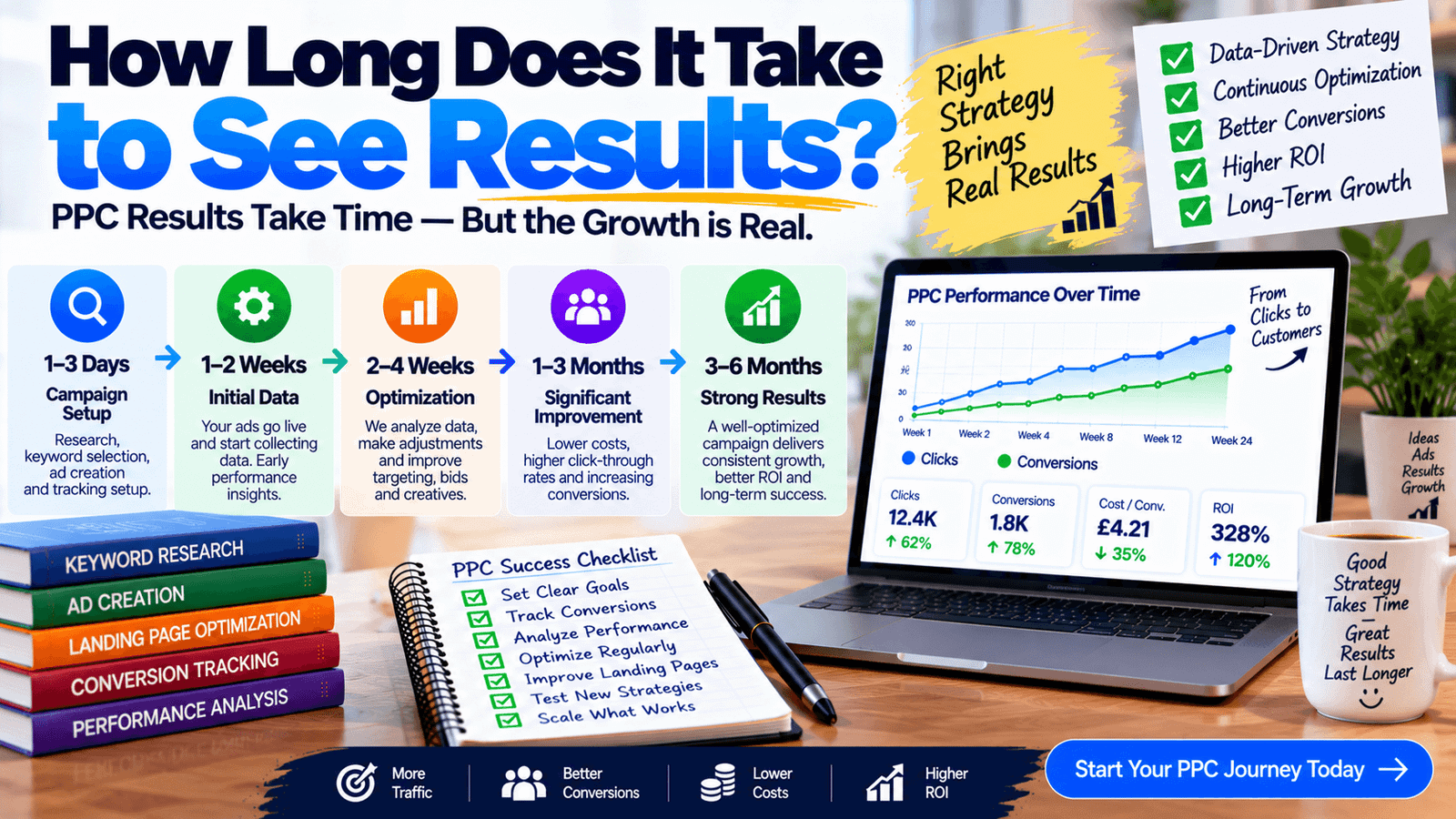
SEO and PPC operate on different timelines.
PPC campaigns can begin generating impressions and clicks relatively quickly after launch and approval.
SEO generally takes longer because organic visibility depends on many factors, including competition, website quality, content, authority, technical performance, and search engine evaluation.
For this reason, businesses should think about both short-term and long-term objectives.
PPC can support immediate campaign activity, while SEO can contribute to longer-term organic growth.
How to Build an SEO PPC Strategy
A practical strategy can follow these stages.
Stage 1: Define Goals
Determine whether the primary objective is:
- Sales
- Leads
- Calls
- Bookings
- Brand awareness
- Website traffic
- Product discovery
Stage 2: Identify the Audience
Understand who the business wants to reach.
Stage 3: Research Keywords
Identify relevant search terms based on intent and business value.
Stage 4: Optimize the Website
Improve technical SEO, content, landing pages, and user experience.
Stage 5: Launch PPC Campaigns
Build targeted campaigns based on business objectives.
Stage 6: Track Conversions
Measure meaningful actions.
Stage 7: Analyze Data
Review performance across SEO and PPC.
Stage 8: Optimize
Improve keywords, advertisements, content, landing pages, and budgets based on the data.
The Future of SEO PPC Services
Search marketing continues to evolve.
Businesses need to pay attention to changes in:
- Search behavior
- Artificial intelligence
- Search engine features
- Advertising platforms
- Privacy requirements
- User expectations
- Mobile usage
- Content quality
The fundamentals remain important: understand your audience, create useful content, target relevant searches, provide good user experiences, and measure meaningful outcomes.
Businesses that continuously test and improve their strategies can adapt more effectively to changes in the search landscape.
Frequently Asked Questions About SEO PPC Services
What are SEO PPC services?
SEO PPC services combine organic search engine optimization with paid-per-click advertising. The goal is to help businesses increase search visibility, attract relevant visitors, and generate conversions through both channels.
Are SEO PPC services worth using?
The value of SEO PPC services depends on a business’s goals, industry, competition, budget, website, and target audience. Combining both channels can provide access to organic and paid search opportunities.
What does an SEO PPC agency do?
An SEO PPC agency may manage keyword research, SEO optimization, content strategy, Google Ads campaigns, ad copy, landing pages, conversion tracking, reporting, and ongoing campaign optimization.
Can SEO PPC services increase sales?
They can support sales by increasing relevant traffic and creating opportunities for conversions. However, sales also depend on factors such as pricing, products, customer experience, competition, and website quality.
Can SEO PPC services generate leads?
Yes. Businesses can use SEO and PPC to target relevant searches and direct potential customers toward lead-generation pages, forms, calls, bookings, or consultations.
Can small businesses use SEO PPC services?
Yes. Small businesses can create strategies based on their available budget and target market. Local SEO and geographically targeted PPC campaigns can be particularly relevant for location-based businesses.
Are SEO PPC services suitable for e-commerce?
Yes. E-commerce companies can use SEO to improve product and category visibility while PPC can help promote products and target commercial search queries.
Does PPC replace SEO?
No. PPC and SEO are different channels. PPC provides paid visibility, while SEO focuses on organic visibility. Businesses may use both depending on their goals.
Does SEO replace PPC?
SEO does not necessarily replace PPC either. Organic rankings can take time to develop, while PPC can provide paid exposure for selected searches.
How important is keyword research?
Keyword research is fundamental to both SEO and PPC because it helps identify what potential customers are searching for and what type of intent those searches represent.
What is conversion tracking?
Conversion tracking measures valuable actions taken by users, such as purchases, leads, phone calls, bookings, or form submissions.
Why are landing pages important for PPC?
Landing pages provide the destination after a user clicks an advertisement. A relevant, clear, and user-friendly landing page can help support better conversion performance.
Can SEO PPC services help local companies?
Yes. Local companies can use SEO to improve visibility for location-based searches and PPC to target relevant customers within selected geographic areas.
How often should PPC campaigns be optimized?
There is no single schedule that works for every campaign. Optimization frequency depends on budget, campaign size, data volume, industry, and performance. Campaigns should be reviewed regularly.
How often should SEO content be updated?
Content should be reviewed based on relevance, performance, search intent, industry changes, and whether the information remains accurate and useful.
What PPC metrics should businesses monitor?
Common metrics include impressions, clicks, CTR, CPC, conversions, conversion rate, cost per conversion, and ROAS where revenue tracking is appropriate.
What SEO metrics should businesses monitor?
Businesses may monitor organic traffic, keyword visibility, organic conversions, click-through rate, indexed pages, and engagement-related metrics.
Can PPC data help SEO?
Yes. PPC campaigns can provide insights into keyword performance, search intent, advertisements, and conversion behavior that may inform SEO decisions.
Can SEO data help PPC?
Yes. SEO research can reveal valuable keywords, topics, search intent, and audience questions that may help inform PPC campaigns.
How much should I spend on PPC?
There is no universal advertising budget. The appropriate budget depends on the industry, target market, customer value, competition, goals, and available resources.
How do I know if my PPC campaign is successful?
Success should be evaluated against the campaign objective. For example, an e-commerce company may focus on purchases and ROAS, while a service business may focus on qualified leads and cost per lead.
What is the difference between SEO traffic and PPC traffic?
SEO traffic comes from organic search results, while PPC traffic comes from paid advertisements. The two channels can have different costs, timelines, and user behaviors.
Can SEO PPC services help a new business?
Yes. A new business can use SEO to establish organic visibility while PPC provides opportunities for targeted paid traffic.
Should I hire an SEO PPC agency or manage campaigns myself?
This depends on your experience, available time, budget, campaign complexity, and business requirements. Businesses with limited PPC or SEO experience may choose professional management.
What should I provide to an SEO PPC agency?
Useful information can include:
- Business goals
- Target audience
- Products or services
- Geographic markets
- Existing website access
- Advertising account access
- Previous campaign data
- Conversion goals
- Marketing budget
How can I improve my SEO PPC strategy?
Start by reviewing your goals, keyword targeting, website performance, landing pages, conversion tracking, content, PPC campaigns, and performance data. Then prioritize improvements based on business impact.
Final Thoughts
SEO PPC services provide businesses with a way to combine organic search optimization and paid advertising into a coordinated digital marketing strategy.
SEO can help establish long-term organic visibility, while PPC can provide targeted exposure for valuable searches. When both channels are supported by strong keyword research, relevant content, optimized landing pages, accurate conversion tracking, and regular analysis, businesses can make better use of their search marketing efforts.
The most effective strategy is not simply about generating more traffic. It is about attracting the right audience, delivering a useful experience, and turning relevant visitors into meaningful business outcomes.
If you are looking to improve your search visibility, generate qualified leads, increase online sales, or build a stronger digital presence, SEO PPC services can be an important part of your overall marketing strategy.