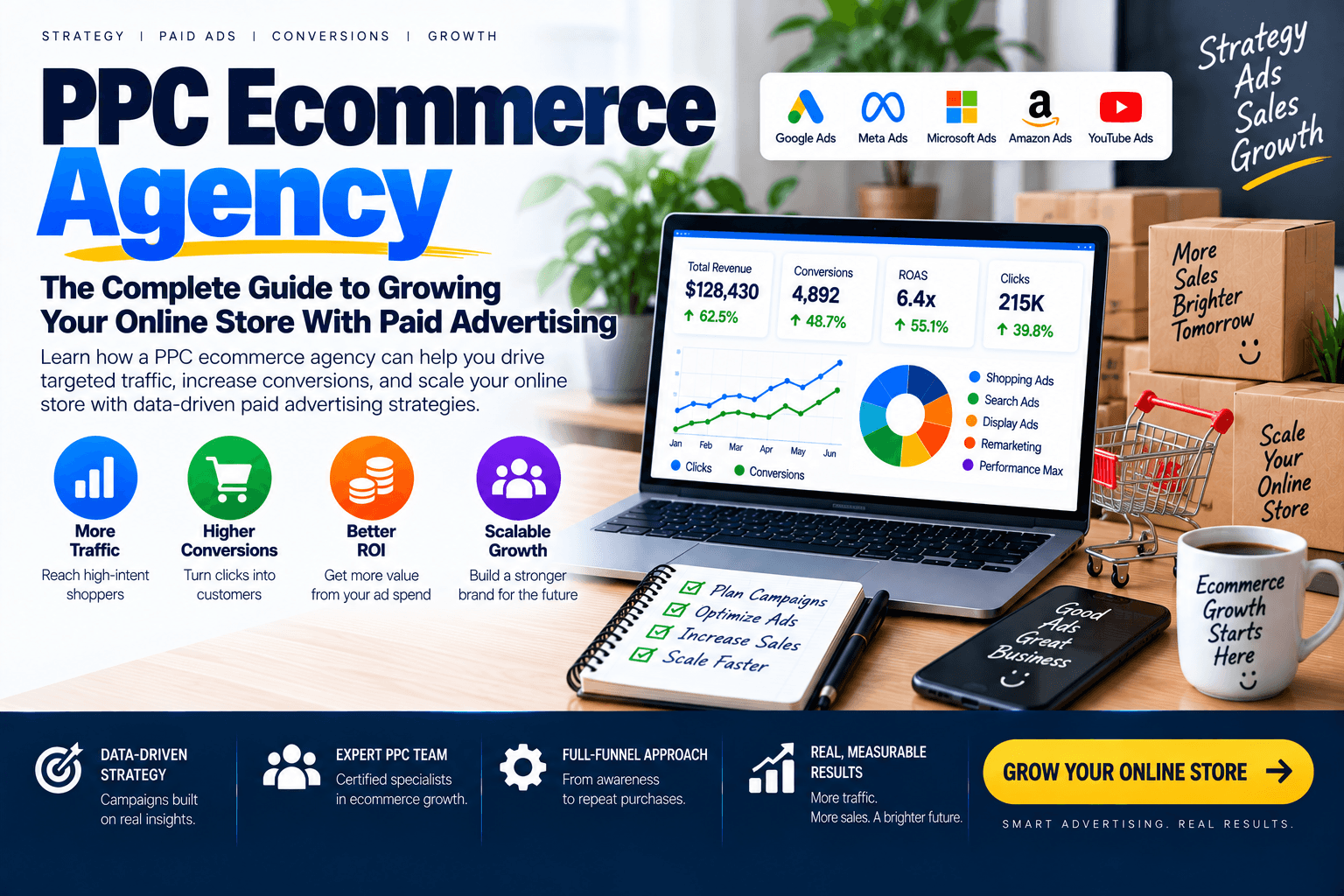
The ecommerce industry has become more competitive than ever. Thousands of online stores are competing for the same customers, making it increasingly difficult for brands to gain visibility and generate consistent sales through organic methods alone. While search engine optimization (SEO), content marketing, and social media strategies are valuable for long-term growth, paid advertising provides ecommerce businesses with an opportunity to reach potential customers immediately.
This is where a PPC ecommerce agency becomes valuable.
A PPC ecommerce agency specializes in creating, managing, and optimizing paid advertising campaigns specifically for online stores. These agencies help brands attract high-intent shoppers, increase product visibility, reduce advertising waste, and achieve better returns on their marketing investment.
From Google Shopping campaigns and search ads to remarketing strategies and social media advertising, a professional PPC agency uses data-driven methods to turn advertising clicks into measurable revenue.
What Is a PPC Ecommerce Agency?
A PPC ecommerce agency is a digital marketing company that focuses on pay-per-click advertising solutions for ecommerce businesses. Unlike general advertising agencies, PPC ecommerce specialists understand the unique challenges of online stores, including product catalog management, customer purchase journeys, conversion tracking, and profitability goals.
PPC advertising works on a simple principle: businesses pay a fee every time someone clicks on their advertisement. These ads appear on search engines, shopping platforms, websites, and social media channels.
Popular PPC platforms used by ecommerce agencies include:
- Google Ads
- Google Shopping Ads
- Microsoft Advertising
- Amazon Advertising
- Facebook Ads
- Instagram Ads
- TikTok Ads
- Pinterest Ads
A skilled PPC ecommerce agency does more than create advertisements. It researches customer behavior, analyzes competitors, manages budgets, tests campaigns, and continuously improves performance.
Why PPC Is Important for Ecommerce Businesses
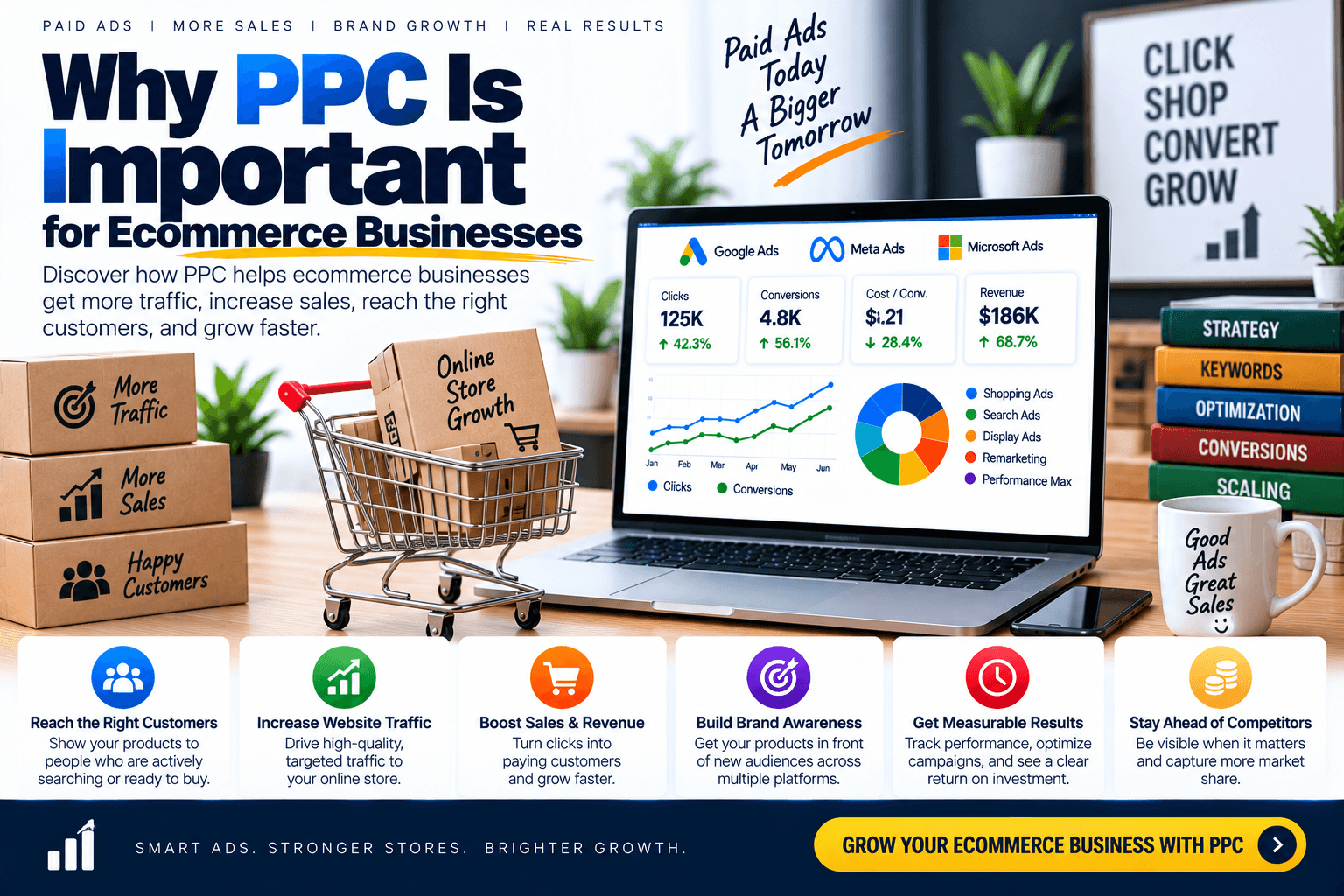
1. Immediate Visibility in Search Results
One of the biggest challenges ecommerce businesses face is getting noticed by potential customers. Even if a website has excellent products, customers cannot buy from a store they cannot find.
PPC advertising solves this problem by placing products directly in front of users who are actively searching for them.
For example, when a customer searches for:
- “best wireless headphones”
- “buy organic skincare products”
- “women’s running shoes online”
PPC ads allow ecommerce brands to appear at the top of search results.
This immediate visibility helps businesses attract customers faster than waiting months for organic rankings.
2. Reaching Customers With High Purchase Intent
Not every website visitor is ready to buy. PPC allows ecommerce businesses to target users who already demonstrate buying interest.
A PPC ecommerce agency analyzes:
- Search keywords
- Customer demographics
- Shopping behavior
- Previous website visits
- Product interests
This allows businesses to focus their advertising budget on audiences most likely to convert.
3. Increasing Ecommerce Sales and Revenue
The primary objective of PPC advertising is not just generating clicks but increasing profitable sales.
A professional PPC ecommerce agency focuses on metrics such as:
- Return on Ad Spend (ROAS)
- Conversion rate
- Average order value
- Customer acquisition cost
- Profit margins
By continuously optimizing campaigns, agencies help businesses generate more revenue from their advertising budget.
How a PPC Ecommerce Agency Works
A professional PPC agency follows a structured process to create successful campaigns.
Step 1: Business and Market Analysis
Before launching advertisements, a PPC ecommerce agency studies the business, products, competitors, and target customers.
The analysis includes:
- Product profitability
- Existing advertising performance
- Customer demographics
- Competitor strategies
- Market trends
This research helps create a customized advertising plan.
Step 2: PPC Strategy Development
Every ecommerce business has different goals. Some brands want more sales, while others want increased brand awareness or customer acquisition.
A PPC strategy may include:
- Search campaigns
- Shopping campaigns
- Display advertising
- Remarketing campaigns
- Social media ads
- Performance-based optimization
The agency determines the best channels and budget allocation based on business objectives.
Step 3: Keyword Research and Audience Targeting
Keyword research is one of the most important parts of PPC success.
A PPC ecommerce agency identifies keywords that customers use when searching for products.
Keywords are categorized into:
High-Intent Keywords
These keywords indicate strong purchase intent.
Examples:
- Buy men’s watches online
- Order running shoes
- Best laptop deals
Product-Specific Keywords
These focus on specific items.
Examples:
- Nike Air Max men’s shoes
- Samsung Galaxy accessories
Long-Tail Keywords
These are more specific searches with lower competition.
Examples:
- Affordable waterproof hiking shoes for men
Effective keyword targeting improves traffic quality and reduces wasted spending.
Types of PPC Campaigns for Ecommerce Businesses
Google Search Ads
Google Search Ads allow ecommerce businesses to appear when customers search for relevant products.
Benefits include:
- Immediate visibility
- High purchase intent traffic
- Flexible budget control
- Measurable performance
Search ads are especially effective for products with strong customer demand.
Google Shopping Ads
Google Shopping Ads are among the most powerful advertising options for ecommerce stores.
These ads display:
- Product images
- Prices
- Ratings
- Store information
Shopping ads help customers compare products before clicking, making them highly valuable for online retailers.
A PPC ecommerce agency manages:
- Product feed optimization
- Campaign structure
- Bid management
- Negative keywords
- Performance analysis
Remarketing Campaigns
Many customers visit an ecommerce website but leave without purchasing.
Remarketing helps businesses reconnect with these visitors through targeted advertisements.
Examples:
- Showing abandoned cart reminders
- Promoting previously viewed products
- Offering special discounts
Remarketing improves conversion rates by bringing interested shoppers back.
Social Media PPC Advertising
Social media platforms provide powerful targeting options for ecommerce brands.
A PPC ecommerce agency can create campaigns on platforms such as:
- TikTok
These campaigns can target users based on interests, behavior, demographics, and online activity.
Benefits of Hiring a PPC Ecommerce Agency
Expert Knowledge and Experience
PPC platforms constantly change. New features, bidding strategies, and advertising policies require continuous learning.
A professional agency has specialists who understand:
- Campaign structures
- Ad optimization
- Audience targeting
- Conversion improvement
Better Budget Management
Poor PPC management can quickly waste advertising money.
Common budget problems include:
- Expensive irrelevant clicks
- Poor keyword targeting
- Low-performing campaigns
- Incorrect bidding strategies
A PPC ecommerce agency monitors campaigns daily to improve spending efficiency.
Advanced Tracking and Analytics
Successful PPC requires accurate measurement.
Agencies track:
- Sales conversions
- Revenue generated
- Customer acquisition cost
- Click performance
- User behavior
This data allows businesses to make informed marketing decisions.
Continuous Campaign Optimization
PPC campaigns require ongoing improvement.
A PPC agency regularly:
- Tests advertisements
- Adjusts bids
- Removes poor-performing keywords
- Improves targeting
- Updates product feeds
Continuous optimization leads to better results over time.
How to Choose the Best PPC Ecommerce Agency
Choosing the right PPC partner is an important decision. Businesses should consider several factors.
Look for Ecommerce Experience
An agency that understands ecommerce has experience with:
- Product catalogs
- Shopping ads
- Conversion tracking
- Online sales funnels
Check Previous Results
Before hiring an agency, review:
- Case studies
- Client reviews
- Campaign results
- Industry experience
A proven track record indicates reliability.
Understand Their Reporting Process
A trustworthy PPC agency provides transparent reports showing:
- Advertising costs
- Sales generated
- Campaign performance
- Growth opportunities
Evaluate Their Strategy
Avoid agencies that only focus on increasing clicks.
A successful ecommerce PPC strategy should focus on:
- Revenue growth
- Profitability
- Customer acquisition
- Long-term performance
Common PPC Mistakes Ecommerce Businesses Make
Ignoring Conversion Tracking
Without proper tracking, businesses cannot understand which campaigns generate sales.
Using Broad Keywords Without Optimization
Broad keywords often attract irrelevant traffic and increase advertising costs.
Not Testing Ad Copy
Successful PPC campaigns require continuous testing of:
- Headlines
- Descriptions
- Images
- Offers
Failing to Optimize Product Pages
Even excellent advertisements cannot succeed if landing pages are poor.
Product pages should have:
- Clear descriptions
- High-quality images
- Customer reviews
- Easy checkout process
PPC Ecommerce Agency Pricing Factors
The cost of hiring a PPC ecommerce agency depends on several factors:
- Advertising budget
- Number of products
- Campaign complexity
- Platforms used
- Management requirements
- Business goals
Some agencies charge a fixed monthly fee, while others use a percentage of advertising spend.
Businesses should focus on value and results rather than choosing the cheapest option.
The Future of PPC Ecommerce Marketing
PPC advertising continues to evolve with artificial intelligence, automation, and advanced customer targeting.
Future ecommerce PPC trends include:
- AI-powered campaign optimization
- Automated bidding systems
- Personalized advertisements
- Voice search advertising
- Improved customer data analysis
Businesses that work with experienced PPC ecommerce agencies will be better prepared to adapt to these changes.
Frequently Asked Questions (FAQs) About PPC Ecommerce Agency
1. What is a PPC ecommerce agency?
A PPC ecommerce agency is a digital marketing company that specializes in managing pay-per-click advertising campaigns for online stores. These agencies create, optimize, and monitor paid advertising campaigns on platforms such as Google Ads, Google Shopping, Amazon Ads, and social media networks to help ecommerce businesses increase traffic, sales, and revenue.
2. Why should ecommerce businesses hire a PPC ecommerce agency?
Ecommerce businesses hire PPC agencies because managing paid advertising requires expertise, continuous optimization, and data analysis. A professional PPC ecommerce agency helps businesses target the right customers, reduce wasted ad spend, improve conversion rates, and achieve a higher return on investment (ROI).
3. How does a PPC ecommerce agency increase online sales?
A PPC ecommerce agency increases sales by targeting customers who are actively searching for products, creating high-performing advertisements, optimizing keywords, improving product feeds, and using remarketing strategies to convert potential buyers into customers.
4. What PPC platforms do ecommerce agencies use?
Most PPC ecommerce agencies use multiple advertising platforms, including:
- Google Ads
- Google Shopping Ads
- Microsoft Ads
- Amazon Advertising
- Facebook Ads
- Instagram Ads
- TikTok Ads
- Pinterest Ads
The best platform depends on the products, audience, and business goals.
5. How much does a PPC ecommerce agency cost?
The cost of hiring a PPC ecommerce agency varies depending on factors such as advertising budget, campaign complexity, number of products, and required services. Agencies may charge a fixed monthly management fee, a percentage of ad spend, or a customized pricing model based on business needs.
6. How long does it take to see results from PPC advertising?
PPC campaigns can generate traffic immediately after launch. However, achieving consistent and profitable results usually requires ongoing testing, optimization, and data collection. Many campaigns improve significantly after several weeks or months of continuous management.
7. What services does a PPC ecommerce agency provide?
A PPC ecommerce agency typically provides services such as:
- PPC campaign setup
- Keyword research
- Google Shopping management
- Search ad creation
- Remarketing campaigns
- Audience targeting
- Conversion tracking
- Bid optimization
- Performance reporting
- A/B testing
8. What is the difference between PPC and SEO for ecommerce?
PPC provides immediate visibility by placing paid advertisements in front of potential customers, while SEO focuses on improving organic search rankings over time. Many successful ecommerce businesses use both PPC and SEO together to achieve short-term and long-term growth.
9. Can a PPC ecommerce agency help reduce advertising costs?
Yes. A PPC ecommerce agency can reduce unnecessary spending by optimizing keywords, removing low-performing ads, improving targeting, adjusting bids, and focusing the budget on campaigns that generate profitable sales.
10. What metrics does a PPC ecommerce agency track?
A PPC agency tracks important performance metrics, including:
- Click-through rate (CTR)
- Cost per click (CPC)
- Conversion rate
- Return on ad spend (ROAS)
- Cost per acquisition (CPA)
- Revenue generated
- Customer lifetime value
These metrics help measure campaign success.
11. Do PPC ecommerce agencies manage Google Shopping campaigns?
Yes. Many PPC ecommerce agencies specialize in Google Shopping campaigns. They optimize product feeds, organize campaigns, manage bids, improve product visibility, and analyze performance to increase sales.
12. Can a PPC ecommerce agency help with Amazon advertising?
Yes. Many agencies offer Amazon PPC management services, including keyword research, sponsored product ads, campaign optimization, and sales performance analysis to help sellers improve product rankings and revenue.
13. Is PPC advertising suitable for small ecommerce businesses?
Yes. PPC can be effective for small ecommerce businesses because campaigns can be started with flexible budgets. A PPC ecommerce agency can help small brands target specific audiences and compete with larger companies.
14. How do PPC ecommerce agencies measure success?
PPC agencies measure success based on business goals. Common success indicators include increased sales, improved ROAS, lower customer acquisition costs, higher conversion rates, and better overall advertising efficiency.
15. What should I look for when choosing a PPC ecommerce agency?
When choosing a PPC ecommerce agency, consider:
- Ecommerce industry experience
- Proven campaign results
- Transparent reporting
- Knowledge of advertising platforms
- Customized strategies
- Client reviews and testimonials
A good agency focuses on business growth, not just generating clicks.
16. Can a PPC ecommerce agency manage campaigns internationally?
Yes. Many PPC ecommerce agencies manage international campaigns by targeting different countries, languages, currencies, and customer segments while adapting advertising strategies for each market.
17. Do PPC agencies provide regular reports?
Most professional PPC ecommerce agencies provide regular reports showing campaign performance, advertising costs, conversions, sales results, and recommendations for future improvements.
18. What makes a PPC ecommerce agency different from a regular PPC agency?
A PPC ecommerce agency specializes in online retail and understands ecommerce-specific requirements such as product feeds, shopping campaigns, inventory changes, customer purchase behavior, and sales optimization.
19. Can PPC advertising work for all types of ecommerce products?
PPC can work for many ecommerce products, but success depends on factors such as product demand, competition, pricing, profit margins, and campaign strategy. A PPC agency analyzes these factors before creating campaigns.
20. How can I get started with a PPC ecommerce agency?
To get started, businesses should define their goals, evaluate their current advertising performance, choose an experienced PPC ecommerce agency, and develop a strategy focused on increasing profitable sales and long-term growth.
Conclusion: Grow Your Ecommerce Business With a PPC Ecommerce Agency
A PPC ecommerce agency helps online businesses compete in a crowded digital marketplace by creating targeted advertising campaigns that generate traffic, sales, and measurable growth.
With expert keyword research, campaign management, conversion tracking, and continuous optimization, PPC specialists help ecommerce brands maximize their advertising investment.
Whether you are launching a new online store or scaling an established ecommerce brand, partnering with the right PPC ecommerce agency can provide the expertise and strategies needed to achieve sustainable online growth.