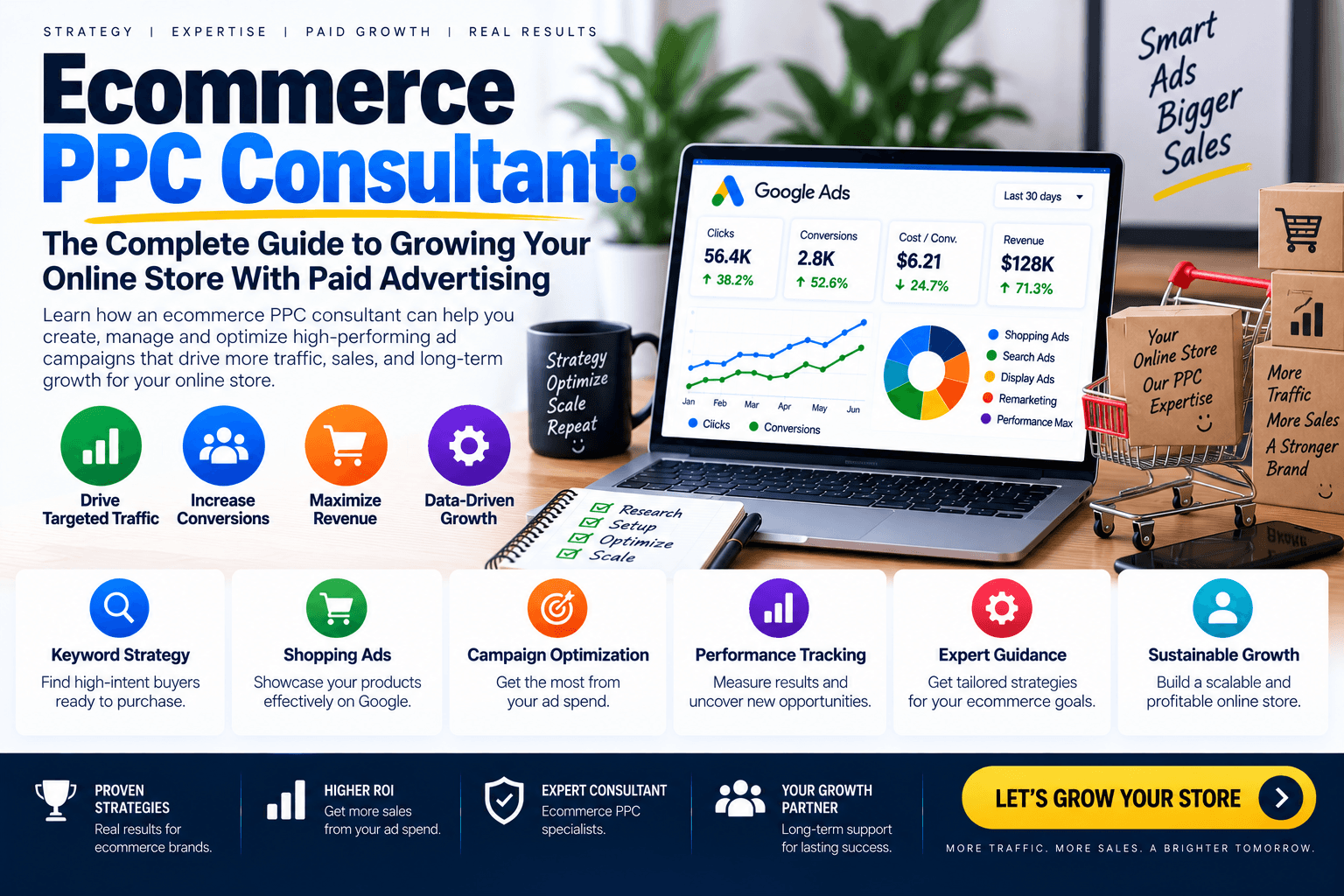
The ecommerce industry is growing rapidly, but increased competition has made it more difficult for online businesses to attract customers organically. Thousands of brands compete for the same audience, keywords, and product searches every day. To succeed in this competitive environment, businesses need targeted advertising strategies that reach potential buyers at the right moment.
An ecommerce PPC consultant helps online stores achieve this goal by creating and optimizing paid advertising campaigns that generate qualified traffic, improve conversions, and increase revenue. With expertise in platforms like Google Ads, Google Shopping, Amazon Ads, and social media advertising, PPC consultants help businesses make smarter decisions about their marketing budgets.
Paid advertising can deliver quick results, but successful PPC campaigns require continuous research, testing, monitoring, and optimization. A professional consultant understands customer behavior, advertising algorithms, bidding strategies, and conversion optimization techniques to maximize campaign performance.
This complete guide explains the role of an ecommerce PPC consultant, the services they provide, the benefits of hiring one, common mistakes to avoid, and how they help ecommerce brands achieve sustainable growth.
What Is an Ecommerce PPC Consultant?
An ecommerce PPC consultant is a paid advertising specialist who helps online businesses create, manage, and improve pay-per-click campaigns. Their main focus is increasing product visibility, attracting potential customers, and generating profitable sales through digital advertising.
Unlike traditional advertising methods, PPC allows businesses to target specific audiences and measure every aspect of campaign performance. A consultant uses data analysis and industry knowledge to improve advertising results.
An ecommerce PPC consultant typically works on:
- Campaign strategy development
- Keyword research
- Competitor analysis
- Google Shopping optimization
- Search campaign management
- Product feed improvement
- Audience targeting
- Bid management
- Conversion tracking
- Performance reporting
The primary objective is not just getting clicks but generating valuable customers and increasing return on investment.
Why Ecommerce Businesses Need a PPC Consultant
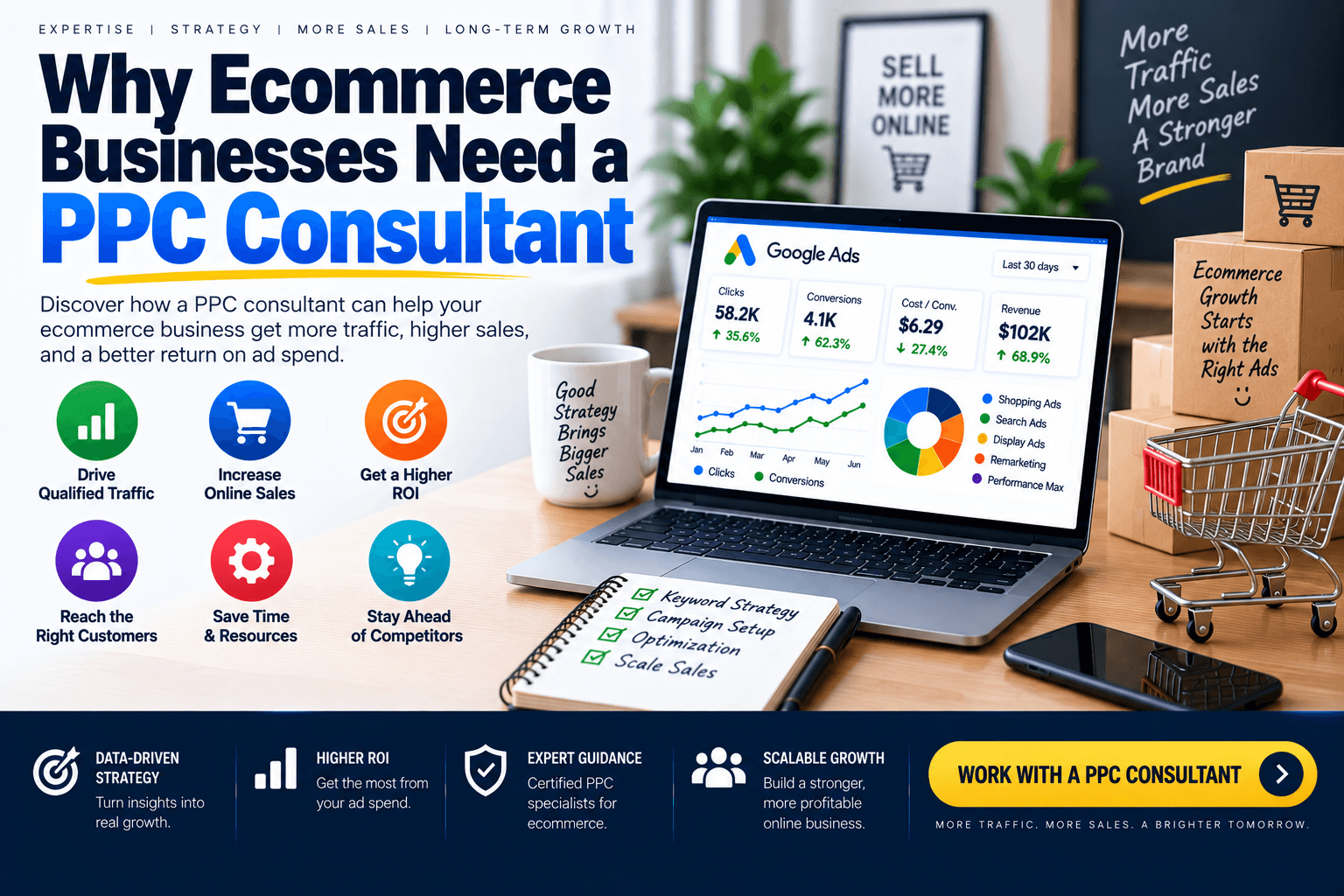
Running successful PPC campaigns requires more than creating advertisements. Many businesses spend money on paid ads but fail to achieve profitable results because of poor targeting, weak campaign structures, or incorrect optimization.
An experienced ecommerce PPC consultant helps businesses avoid these challenges.
1. Competitive Advantage in the Ecommerce Market
Online competition continues to increase across almost every industry. Businesses need effective strategies to appear before customers when they are searching for products.
A PPC consultant analyzes:
- Competitor advertising strategies
- Market trends
- Customer search behavior
- Product demand
- Keyword opportunities
This information helps create campaigns that outperform competitors.
2. Efficient Use of Advertising Budget
Without proper management, PPC budgets can quickly be wasted on irrelevant clicks and low-quality traffic.
A consultant improves budget efficiency by:
- Removing ineffective keywords
- Adjusting bids based on performance
- Targeting valuable audiences
- Improving campaign structure
- Prioritizing profitable products
This ensures advertising investment contributes directly to business growth.
3. Faster Customer Acquisition
Organic marketing strategies often require significant time before producing results. PPC campaigns can provide immediate visibility and attract customers faster.
An ecommerce PPC consultant creates campaigns designed to reach users who are already interested in specific products.
This helps businesses:
- Launch new products
- Increase seasonal sales
- Promote special offers
- Enter new markets
Core Responsibilities of an Ecommerce PPC Consultant
A professional consultant handles multiple areas of paid advertising management.
PPC Strategy Development
Before launching campaigns, consultants develop a customized advertising strategy based on business goals.
The strategy includes:
- Target audience research
- Advertising platform selection
- Budget planning
- Keyword targeting
- Campaign structure
- Performance goals
A clear strategy creates a strong foundation for successful campaigns.
Comprehensive Keyword Research
Keywords determine when and where advertisements appear. Selecting the wrong keywords can result in wasted spending.
An ecommerce PPC consultant researches keywords based on:
Search Intent
Understanding whether users are researching products or ready to purchase.
Competition Level
Finding keywords that provide a balance between demand and advertising cost.
Conversion Potential
Identifying terms that are more likely to generate sales.
Keyword research may include:
- Product-specific keywords
- Long-tail keywords
- Brand keywords
- Competitor keywords
- Seasonal keywords
Google Ads Management for Ecommerce
Google Ads is one of the most effective platforms for ecommerce businesses.
A PPC consultant manages different campaign types, including:
Search Campaigns
Search ads appear when users search for products or services.
Consultants optimize:
- Keywords
- Ad groups
- Headlines
- Descriptions
- Negative keywords
- Bidding strategies
Google Shopping Campaigns
Google Shopping campaigns allow businesses to display products directly in search results.
A consultant improves performance by optimizing:
- Product titles
- Descriptions
- Categories
- Images
- Pricing information
- Product feeds
Shopping optimization helps products appear for relevant customer searches.
Performance Max Campaigns
Performance Max campaigns use automation to display ads across Google’s advertising channels.
Consultants optimize:
- Audience signals
- Creative assets
- Product data
- Conversion goals
- Campaign settings
Product Feed Optimization
For ecommerce advertising, product data quality directly affects campaign success.
A PPC consultant reviews and improves product feeds by optimizing:
- Product names
- Product descriptions
- Product categories
- Brand information
- Images
- Availability
- Pricing details
A well-optimized feed improves product visibility and advertising performance.
Conversion Tracking and Analytics
Successful PPC management requires accurate data.
An ecommerce PPC consultant sets up and analyzes tracking systems to measure:
- Purchases
- Revenue
- Add-to-cart actions
- Customer behavior
- Conversion rates
- Advertising profitability
Without proper tracking, businesses cannot identify successful campaigns or make informed decisions.
Benefits of Hiring an Ecommerce PPC Consultant
1. Professional Expertise
PPC platforms constantly change their features, algorithms, and advertising policies. Consultants stay updated with industry changes and apply effective strategies.
2. Improved Return on Investment
The main goal of professional PPC management is increasing revenue while controlling advertising costs.
Consultants improve ROI through:
- Better targeting
- Campaign optimization
- Performance analysis
- Strategic budget allocation
3. More Qualified Website Traffic
A successful PPC campaign focuses on attracting users who have genuine interest in purchasing products.
This leads to:
- Higher conversion rates
- Better customer quality
- Increased sales opportunities
4. Better Data-Based Decisions
Instead of guessing what works, consultants use campaign data to make improvements.
They analyze:
- Customer behavior
- Search trends
- Product performance
- Advertising results
5. Saves Time for Business Owners
Managing PPC campaigns requires daily attention. Hiring a consultant allows business owners to focus on operations, product development, and customer service.
Ecommerce PPC Consultant Services for Different Business Sizes
Small Ecommerce Businesses
Small businesses benefit from consultants by:
- Creating affordable advertising strategies
- Finding profitable keywords
- Avoiding unnecessary spending
- Building brand awareness
Growing Ecommerce Brands
Growing businesses need advanced optimization to scale campaigns while maintaining profitability.
Consultants help with:
- Expanding campaigns
- Improving ROAS
- Testing new audiences
- Increasing product visibility
Large Ecommerce Companies
Large brands often require complex PPC strategies involving thousands of products and multiple advertising platforms.
Consultants provide:
- Advanced campaign structures
- Large-scale optimization
- Performance analysis
- Automation strategies
Common Ecommerce PPC Mistakes
Poor Campaign Structure
Disorganized campaigns make optimization difficult and reduce performance.
Ignoring Negative Keywords
Negative keywords prevent ads from appearing for irrelevant searches and help reduce wasted spending.
Weak Product Pages
Even successful ads cannot generate sales if product pages provide a poor customer experience.
Not Testing Advertisements
Testing different headlines, images, offers, and targeting options helps identify the best-performing strategies.
Focusing Only on Traffic
More visitors do not always mean more revenue. The focus should be profitable conversions.
How to Choose the Right Ecommerce PPC Consultant
Choosing the right consultant can significantly impact advertising success.
Consider these factors:
Experience
Look for experience managing ecommerce advertising campaigns.
Industry Knowledge
A consultant should understand your products, customers, and market challenges.
Transparent Reporting
Choose someone who provides clear reports and explains campaign performance.
Strategic Approach
A good consultant focuses on long-term growth rather than temporary results.
Platform Expertise
Experience with multiple platforms is valuable, including:
- Google Ads
- Google Shopping
- Amazon Advertising
- Meta Ads
- Microsoft Ads
Future Trends in Ecommerce PPC Consulting
The PPC industry continues to evolve with new technology.
Artificial Intelligence in Advertising
AI tools are improving:
- Automated bidding
- Audience targeting
- Campaign optimization
- Predictive analysis
Personalization
Future campaigns will focus more on personalized advertisements based on customer interests and behavior.
Automation
Automated campaign management will help businesses optimize advertising faster and more efficiently.
Data Privacy Changes
Consultants will need to adapt strategies as advertising platforms introduce new privacy regulations.
Frequently Asked Questions About Ecommerce PPC Consultant
What does an ecommerce PPC consultant do?
An ecommerce PPC consultant creates and manages paid advertising campaigns for online stores. They handle keyword research, campaign optimization, tracking, and strategy development to improve sales and advertising performance.
How can a PPC consultant increase ecommerce sales?
A consultant increases sales by targeting the right customers, improving advertisements, optimizing budgets, and focusing on campaigns that generate profitable conversions.
Is hiring a PPC consultant worth it for small businesses?
Yes. Small businesses can benefit from expert PPC management because consultants help avoid costly mistakes and create strategies that maximize limited advertising budgets.
How long does it take to see PPC results?
PPC campaigns can generate traffic quickly, but consistent results usually require ongoing testing and optimization.
What platforms do ecommerce PPC consultants manage?
Most consultants work with platforms such as Google Ads, Google Shopping, Amazon Ads, Facebook Ads, Instagram Ads, and Microsoft Advertising.
Conclusion
An ecommerce PPC consultant provides the expertise needed to create successful paid advertising campaigns that drive traffic, increase conversions, and improve revenue. From keyword research and shopping campaign optimization to analytics and performance improvement, consultants help ecommerce businesses make better marketing decisions.
In a competitive online marketplace, professional PPC management can help brands maximize advertising budgets, reach more customers, and build long-term growth. Investing in expert PPC guidance is a strategic step for ecommerce businesses that want measurable results and sustainable success.