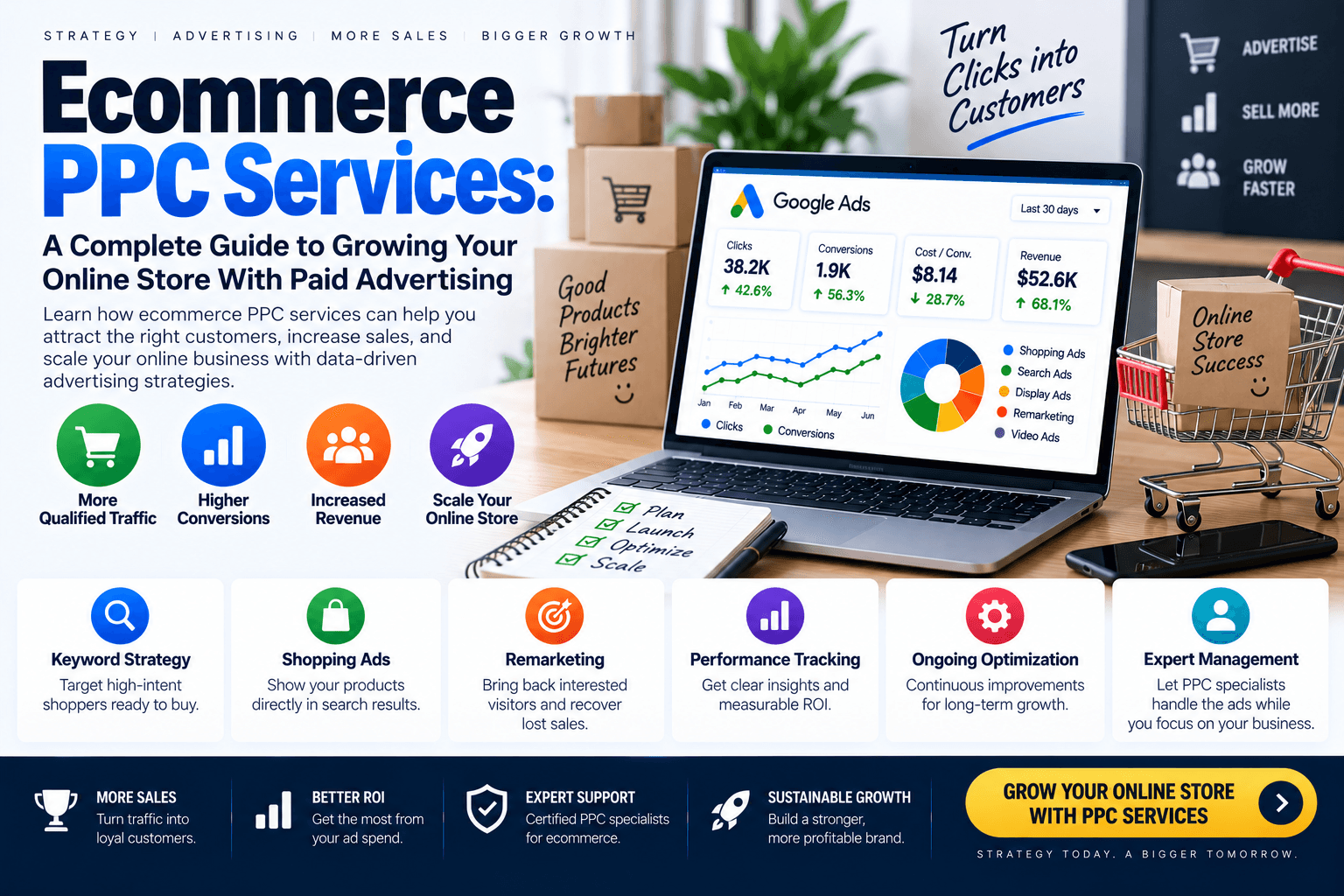
The ecommerce industry has transformed the way businesses sell products and how customers make purchasing decisions. With millions of online stores competing for attention, simply having a website is no longer enough. Brands need effective digital marketing strategies to attract potential customers, increase visibility, and generate consistent sales.
One of the most powerful strategies for ecommerce growth is ecommerce PPC services. Pay-per-click advertising allows online businesses to reach customers who are actively searching for products, making it one of the fastest ways to drive targeted traffic and increase revenue.
Unlike traditional advertising methods, PPC provides measurable results. Businesses can track clicks, conversions, customer behavior, and advertising costs to understand exactly how their campaigns perform. With proper planning and optimization, ecommerce PPC campaigns can deliver a strong return on investment and help brands compete in crowded markets.
This comprehensive guide explains what ecommerce PPC services are, how they work, their benefits, different campaign types, optimization strategies, and how professional PPC management can help your online store grow.
What Are Ecommerce PPC Services?
Ecommerce PPC services are specialized paid advertising solutions designed to help online stores promote their products across search engines, shopping platforms, and social media channels.
PPC works on a simple model: advertisers pay a fee each time someone clicks on their advertisement. Instead of paying for general exposure, businesses only pay when users interact with their ads.
For ecommerce businesses, PPC campaigns are designed to:
- Increase product visibility
- Generate qualified website traffic
- Improve online sales
- Promote new products
- Reach specific customer segments
- Increase brand awareness
- Improve return on advertising spend (ROAS)
Professional ecommerce PPC service providers handle every aspect of advertising campaigns, including research, setup, management, testing, optimization, and reporting.
Why Ecommerce PPC Services Are Important for Online Businesses
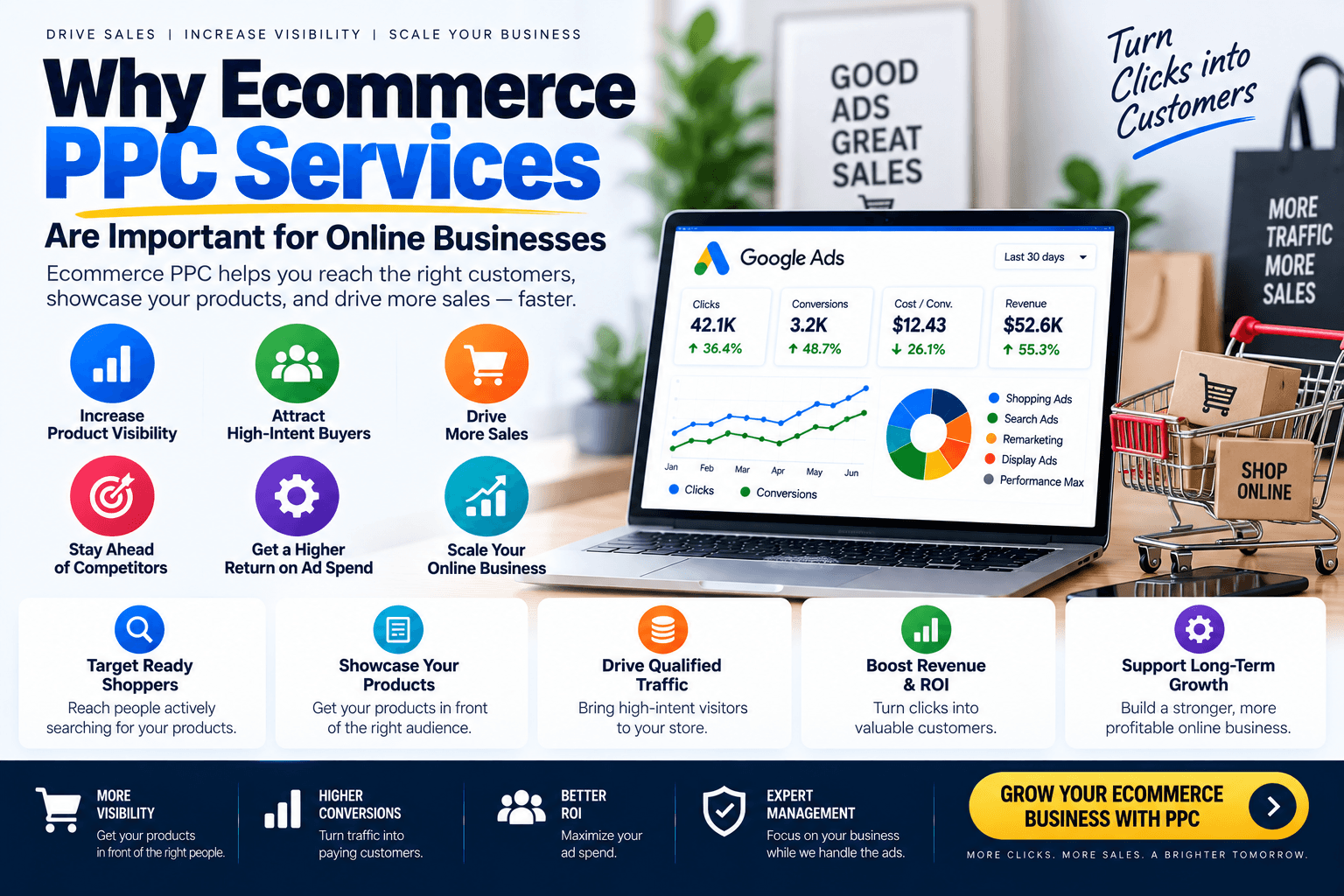
The ecommerce market is highly competitive. Customers have thousands of choices when searching for products, and businesses must find effective ways to stand out.
PPC advertising gives ecommerce brands the opportunity to appear in front of potential buyers at the exact moment they are looking for products.
1. Immediate Visibility in Search ResultsSearch engine optimization is essential for long-term growth, but ranking organically for competitive keywords can take months or even years.
PPC advertising provides immediate visibility. Once campaigns are approved, products can appear at the top of search results and shopping pages.
For example, when customers search for terms like:
- “best running shoes online”
- “buy wireless headphones”
- “affordable skincare products”
PPC ads can place relevant products directly in front of those users.
2. Reach Customers With Strong Buying IntentOne of the biggest advantages of ecommerce PPC is targeting customers who are already interested in purchasing.
Unlike traditional marketing, where businesses advertise to broad audiences, PPC focuses on users who are actively searching for specific products.
This improves:
- Click quality
- Conversion rates
- Sales opportunities
- Customer acquisition efficiency
Ecommerce businesses can control exactly how much they spend on advertising.
With PPC campaigns, companies can:
- Set daily budgets
- Adjust bids
- Pause campaigns
- Increase investment in profitable products
- Reduce spending on poor-performing ads
This flexibility allows businesses of all sizes to advertise effectively.
How Ecommerce PPC Services Work
A successful ecommerce PPC campaign requires careful planning and continuous optimization.
Step 1: Business and Market Analysis
Before creating campaigns, PPC specialists analyze:
- Business goals
- Target customers
- Product categories
- Competitors
- Current advertising performance
- Market demand
This research helps create a strategy based on business objectives.
Step 2: Keyword Research
Keyword research is one of the most important parts of PPC management.
Experts identify keywords that potential customers use when searching for products.
Keywords may include:
Product KeywordsExamples:
- men’s leather jackets
- organic coffee beans
- smart home devices
Examples:
- buy men’s leather jackets online
- best price for smart watches
- discount running shoes
Long-tail keywords usually have lower competition and higher conversion potential.
Examples:
- waterproof hiking shoes for women
- affordable gaming laptop under $1000
Types of Ecommerce PPC Advertising Campaigns
A professional ecommerce PPC strategy often combines multiple advertising channels.
1. Google Shopping Ads
Google Shopping Ads are among the most effective advertising options for ecommerce businesses.
These ads display:
- Product images
- Prices
- Store names
- Ratings
- Promotional information
Shopping ads help customers compare products before clicking, which often leads to higher purchase intent.
2. Google Search Ads
Search ads appear when users search for specific keywords.
These campaigns are useful for:
- High-value products
- Brand searches
- Competitive keywords
- Seasonal promotions
A well-optimized search campaign can capture customers at the final stage of the buying journey.
3. Display Advertising
Display campaigns use visual advertisements across websites and apps.
They help businesses:
- Build brand awareness
- Retarget visitors
- Promote special offers
- Reach new audiences
4. Remarketing PPC Campaigns
Many visitors leave ecommerce websites without purchasing.
Remarketing campaigns target these users and encourage them to return.
Examples include:
- Showing ads for viewed products
- Offering discount promotions
- Reminding customers about abandoned carts
Remarketing is effective because it targets people who already know the brand.
5. Social Media PPC Advertising
Social media platforms provide advanced targeting options for ecommerce businesses.
Brands can advertise based on:
- Interests
- Online behavior
- Demographics
- Previous interactions
- Similar customer audiences
Social media PPC is especially useful for lifestyle products, fashion, beauty, and consumer goods.
Essential Components of Successful Ecommerce PPC Services
Product Feed Optimization
For shopping campaigns, product data plays a major role.
An optimized product feed includes:
- Accurate product titles
- Detailed descriptions
- Correct categories
- High-quality images
- Updated pricing
- Product availability
A poor product feed can reduce visibility and increase advertising costs.
Landing Page Optimization
A PPC click is valuable only if it leads to a page that converts.
Effective ecommerce landing pages should include:
- Clear product information
- High-quality images
- Customer reviews
- Easy checkout process
- Mobile-friendly design
- Strong calls to action
Tracking allows businesses to understand campaign performance.
Important metrics include:
Click-Through Rate (CTR)
Measures how many people click an advertisement after seeing it.
Conversion Rate
Shows the percentage of visitors who complete a purchase.
Cost Per Acquisition (CPA)
Measures the cost of gaining a new customer.
Return on Ad Spend (ROAS)
Shows how much revenue is generated from advertising investment.
Benefits of Professional Ecommerce PPC Management
Managing PPC campaigns requires experience, testing, and continuous monitoring. Professional ecommerce PPC services provide several advantages.
Increased Sales Opportunities
Experts optimize campaigns to attract customers who are more likely to buy.
Improved Advertising Efficiency
Professional management reduces wasted spending by removing poor-performing keywords and targeting strategies.
Better Customer Targeting
PPC specialists use data analysis to identify valuable customer segments.
Continuous Campaign Improvement
Successful PPC requires ongoing adjustments. Experts test:
- Keywords
- Ad copy
- Product targeting
- Bidding strategies
- Audience segments
Common Ecommerce PPC Challenges
Although PPC is powerful, poor management can lead to wasted budgets.
Common challenges include:
High Advertising Costs
Competitive industries often have expensive keywords. Proper bidding strategies are necessary to maintain profitability.
Low Conversion Rates
High traffic does not always mean high sales. Landing pages, product pricing, and customer experience must be optimized.
Poor Keyword Selection
Incorrect keywords can attract visitors who are unlikely to purchase.
Lack of Testing
Without regular testing, businesses may miss opportunities to improve performance.
How to Choose the Best Ecommerce PPC Service Provider
Choosing the right PPC agency can significantly impact campaign success.
Consider these factors:
Ecommerce Experience
Choose a provider that understands online shopping behavior and product-based advertising.
Transparent Reporting
A reliable agency should provide detailed reports covering:
- Advertising spend
- Clicks
- Sales
- Conversions
- Campaign improvements
Customized Strategies
Avoid providers using the same strategy for every business. Effective PPC requires a customized approach.
Focus on Profitability
The goal should not only be generating clicks but increasing profitable sales.
Ecommerce PPC Trends for the Future
The future of ecommerce PPC will continue to evolve with technology.
Important trends include:
Artificial Intelligence Optimization
AI tools are improving:
- Audience targeting
- Bid management
- Ad personalization
- Performance forecasting
Voice Search Advertising
As voice assistants become more popular, businesses will need to optimize campaigns for conversational searches.
Personalized Shopping Experiences
Customers increasingly expect personalized recommendations and advertisements based on their interests and behavior.
Automation and Smart Campaign Management
Automated bidding and campaign optimization tools will help businesses improve efficiency.
Frequently Asked Questions About Ecommerce PPC Services
1. What are ecommerce PPC services?
Ecommerce PPC services are specialized digital marketing solutions designed to help online stores promote products through paid advertising channels. These services include campaign planning, keyword research, ad creation, product feed optimization, bid management, and performance tracking to help businesses generate more qualified traffic and sales.
2. Why are ecommerce PPC services important for online stores?
Ecommerce PPC services help businesses reach potential customers who are actively searching for products. Unlike traditional marketing methods, PPC allows brands to target specific audiences, control advertising budgets, measure results, and optimize campaigns based on real-time data.
3. How do ecommerce PPC services increase sales?
Ecommerce PPC services increase sales by placing product advertisements in front of customers with high purchase intent. Through effective keyword targeting, optimized ads, and strategic bidding, businesses can attract visitors who are more likely to complete a purchase.
4. Which advertising platforms are used for ecommerce PPC campaigns?
Businesses can run PPC campaigns on multiple platforms, including:
- Google Ads
- Google Shopping Ads
- Microsoft Advertising
- Amazon Ads
- Facebook Ads
- Instagram Ads
- TikTok Ads
- Pinterest Ads
The best platform depends on the products, audience, and overall marketing goals.
5. How much do ecommerce PPC services cost?
The cost of ecommerce PPC services varies depending on campaign size, industry competition, advertising goals, and monthly budget. Some businesses start with small campaigns, while larger brands invest more heavily to achieve higher sales volume and market visibility.
6. How long does it take to see results from PPC campaigns?
PPC campaigns can start generating traffic soon after launch. However, improving profitability requires continuous monitoring, testing, and optimization. Factors such as competition, product demand, website quality, and budget influence campaign performance.
7. What is included in professional ecommerce PPC services?
Professional ecommerce PPC services usually include:
- Market and competitor research
- Keyword analysis
- Campaign setup
- Ad copy creation
- Shopping feed optimization
- Audience targeting
- Conversion tracking
- Performance reporting
- Campaign optimization
These activities help improve advertising efficiency and maximize returns.
8. Can small businesses benefit from ecommerce PPC services?
Yes. Small ecommerce businesses can use PPC advertising to compete with larger companies by targeting specific products, niche audiences, and valuable search terms. A well-planned campaign can help smaller brands attract customers without requiring a large marketing budget.
9. How do PPC experts measure campaign success?
PPC specialists use several important metrics to evaluate performance, including:
- Click-through rate (CTR)
- Conversion rate
- Cost per click (CPC)
- Cost per acquisition (CPA)
- Return on ad spend (ROAS)
- Revenue generated from campaigns
Analyzing these metrics helps businesses make informed advertising decisions.
10. What makes ecommerce PPC services effective?
Effective ecommerce PPC services combine accurate targeting, compelling advertisements, optimized product pages, and continuous campaign improvement. A data-driven approach ensures advertising budgets are focused on strategies that generate the best possible results.
11. Can ecommerce PPC campaigns help promote new products?
Yes. PPC campaigns are highly effective for launching new products because they provide immediate visibility. Businesses can introduce new products to targeted audiences, collect customer data, and identify which advertising strategies produce the best results.
12. Why should businesses hire experts for ecommerce PPC management?
Managing paid advertising requires experience, technical knowledge, and regular optimization. Ecommerce PPC experts help businesses avoid wasted spending, improve campaign performance, and develop strategies focused on increasing conversions and revenue.
Conclusion
Ecommerce PPC services are an essential marketing solution for businesses that want to increase online visibility, attract qualified customers, and grow sales.
With professional PPC management, ecommerce brands can create targeted advertising campaigns, optimize budgets, improve conversions, and achieve measurable business growth.
Whether you operate a small online store or a large ecommerce platform, investing in strategic PPC advertising can help you reach more customers and compete effectively in the digital marketplace.