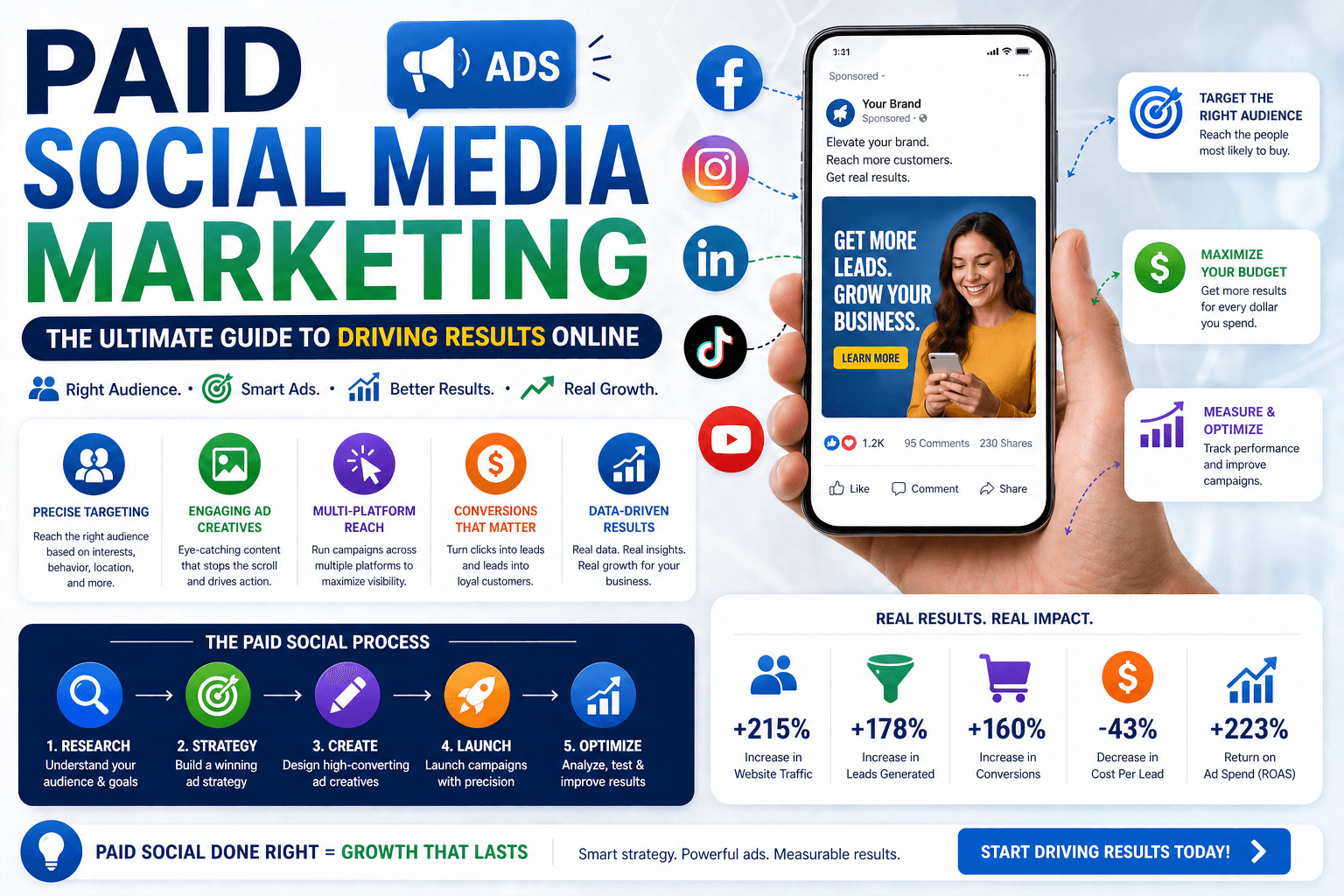
In today’s digital-first world, paid social media marketing has become one of the most effective ways for businesses to reach their target audience, drive traffic, and generate sales. Unlike organic social media strategies, paid campaigns allow brands to control visibility, reach specific demographics, and achieve measurable results quickly.
Whether you are a small business, an e-commerce brand, or a large enterprise, understanding the ins and outs of paid social media marketing can help you maximize your advertising budget and grow your business. This comprehensive guide covers everything from platform selection, campaign planning, creative best practices, targeting strategies, advanced techniques, and analytics.
What is Paid Social Media Marketing?
Paid social media marketing refers to using sponsored advertisements on social media platforms to promote products, services, or brand awareness. These ads differ from organic posts because they are boosted through paid promotion, ensuring visibility to a specific audience.
The primary goals of paid social media marketing include:
- Increasing website traffic
- Generating leads or sales
- Boosting brand awareness
- Retargeting previous website visitors or customers
By investing in paid campaigns, businesses can reach potential customers faster than organic growth, with precise targeting based on demographics, interests, behaviors, and even online purchasing habits.
Why Paid Social Media Marketing is Essential
Organic reach has declined across platforms as algorithms prioritize posts from friends and family. This makes paid social media marketing critical for brands that want consistent visibility. The benefits include:
- Highly Targeted Reach – Target users by location, age, gender, interests, and behaviors.
- Faster Results – Paid campaigns deliver immediate traffic, leads, and conversions.
- Scalability – Easily adjust budgets to increase reach and conversions.
- Analytics & Insights – Measure campaign effectiveness in real-time, optimizing ROI.
- Retargeting Opportunities – Re-engage users who interacted with your brand but didn’t convert.
Key Platforms for Paid Social Media Marketing
Different platforms serve unique audiences and ad formats. Choosing the right platform depends on your business goals and target audience.
1. Facebook Ads
Best For: Local businesses, e-commerce, lead generation
Ad Formats: Image, video, carousel, slideshow, collection ads
Targeting Options: Interests, demographics, lookalike audiences, behaviors
Tips: Use retargeting to capture users who visited your website but didn’t convert.
2. Instagram Ads
Best For: Visual brands, lifestyle products, younger audiences
Ad Formats: Stories, Reels, feed posts, carousel
Tips: Use high-quality visuals, showcase products in use, and leverage influencer partnerships.
3. LinkedIn Ads
Best For: B2B marketing, professional services, recruitment
Ad Formats: Sponsored content, text ads, InMail, video ads
Tips: Target by industry, company size, job title, and seniority for maximum relevance.
4. TikTok Ads
Best For: Reaching Gen Z and younger audiences
Ad Formats: In-feed videos, branded content, hashtag challenges
Tips: Use short, engaging, creative content that aligns with TikTok trends.
5. Twitter Ads
Best For: Event promotion, trending topics, brand engagement
Ad Formats: Promoted tweets, promoted accounts, promoted trends
Tips: Use keyword targeting and trending hashtags to increase visibility.
Types of Paid Social Media Campaigns
Understanding campaign types helps align your marketing efforts with your business goals.
1. Awareness Campaigns
Goal: Increase brand visibility and reach a broad audience.
Best Platforms: Facebook, Instagram, TikTok
Metrics: Impressions, reach, video views
2. Consideration Campaigns
Goal: Engage potential customers and generate leads.
Best Platforms: LinkedIn, Facebook lead ads, Instagram stories
Metrics: Click-through rate (CTR), time on site, form submissions
3. Conversion Campaigns
Goal: Drive purchases, app installs, or sign-ups.
Best Platforms: All platforms with retargeting options
Metrics: Conversion rate, cost per acquisition (CPA), return on ad spend (ROAS)
Step-by-Step Guide to Running Paid Social Media Campaigns
Step 1: Define Campaign Objectives
Start by answering:
- What do I want to achieve? (Traffic, leads, sales, awareness)
- Which platform aligns with this goal?
- Who is my target audience?
Step 2: Audience Targeting
Use platform tools to define:
- Demographics (age, gender, location)
- Interests & hobbies
- Past behavior & purchase intent
- Retarget users who engaged with your content
Step 3: Create Compelling Ad Creative
Key elements:
- Eye-catching visuals or videos
- Clear headline with value proposition
- Strong call-to-action (CTA)
- Consistent branding and messaging
Step 4: Budgeting & Bidding
Choose:
- Daily budget: Controls spending per day
- Lifetime budget: Sets total spend for the campaign duration
- Use automated bidding strategies to maximize conversions
Step 5: Launch & Monitor
Monitor campaigns closely:
- CTR, CPC, CPA
- Engagement metrics (likes, shares, comments)
- ROI and ROAS
Step 6: Optimize & Scale
- Test different ad creatives (A/B testing)
- Refine audience targeting
- Adjust budgets for high-performing campaigns
Advanced Paid Social Media Marketing Techniques
- Retargeting Ads: Engage users who visited your website but didn’t convert.
- Lookalike Audiences: Reach new prospects similar to your best customers.
- Custom Landing Pages: Ensure ads lead to pages optimized for conversion.
- Dynamic Product Ads: Automatically show products users have viewed on your website.
- Video Marketing: Use short, informative videos to boost engagement and shares.
Measuring Paid Social Media Success
Key metrics depend on your objective:
| Objective | Key Metrics |
|---|---|
| Brand Awareness | Impressions, reach, video views |
| Engagement | Likes, comments, shares, CTR |
| Lead Generation | Cost per lead, form submissions |
| Sales | Conversions, ROAS, revenue |
Regular reporting helps optimize campaigns and improve ROI over time.
Trends in Paid Social Media Marketing (2026)
- AI-Powered Targeting: Platforms use AI to predict which users are most likely to convert.
- Interactive Ads: Polls, quizzes, and AR experiences increase engagement.
- Video-First Strategy: Short-form videos outperform static content.
- Cross-Platform Retargeting: Ads follow users across social platforms for maximum impact.
- Local Focus: Geo-targeted campaigns drive foot traffic for local businesses.
Common Mistakes to Avoid
- Ignoring analytics and metrics
- Poor targeting and generic messaging
- Overloading creatives with text
- Not testing ad variations
- Expecting instant results without optimization
FAQ – Paid Social Media Marketing
Q1: What is paid social media marketing?
Paid social media marketing is running sponsored ads on platforms like Facebook, Instagram, TikTok, and LinkedIn to reach specific audiences and achieve measurable business goals.
Q2: Why should I invest in paid social media marketing?
Paid campaigns offer faster results, precise targeting, and measurable ROI, which organic social posts alone cannot deliver.
Q3: How much should I spend on paid social media?
Budgets vary by platform and goals. Start small to test ad performance, then scale campaigns that perform well.
Q4: Which platform is best for paid social media marketing?
It depends on your audience:
- Facebook & Instagram: B2C, e-commerce, local businesses
- LinkedIn: B2B services and professional marketing
- TikTok: Young audiences and viral campaigns
Q5: How do I track the success of paid social campaigns?
Use platform analytics, Google Analytics, and UTM tracking to monitor CTR, conversions, cost per lead, and ROI.
Q6: Can paid social media marketing improve SEO indirectly?
Yes! Increased traffic, engagement, and social signals can boost website authority and improve search visibility over time.
Final Thoughts
Paid social media marketing is no longer optional—it’s a critical strategy for businesses that want fast, measurable, and targeted results. By leveraging platforms like Facebook, Instagram, LinkedIn, TikTok, and Twitter, brands can reach the right audience, increase website traffic, generate leads, and drive conversions effectively.
To succeed, businesses must:
- Define clear objectives before launching campaigns
- Target the right audience using demographics, interests, and behaviors
- Create compelling ad creatives that capture attention instantly
- Track performance and optimize campaigns continuously for maximum ROI
Remember, the power of paid social media marketing lies in combining strategy with consistent testing and optimization. Whether you’re a small business or a large enterprise, these strategies can help you maximize your ad spend, grow your brand, and achieve measurable results.
Start implementing these tactics today and watch your social media campaigns deliver the results your business deserves.