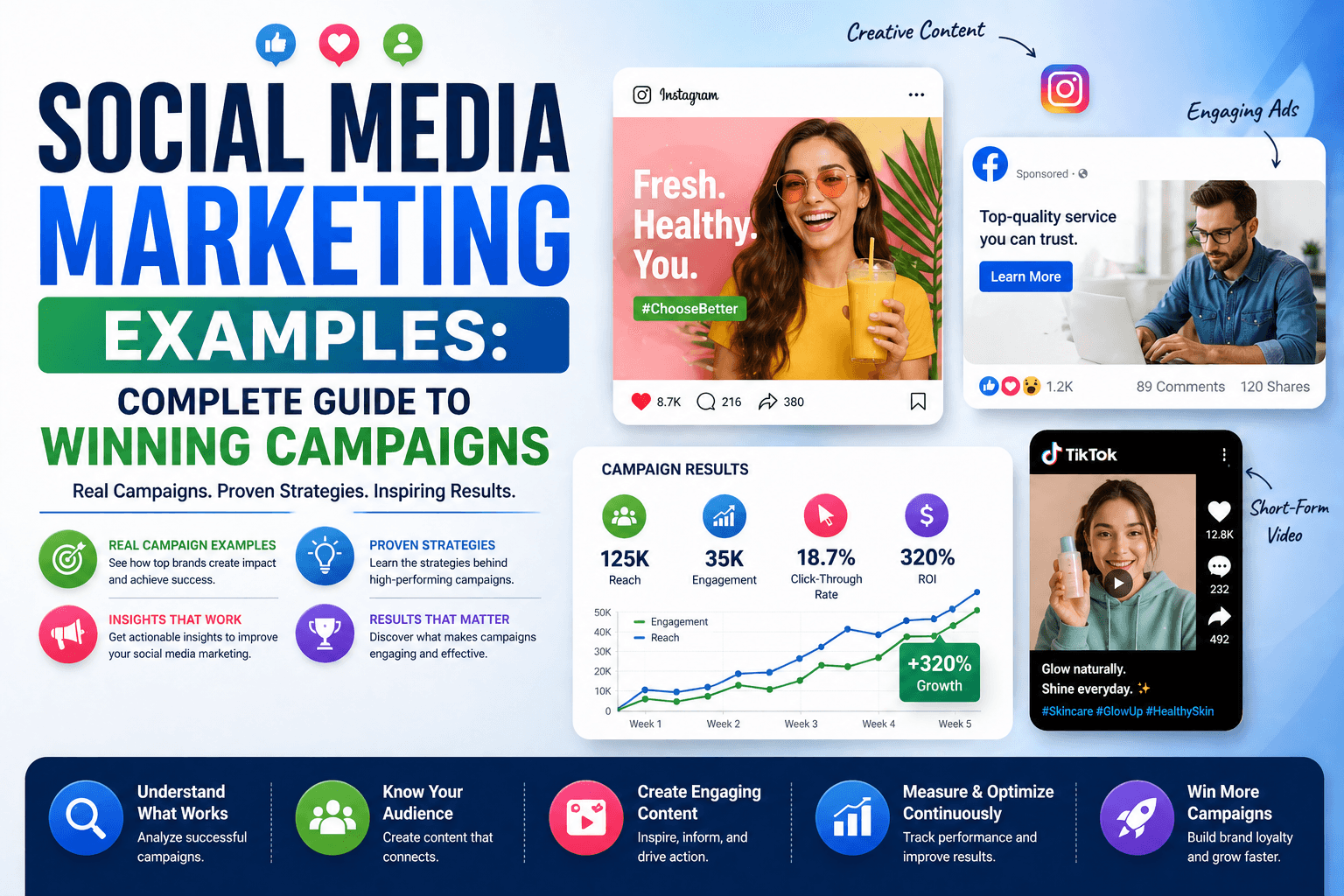
Social media marketing is no longer optional—it’s essential. Businesses of all sizes leverage platforms like Facebook, Instagram, TikTok, LinkedIn, and YouTube to engage audiences, build trust, and drive sales. Understanding social media marketing examples provides a blueprint for success, helping you adopt strategies that work in real-world campaigns.
This guide covers everything—from successful brand campaigns and platform-specific examples to key takeaways, actionable strategies, and FAQs—so you can implement proven techniques for your business.
1. Why Learn From Social Media Marketing Examples?
Studying examples is crucial because it helps businesses:
- Discover Best Practices: Learn which types of content and campaigns drive engagement.
- Understand Audience Behavior: See how users react to different types of posts.
- Generate Content Ideas: Use proven concepts to inspire your own campaigns.
- Avoid Mistakes: Learn from campaigns that underperformed.
- Benchmark Performance: Compare your efforts with industry leaders.
2. Platform-Specific Social Media Marketing Examples
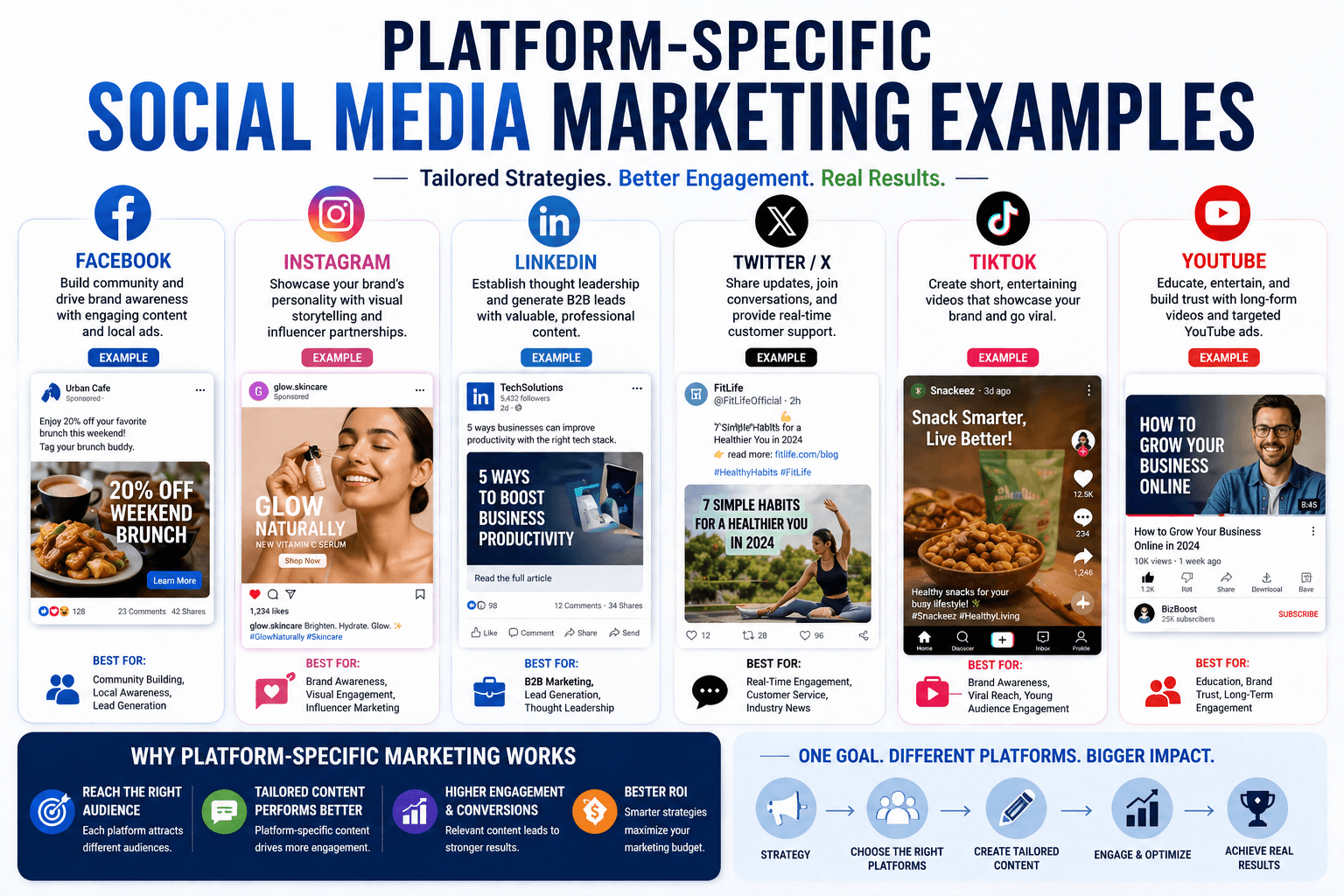
2.1 Facebook Marketing Examples
Example 1: Coca-Cola – Share a Coke Campaign
- Coca-Cola personalized bottles with people’s names.
- Encouraged users to share photos on Facebook.
- Result: Viral engagement and millions of shares.
Example 2: Starbucks – Branded Hashtag Engagement
- Starbucks promoted #RedCupContest, asking users to post their holiday cups.
- Result: Increased user-generated content and brand visibility.
Example 3: Airbnb – Community Storytelling
- Airbnb shared host stories and traveler experiences.
- Result: Built emotional connection and trust with the audience.
2.2 Instagram Marketing Examples
Example 1: Nike – Inspirational Storytelling
- Posts highlighting athletes, achievements, and motivational quotes.
- Result: Increased engagement and brand loyalty globally.
Example 2: Glossier – Customer-Centric Content
- Reposting authentic customer photos and reviews.
- Result: Strengthened community and boosted credibility.
Example 3: National Geographic – Stunning Visuals
- High-quality photography paired with educational captions.
- Result: Massive follower growth and global recognition.
2.3 Twitter Marketing Examples
Example 1: Wendy’s – Real-Time Engagement
- Witty responses to user mentions and trending topics.
- Result: Higher engagement and viral interactions.
Example 2: Netflix – Pop Culture Integration
- Tweets tied to trending events, memes, and new shows.
- Result: Increased shares and global brand awareness.
Example 3: Duolingo – Fun Brand Voice
- Humorous and relatable tweets reflecting brand personality.
- Result: Strong follower growth and brand recall.
2.4 LinkedIn Marketing Examples
Example 1: HubSpot – Educational Thought Leadership
- Regular posts with in-depth guides, case studies, and industry insights.
- Result: Established as a leading authority in marketing and sales.
Example 2: Microsoft – Employee Advocacy
- Highlighting employee achievements and workplace culture.
- Result: Strengthened employer branding and engagement.
Example 3: Adobe – Webinars & Tutorials
- Sharing professional learning content and how-to tutorials.
- Result: Increased trust and professional credibility.
2.5 TikTok Marketing Examples
Example 1: Gymshark – Influencer Collaborations
- Fitness influencers creating workout challenges.
- Result: Rapid follower growth and high engagement rates.
Example 2: Chipotle – Hashtag Challenges
- Created fun, viral challenges encouraging user participation.
- Result: Massive brand visibility and engagement.
Example 3: The Washington Post – Educational Humor
- Short, entertaining news summaries.
- Result: Reached younger audiences effectively.
2.6 YouTube Marketing Examples
Example 1: GoPro – User-Generated Content
- Features adventure videos from real users using GoPro cameras.
- Result: Authentic product promotion and high engagement.
Example 2: TED – Shareable Educational Talks
- Short, high-value educational content.
- Result: High shareability and repeat engagement.
Example 3: Blendtec – “Will It Blend?” Series
- Demonstrated products creatively through fun videos.
- Result: Viral campaigns and boosted product awareness.
3. Key Lessons From Social Media Marketing Examples
- Storytelling Builds Trust: Authentic stories create emotional connections.
- User-Generated Content is Powerful: Customers sharing their experiences enhances credibility.
- Two-Way Engagement is Crucial: Interacting with your audience boosts loyalty.
- Visual Content Outperforms Text: High-quality images and videos capture attention.
- Trends and Timeliness Matter: Leveraging trending topics improves reach and relevance.
- Consistency Matters: Regular posting increases audience familiarity and trust.
4. How to Apply These Examples to Your Business
- Identify platforms where your audience is most active.
- Use storytelling and user-generated content as core strategies.
- Experiment with trending topics, hashtags, and viral formats.
- Measure engagement, reach, and conversions to optimize campaigns.
- Collaborate with influencers or local partners for broader reach.
5. Advanced Social Media Marketing Strategies
- Interactive Content: Polls, quizzes, contests, and live Q&A sessions.
- Social Commerce: Sell products directly through platforms like Instagram and Facebook.
- AI-Powered Marketing: Automate content creation, targeting, and performance tracking.
- Short-Form Video Focus: TikTok, Instagram Reels, and YouTube Shorts for high engagement.
- Local Targeting: Geo-targeted campaigns for businesses with local audiences.
6. Case Studies: Success Stories
Case Study 1: Coca-Cola Share a Coke Campaign
- Personalized names on bottles → shared on social media
- Result: Millions of organic shares, global engagement
Case Study 2: Wendy’s Twitter Engagement
- Witty and timely responses → viral content
- Result: Increased brand mentions and follower growth
Case Study 3: GoPro User-Generated Content
- Customers creating videos → featured by GoPro
- Result: Authentic product promotion and high engagement
FAQs: Social Media Marketing Examples
Q1: What are some of the best social media marketing examples?
A1: Brands like Coca-Cola, Nike, Starbucks, Wendy’s, GoPro, Gymshark, and Netflix have created engaging, effective campaigns.
Q2: Why are examples important in social media marketing?
A2: They provide insights into strategies, content formats, and engagement tactics that work in real-life scenarios.
Q3: Can small businesses replicate these examples?
A3: Yes, even small businesses can adopt the principles of storytelling, user engagement, and trends to boost their campaigns.
Q4: Which platforms are best for social media marketing?
A4: Depends on your audience. Instagram, TikTok, and YouTube for younger demographics; LinkedIn for B2B; Facebook for broad reach.
Q5: How do I measure the success of a social media campaign?
A5: Track KPIs like engagement, reach, traffic, conversions, and ROI using analytics tools for each platform.
Q6: What is the most important takeaway from social media marketing examples?
A6: Authenticity, consistency, and audience engagement are the keys to creating successful campaigns.
Conclusion
Social media marketing is a dynamic and powerful way to connect with your audience, build brand awareness, and drive measurable results. By studying social media marketing examples, you can see what works in the real world—from storytelling and user-generated content to viral campaigns and influencer collaborations.
The key lessons are clear: authenticity, consistency, creativity, and engagement are what make campaigns successful. Whether you’re a small business or a large enterprise, applying these proven strategies can help you increase followers, boost engagement, and achieve your business goals.
Remember, the most effective campaigns combine data-driven decisions with creative storytelling. Keep experimenting, analyzing, and learning from examples to refine your social media strategy and stay ahead in today’s competitive digital landscape.